
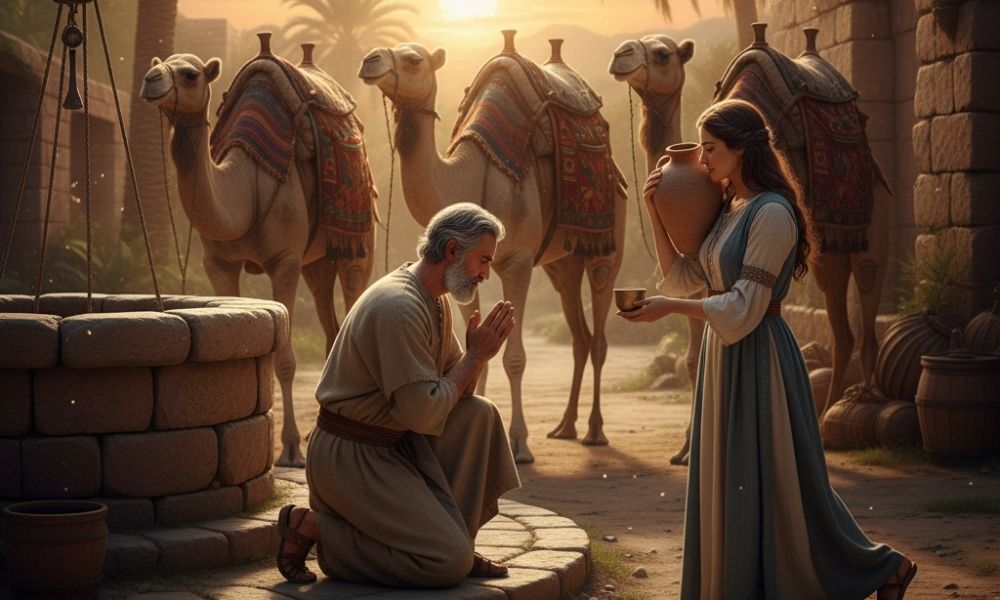
Eliezer of Damascus is mentioned in the Book of Genesis as the chief servant of Abraham, known for his loyalty, faithfulness, and obedience. Though only briefly referenced, Eliezer plays a significant role as a trusted steward who managed Abraham’s household and, according to tradition, was the servant sent to find a wife for Isaac — a mission carried out with deep faith and divine guidance.
Quick Facts
Name: Eliezer of Damascus (Hebrew: אֱלִיעֶזֶר, Eliʿezer, meaning “God is my help”)
Role: Chief servant/steward of Abraham
Tribe/Nation: Born in Damascus, Syria
Era: Patriarchal period (around 2000 BCE)
Master: Abraham
Book: Genesis
Virtues: Loyalty, faith, obedience, wisdom
Symbol: Jar of water or caravan — symbolizing faithful service and divine guidance
Name Meaning
“Eliezer” means “God is my help.” This name beautifully reflects his character and mission — acting as an instrument through whom God provided help and fulfillment of His promises to Abraham.
Lineage / Background
Eliezer was from Damascus, likely born a household servant or acquired when Abraham dwelt in that region. Abraham once considered him the heir of his house before the birth of Isaac (Genesis 15:2–3), showing the deep trust and affection between them.
Biblical Context
Eliezer lived during the Patriarchal era, serving Abraham — a nomadic chieftain chosen by God to become the father of many nations. The story of Eliezer highlights servanthood guided by faith, a theme central to God’s covenant work in Genesis.
Major Roles / Identity
- Faithful steward and overseer of Abraham’s household (Genesis 15:2)
- Trusted emissary sent to find a wife for Isaac (traditionally identified as Eliezer in Genesis 24)
- Model of prayerful dependence on God’s guidance
Key Character Traits
- Loyalty: Served Abraham with absolute devotion and integrity
- Faith: Sought and trusted God’s direction in critical moments (Genesis 24:12–14)
- Wisdom: Acted with prudence and discernment
- Obedience: Fulfilled Abraham’s instructions exactly, without hesitation
Main Life Events
- Stewardship: Managed all Abraham’s possessions (Genesis 15:2)
- Mission to Haran: Tasked to find a wife for Isaac among Abraham’s kin (Genesis 24:1–10)
- Prayer at the Well: Asked God for a sign to identify the right woman — Rebekah (Genesis 24:12–21)
- Fulfillment: Witnessed divine providence as Rebekah fulfilled every sign he prayed for
Major Relationships
- Abraham: His master and spiritual example; a bond of trust and respect
- Isaac: The heir whom he faithfully served
- Rebekah: The chosen bride, result of his prayer and mission
- God: His ultimate guide and helper
Notable Passages
- Genesis 15:2–3: “O Lord GOD, what will You give me, since I remain childless, and the heir of my house is Eliezer of Damascus?”
- Genesis 24:12: “O LORD, God of my master Abraham, please grant me success today and show steadfast love to my master Abraham.”
- Genesis 24:26–27: “Then the man bowed down and worshiped the LORD…”
Legacy & Impact
Eliezer represents the faithful servant — humble, prayerful, and guided by God’s hand. His example prefigures the ideal disciple, whose actions are led by faith and obedience. In Jewish and Christian tradition alike, Eliezer is honored as a model of faithful stewardship and divine cooperation.
Symbolism / Typology
- Eliezer — a type of the Holy Spirit, who guides and fulfills the Father’s will in finding a bride for the Son (Isaac/Christ).
- Abraham — a type of God the Father.
- Isaac — a type of Christ.
- Rebekah — a type of the Church, called and adorned for the Bridegroom.
Extra-Biblical References
Jewish tradition in the Midrash identifies Eliezer as the servant of Genesis 24, emphasizing his piety and wisdom. He is sometimes said to have been freed by Abraham for his faithfulness. Christian commentators such as Augustine and Origen viewed him as a figure of the Spirit-led servant, representing divine obedience and service.







Leave a Reply