
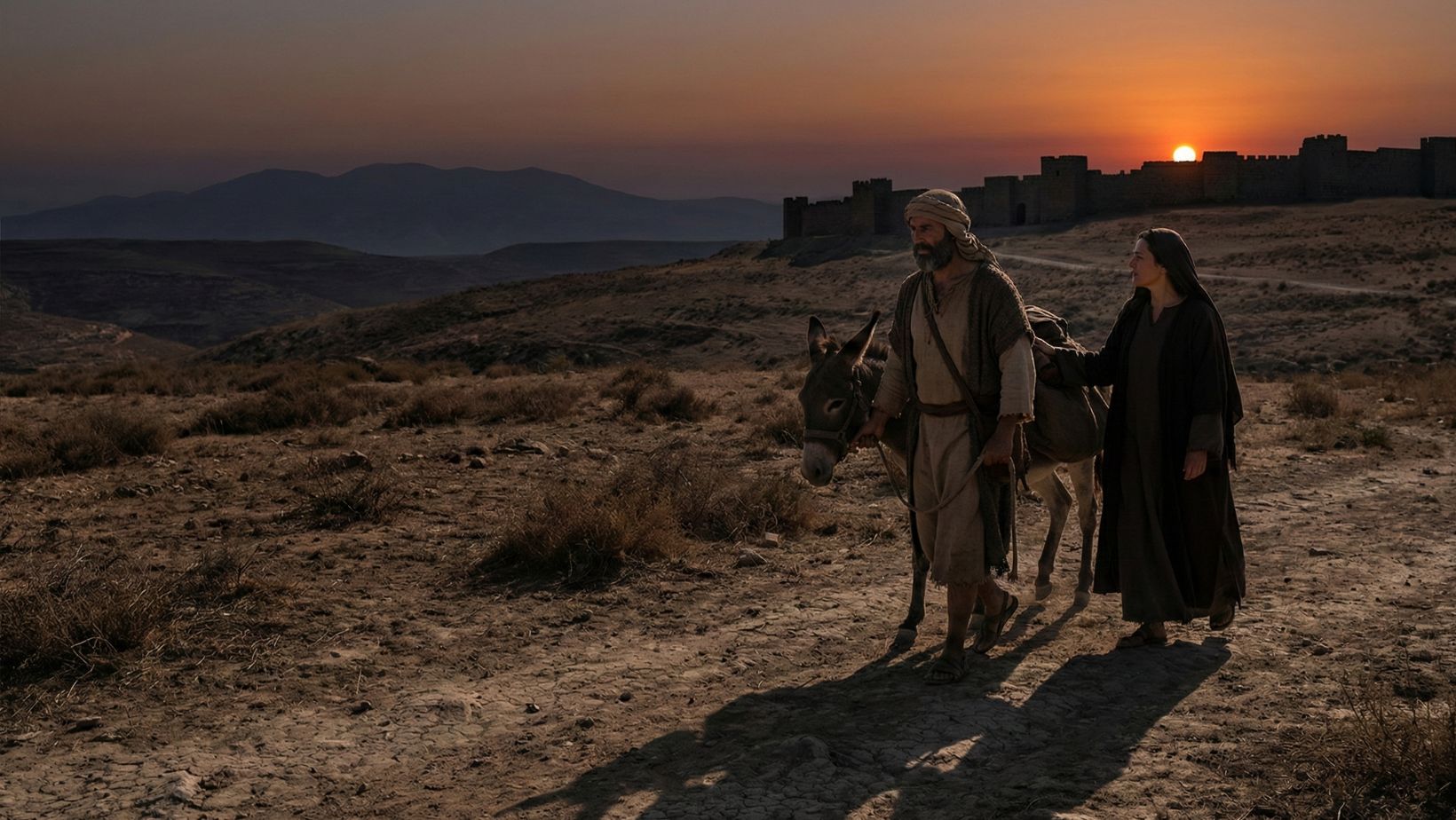
Elimelech is a pivotal though brief figure in the Old Testament, serving as the catalyst for the events in the Book of Ruth. An Israelite from Bethlehem, he made the fateful decision to move his family to the land of Moab to escape a severe famine. While his time in the narrative is short—ending with his death in a foreign land—his actions set the stage for the return of Naomi and Ruth, the redemption of his lineage by Boaz, and the eventual birth of King David. His life serves as a somber backdrop regarding the consequences of leaving the Promised Land during times of testing.
- Name: Elimelech (Hebrew: Elimelekh, meaning “My God is King”)
- Tribe/Nation: Tribe of Judah (Ephrathite of Bethlehem)
- Era: Time of the Judges (~12th century BCE)
- Wife: Naomi
- Sons: Mahlon and Chilion
- Home: Bethlehem, Judah → Moab
- Book: The Book of Ruth (Chapter 1; mentioned in Chapters 2 and 4)
- Key Action: Relocating his family to Moab due to famine
- Legacy: His land and lineage were redeemed by Boaz; ancestor (by law/proxy) of David
- Symbolism: Represents a crisis of faith or the futility of seeking security outside of God’s promise
Name Meaning
“Elimelech” translates to “My God is King.” There is a profound irony in his name; while his name proclaimed Yahweh’s sovereignty, his actions—leaving the land where God ruled to dwell in the pagan land of Moab—suggested a momentary lapse in trusting that King for provision.
Lineage / Family Background
Origin: An Ephrathite from Bethlehem in Judah, indicating a respected and established family status.
Wife: Naomi, whose name means “Pleasant.”
Sons: Mahlon (meaning “Sickly” or “Weak”) and Chilion (meaning “Frail” or “Pining”).
Kinsman: Boaz, a wealthy man of noble character, was a close relative of Elimelech, which later allowed for the legal process of redemption.
Biblical Era / Context
Time: The period of the Judges, a turbulent era characterized by cycles of rebellion, judgment, and deliverance.
Setting: A “famine in the land” of Israel. Famine in the Bible often served as a divine test or judgment, calling the people to repentance.
Cultural Context: Leaving the covenant land of Israel to reside in Moab—a nation often hostile to Israel and born of Lot’s incestuous relationship—was a significant and spiritually risky decision for an Israelite patriarch.
Major Roles / Identity
Patriarch: The head of the household responsible for the welfare of Naomi and his sons.
Emigrant: A man who chose displacement over enduring the hardships within Bethlehem.
The Deceased: His death early in the narrative leaves his wife a widow and eventually leads to the destitution of his family, setting up the need for a “Kinsman-Redeemer.”
Key Character Traits
Pragmatism: He made a logical, survival-based decision to leave a famine-struck area for a fertile one, though it arguably lacked spiritual foresight.
Short-sightedness: In seeking physical bread in Moab, he removed his family from the spiritual covering of the community of Israel.
Responsibility: Though his choice is often critiqued, it was likely driven by a desperate desire to protect his wife and sons from starvation.
Main Life Events
Departure from Bethlehem: Facing severe famine, Elimelech takes Naomi, Mahlon, and Chilion and travels east across the Jordan River to Moab (Ruth 1:1-2).
Settlement in Moab: The family settles among the Moabites, intending to sojourn there.
Death: Elimelech dies shortly after arriving or settling in Moab, leaving Naomi a widow with two sons (Ruth 1:3).
Posthumous Legacy: His sons marry Moabite women (Orpah and Ruth) but also die ten years later. Elimelech’s name and inheritance are eventually saved when Boaz marries Ruth to “raise up seed” for the dead (Ruth 4:10).
Major Relationships
Naomi: His wife, who endured the consequences of his decision and his death, eventually returning to Bethlehem empty but faithful.
Mahlon and Chilion: His sons, whom he led into a foreign culture; they followed his path and died in Moab without heirs.
Boaz: His relative who remained in Bethlehem. Boaz honored Elimelech’s memory by redeeming his land and marrying his daughter-in-law.
Notable Passages
Ruth 1:1–2: The historical record of his departure — “…a man from Bethlehem in Judah, together with his wife and two sons, went to live for a while in the country of Moab.”
Ruth 1:3: The record of his death — “Now Elimelech, Naomi’s husband, died, and she was left with her two sons.”
Ruth 4:3: Boaz discusses the legal status of Elimelech’s estate — “Naomi… is selling the piece of land that belonged to our relative Elimelech.”
Legacy & Impact
Catalyst for Redemption: While his choice led to tragedy, God used the vacuum left by Elimelech’s death to orchestrate the union of Ruth and Boaz.
The Law of Redemption: His story highlights the importance of the Israelite law of the Goel (Kinsman-Redeemer), which ensured that a man’s name and inheritance would not be blotted out from Israel.
Genealogy: Legally, the child born to Boaz and Ruth (Obed) was considered the heir of Mahlon and Elimelech, ensuring his place in the genealogy of King David.
Symbolism / Typology
The Prodigal Figure: Elimelech represents the tendency of believers to wander from the place of promise when difficulties (famine) arise, seeking satisfaction in the “world” (Moab).
The Need for Grace: His inability to sustain his family’s life by his own efforts highlights the necessity of divine intervention and a Redeemer (Boaz/Christ).
Bethlehem (House of Bread): His leaving Bethlehem serves as an ironic symbol—leaving the “House of Bread” to find food, only to find death.
Extra-Biblical References
Jewish Midrash: Rabbinic tradition is often harsh toward Elimelech. Some sources (e.g., Ruth Rabbah) suggest he was a wealthy leader who fled Bethlehem not because he was starving, but because he did not want to share his wealth with the poor during the famine. His death is viewed in these traditions as divine punishment for stinginess and desertion.
Talmud: Identifies Elimelech as the brother of Salmon (Boaz’s father), making him the uncle of Boaz.







Leave a Reply