
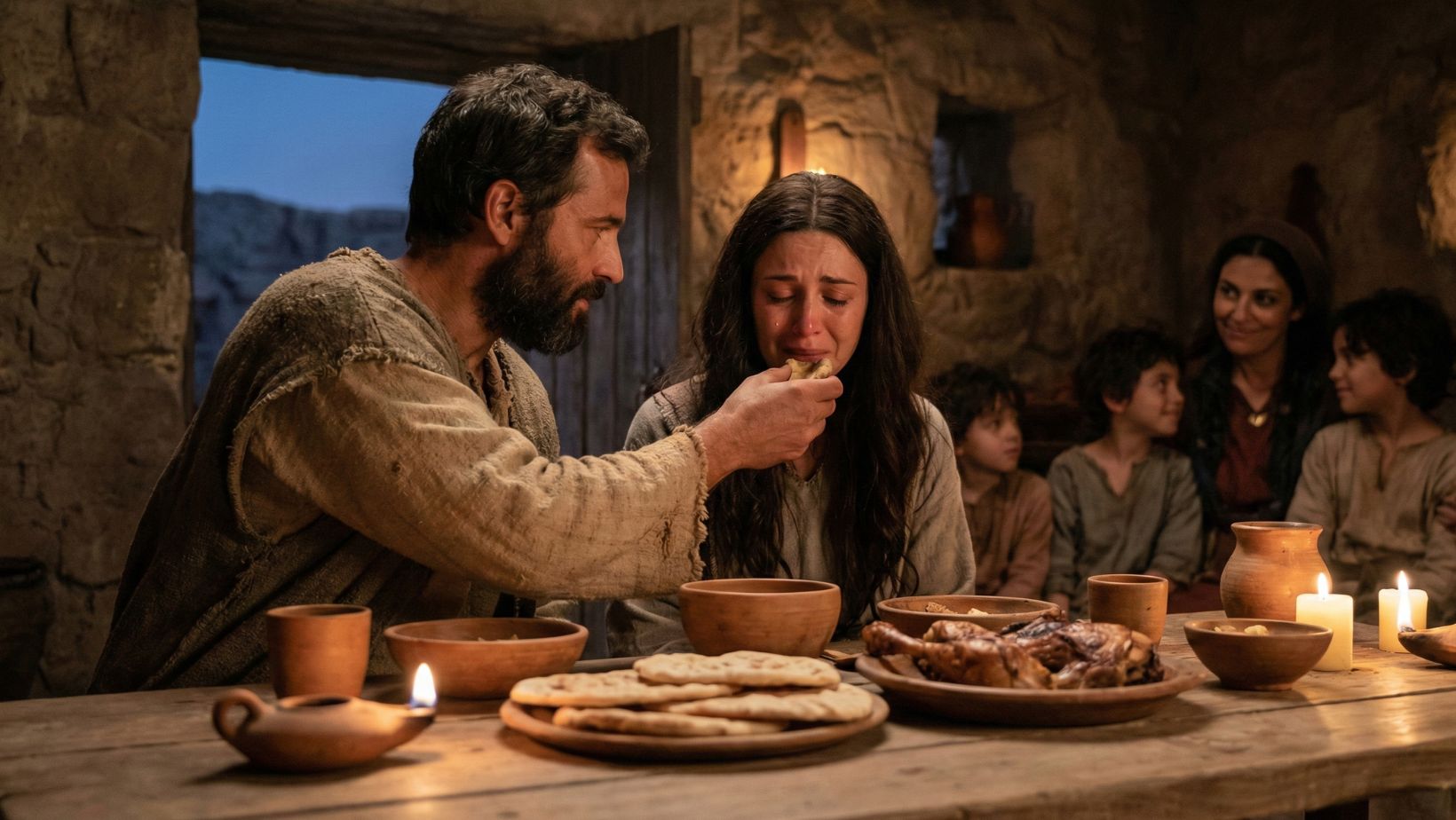
Elkanah is a unique figure in the Old Testament: a devout man of God living in a spiritually dark era, and a loving husband who—despite his best intentions—struggled to fully grasp his wife’s emotional turmoil. While he is often overshadowed by the dramatic story of his wife Hannah and his son Samuel, Elkanah provides the stable foundation for the narrative. He is portrayed as a man who faithfully worshipped Yahweh even when the priesthood was corrupt, and who supported his wife’s radical vow to give their firstborn son back to God.
- Name: Elkanah (Hebrew: Elqanah)
- Tribe/Nation: Levite (living in the hill country of Ephraim)
- Era: End of Judges / Pre-Monarchy (~11th Century BCE)
- Father: Jeroham
- Wives: Hannah (the loved one) and Peninnah (the fruitful one)
- Children: Samuel, plus three other sons and two daughters by Hannah; unnamed children by Peninnah
- Home: Ramathaim-zophim (Ramah)
- Key Quality: Piety, Consistency, Domestic Peacekeeper
- Legacy: Father of Samuel the Prophet
Name Meaning
Hebrew: Elqanah, meaning “God has created” or “God has possessed.” Significance: His name reflects a recognition of God’s sovereignty, fitting for a man who faithfully attributed his family’s blessings and life to Yahweh.
Lineage / Family Background
The Levite Connection: 1 Samuel 1:1 identifies him as an “Ephraimite” (Ephrathite), referring to his geography (living in the territory of Ephraim). However, 1 Chronicles 6:33-38 clarifies that he was a Levite of the line of Kohath. This is crucial because it explains why his son, Samuel, could legitimately serve in the Tabernacle and offer sacrifices.
Polygamy: Elkanah had two wives, a practice not uncommon in that era, especially if the first wife was barren. This arrangement, however, created the domestic strife central to the narrative.
Biblical Era / Context
Time: The very end of the era of the Judges. Spiritual Climate: “In those days Israel had no king; everyone did as they saw fit” (Judges 21:25). The priesthood at Shiloh (Hophni and Phinehas) was abusive and immoral. Elkanah’s Exception: Amidst this national apostasy, Elkanah remained steadfast, traveling roughly 20 miles annually to worship—a sign of the “faithful remnant.”
Major Roles / Identity
The Faithful Worshipper: His defining action is his consistency. He did not let the corruption of the priests stop him from worshipping God.
The Mediator Husband: He attempted to balance the affections of two wives in a rivalry-filled home, giving double portions to Hannah to reassure her of his love.
The Supportive Father: When Hannah decided to dedicate Samuel to the Lord, Elkanah did not object to losing his firstborn son (who would have been his heir and pride). Instead, he ratified her vow.
Key Character Traits
Devout: “This man went up from his city yearly to worship and sacrifice to the LORD of hosts in Shiloh” (1 Samuel 1:3).
Loving but Clueless: He deeply loved Hannah but displayed a typical male inability to understand female grief regarding infertility.
Generous: He gave portions of the sacrifice to his family, ensuring everyone was provided for, and gave a “double portion” (or a choice portion) to Hannah.
Submissive to God: He allowed his wife to make a major spiritual decision regarding their son, saying, “Only may the LORD establish His word.”
Main Life Events
The Yearly Pilgrimage: The narrative opens with his routine of taking his chaotic family to Shiloh to worship.
The Comfort Attempt: Seeing Hannah weeping and refusing to eat, Elkanah tries to comfort her with logic rather than empathy: “Am I not better to you than ten sons?” (1 Samuel 1:8).
Ratifying the Vow: In Old Testament Law (Numbers 30), a husband had the right to nullify his wife’s vow if he disagreed with it. Elkanah’s silence and subsequent encouragement (“Do what seems best to you”) validated Hannah’s promise to give Samuel to God.
The Blessing: After giving up Samuel, Eli the priest blessed Elkanah, saying, “May the LORD give you descendants by this woman,” resulting in five more children.
Major Relationships
Hannah: The love of his life. His relationship with her shows a man who loves deeply but struggles to navigate the pain of infertility alongside her.
Peninnah: His second wife. The text suggests he provided for her and her children dutifully, though his emotional preference was clearly for Hannah, which likely fueled Peninnah’s cruelty.
Samuel: His son. Elkanah is the unsung hero who agreed to let his son be raised by Eli, sacrificing his fatherly rights for the greater good of Israel.
Notable Passages
1 Samuel 1:8: The well-meaning but insensitive question — “Hannah, why are you weeping? … Am I not better to you than ten sons?”
1 Samuel 1:23: The affirmation of Hannah’s plan — “Do what seems best to you; wait until you have weaned him. Only may the LORD establish His word.”
1 Samuel 2:11: The return home — “Then Elkanah went to his home at Ramah. But the child ministered to the LORD before Eli the priest.”
Legacy & Impact
Pattern of Worship: Elkanah demonstrates that the faithfulness of the laity is crucial, especially when the clergy (Eli’s sons) are corrupt. His home was a sanctuary of faith in a faithless time.
Father of the King-Maker: By supporting Hannah, he facilitated the rise of Samuel, who would eventually anoint the first two kings of Israel.
Levitical Heritage: He maintained the lineage that allowed for the restoration of proper worship in Israel through his descendants (specifically the Kohathite singers of David’s time, including Heman the singer, who was Elkanah’s great-grandson).
Symbolism / Typology
The Faithful Remnant: Elkanah typifies the believer who remains faithful to religious ordinances and the house of God even when the leadership is failing.
Christ and the Church: In a limited sense, his love for Hannah despite her barrenness (inability to produce “fruit”) reflects God’s love for His people based on covenant choice rather than utility.







Leave a Reply