
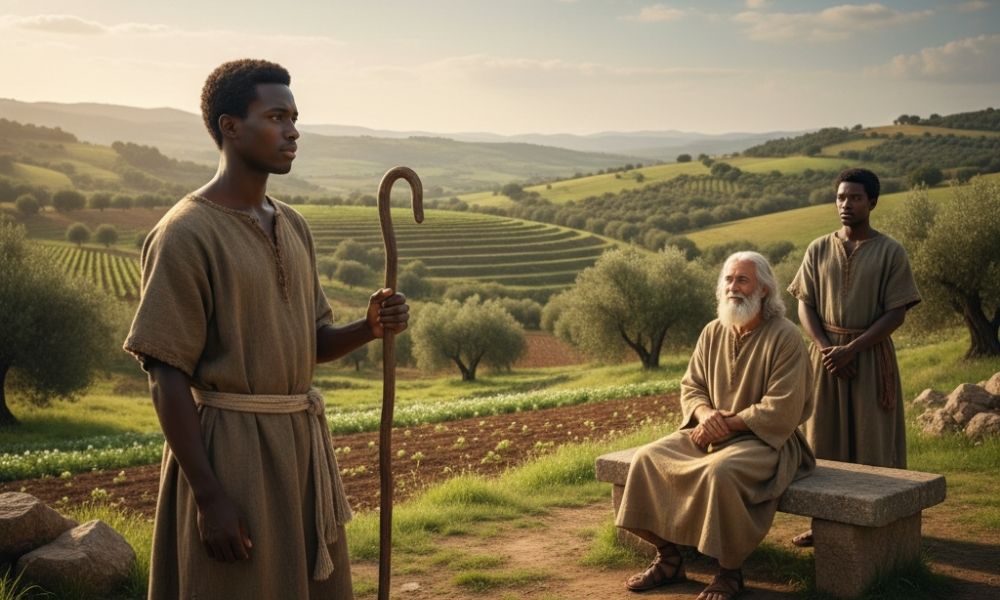
Ephraim stands out as one of the most pivotal figures in Israel’s ancestral story — not because of personal exploits, but because of the profound destiny spoken over him and the powerful tribe that emerged from his name. His life represents God’s surprising choices, the rise of a major national center, and the complex spiritual journey of Israel’s northern kingdom.
Name: Ephraim
Meaning: “Fruitfulness,” “Double fruit”
Father: Joseph, son of Jacob
Mother: Asenath, daughter of Potiphera (Egyptian background)
Brother: Manasseh (older)
Adopted By: Jacob, who elevated both sons to tribal heads
Position: Younger son who received the greater blessing
Region: Central highlands of Canaan; heartland of Israel’s early worship
Symbol: A fruitful bough, ox, or branches
Known For: Dominant role in Israel’s tribal confederation
Lineage and Family Background
Ephraim was born in Egypt during Joseph’s years of authority under Pharaoh. His mixed Hebrew-Egyptian heritage symbolized Israel’s ability to grow and thrive even in foreign lands. When Jacob arrived in Egypt, he formally adopted Ephraim and Manasseh, elevating them to the status of his own sons. This act gave Joseph a “double portion,” fulfilling the honor typically given to the firstborn.
Jacob’s intentional crossing of hands — blessing the younger Ephraim above the older Manasseh — set the stage for Ephraim’s future prominence. This pattern echoes earlier reversals in Scripture, where God chose the unexpected (Isaac over Ishmael, Jacob over Esau).
Biblical Era and Context
Ephraim’s tribe rose to prominence after the Israelites entered Canaan. Their territory covered fertile lands, major trade routes, and strategic highlands. Shiloh — the first long-term home of the tabernacle — lay within Ephraim’s borders. For over 300 years, Israel gathered here for worship, sacrifice, and national festivals.
During the period of the Judges, Ephraim often exercised both military and political influence. Their warriors were known for strength but also for strong pride, leading to clashes with other tribes, including Jephthah’s conflict in Judges 12.
Later, during the monarchy, Ephraim became the leading tribe of the northern kingdom after the national split. “Ephraim” eventually became a prophetic shorthand for all ten northern tribes.
Major Roles and Identity
- Tribal leader: Frequently acted as the central voice in Israel’s early tribal confederation.
- Religious center: Hosted the tabernacle in Shiloh, making it the spiritual heart of Israel before Jerusalem.
- Military power: Produced strong warriors and leaders.
- Symbol of the north: Represented the identity and rebellion of the northern kingdom.
- Bearer of Joseph’s blessing: Inherited the prophetic “fruitfulness” spoken by Jacob.
Key Character Traits (as a figure and a tribe)
- Fruitfulness: Rapid population growth and expansion.
- Influence: Central role in national decisions.
- Boldness: Often assertive, sometimes confrontational.
- Complexity: Capable of great loyalty to God but also vulnerable to idolatry.
Main Life and Tribal Events
- Adoption and Blessing (Genesis 48): Jacob crosses his hands, placing his right hand on Ephraim.
- Settlement in Canaan (Joshua 16–17): Tribe receives rich land near important cities.
- Era of Judges: Ephraim challenges Gideon; later clashes with Jephthah.
- Shiloh Era: Tabernacle stands in Ephraim for centuries.
- Monarchy Split (1 Kings 12): Jeroboam, an Ephraimite, leads the breakaway kingdom.
- Prophetic Warnings: Prophets like Hosea address “Ephraim” as a symbol of the nation’s spiritual struggle.
Major Relationships
- Jacob: Grandfather who spoke destiny over him.
- Joseph: Father whose faith shaped Ephraim’s heritage.
- Manasseh: Brother and occasional rival tribe.
- Joshua: A key descendant and Israel’s national leader.
- Prophets: Hosea, Isaiah, and Jeremiah address Ephraim repeatedly.
Notable Passages
- Genesis 48: Jacob’s crossed-hands blessing.
- Numbers 26: Tribe counted among Israel’s largest.
- Joshua 16–17: Territorial inheritance.
- Judges 8 & 12: Tribal disputes showing their pride and influence.
- Hosea 4–14: “Ephraim” as a symbol for Israel’s spiritual condition.
Legacy and Impact
Ephraim’s legacy is dual: great blessing and great responsibility. At their best, they carried spiritual leadership for the nation. At their worst, they drifted into pride and idolatry. Their story offers insight for African contexts today — reminding leaders and communities that influence must be guided by humility, faithfulness, and unity.
Symbolism / Typology
- Ephraim: Fruitfulness, leadership, influence.
- Crossed-hands blessing: God’s preference for the unexpected.
- Shiloh: Foundations of national worship.
- Northern kingdom: Consequences of spiritual drift.







Leave a Reply