

Gideon, also known as Jerubbaal, was one of Israel’s most remarkable judges — a man whom God raised up during a time of national despair and spiritual decline. Though Gideon saw himself as weak and insignificant, God called him a “mighty man of valor” (Judges 6:12). Through Gideon, God delivered Israel from seven years of oppression by the Midianites using only 300 men — a miracle that proved victory belongs to the Lord, not to human strength. Gideon’s life reveals the transforming power of faith, courage born from obedience, and the dangers of forgetting God after success.
Quick Facts
- Name: Gideon (Hebrew: Gid‘on, meaning “hewer” or “one who cuts down”)
- Also Called: Jerubbaal (“Let Baal contend with him”) — Judges 6:32
- Tribe: Manasseh
- Father: Joash the Abiezrite
- Mother: Not named
- Birthplace: Ophrah, in the territory of Manasseh
- Occupation: Farmer and thresher of wheat before being called by God
- Period of Rule: Approximately 40 years of peace (Judges 8:28)
- Era: Period of the Judges (~1200–1100 BCE)
- Key Enemies: Midianites and Amalekites
- Key Events: Call of Gideon, destruction of Baal’s altar, the fleece test, victory over Midian, Israel’s peace
- Died: At a good old age; buried in Ophrah (Judges 8:32)
- Legacy: A humble man who trusted God and led Israel to victory against overwhelming odds
Name Meaning
Gideon means “hewer” or “cutter down,” which prophetically fits his mission — he “cut down” both the altar of Baal and the armies of Midian. His alternate name, Jerubbaal, means “Let Baal contend,” given after he destroyed the pagan idol, declaring that the false god must defend himself (Judges 6:32).
Lineage / Family Background
- Tribe: Manasseh — one of the smaller tribes of Israel
- Father: Joash, owner of an altar to Baal
- Home: Ophrah of the Abiezrites
- Family Position: Youngest son in a poor household (Judges 6:15)
- Cultural Context: Israel was suffering under Midianite oppression; crops were stolen, and people hid in caves (Judges 6:2–6).
Biblical Era / Timeline
- Historical Setting: During the time of the Judges — a period of spiritual decline and cyclical sin
- Approximate Period: Between 1200 and 1100 BCE
- Context: Israel had turned from God to idols; God allowed Midian to oppress them until they cried out for deliverance (Judges 6:1–6).
Major Roles / Identity
- Judge and Deliverer of Israel — called by God to free Israel from Midian
- Warrior of Faith — led a small band of 300 men to victory
- Reformer — destroyed idols and restored true worship
- Man of Faith and Doubt — sought assurance through signs but obeyed God’s call
Key Character Traits
- Strengths: Faith, humility, obedience, leadership, strategic thinking, reliance on God
- Weaknesses: Fearful, hesitant, occasionally prideful after success
- Transformation: From a fearful farmer to a fearless leader through God’s presence and power
Main Life Events
1. God’s Call (Judges 6:11–16)
While Gideon was secretly threshing wheat to hide from Midianite raiders, the Angel of the Lord appeared and greeted him:
“The Lord is with you, mighty man of valor!” (Judges 6:12)
Gideon doubted both himself and God’s presence, but God assured him that He would deliver Israel through Gideon’s hand.
2. Signs and Confirmation (Judges 6:17–40)
Gideon, uncertain of his divine mission, asked for multiple signs:
- Fire from heaven consumed his offering as proof of God’s calling (Judges 6:21).
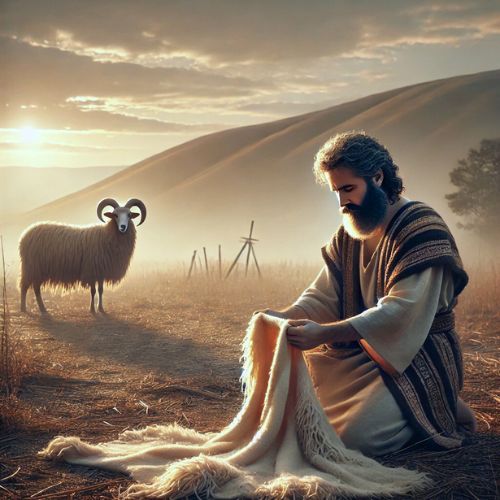
- The fleece tests: Gideon asked God to make a wool fleece wet while the ground was dry, and then vice versa — confirming God’s will (Judges 6:36–40).
3. Destruction of Baal’s Altar (Judges 6:25–32)
At God’s command, Gideon destroyed his father’s altar to Baal and built an altar to the Lord. The townspeople were enraged, but Joash defended him, saying,
“If Baal is a god, let him contend for himself.”
From that day, Gideon was called Jerubbaal.
4. Preparing for Battle (Judges 7:1–8)
Gideon assembled an army of 32,000 men. But God said,
“The people are too many for Me to give the Midianites into their hands.”
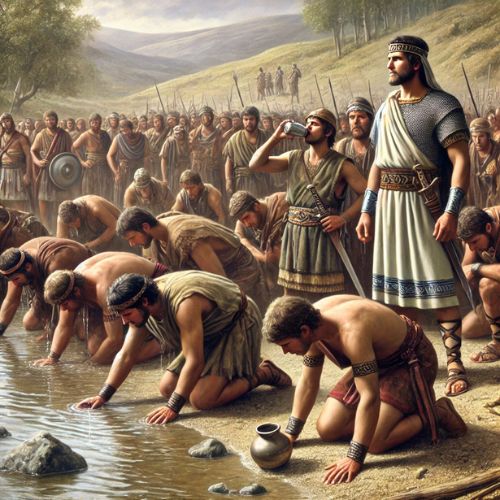
To ensure that the victory would glorify God alone, He reduced the army to 300 men who lapped water with their hands — the most alert and disciplined.
5. The Night Attack (Judges 7:9–22)
Armed only with trumpets, clay jars, and torches, Gideon’s men surrounded the Midianite camp.
At Gideon’s signal, they broke the jars, blew the trumpets, and shouted:
“A sword for the Lord and for Gideon!”
The Midianites, in confusion, turned their swords against each other, fleeing in terror. The victory was total — achieved without conventional weapons.
6. Pursuit and Final Victory (Judges 7:23–8:21)
Gideon pursued the fleeing Midianite kings, Zebah and Zalmunna, across the Jordan, capturing and executing them. He restored peace to Israel and destroyed the enemy completely.
7. Refusal of Kingship and the Ephod (Judges 8:22–27)
The Israelites offered Gideon kingship, but he humbly refused, saying:
“I will not rule over you… the Lord shall rule over you.” (Judges 8:23)
However, Gideon later made an ephod (a priestly garment) from the gold collected in battle. Sadly, Israel began to worship it, and it became a snare for Gideon’s family (Judges 8:27).
8. Death and Aftermath (Judges 8:28–35)
Gideon died at an old age and was buried in his hometown of Ophrah. After his death, Israel once again turned to idolatry, forgetting the Lord and the deliverance He had provided through Gideon.
Major Relationships
- God: Patient and empowering; strengthened Gideon’s weak faith
- Joash (Father): Supported Gideon after the destruction of Baal’s altar
- Midianites: Enemies whom Gideon defeated by God’s power
- 300 Soldiers: Loyal warriors chosen by God to share in the miraculous victory
- Abimelech (Son): Later rebelled and tried to become king, causing bloodshed (Judges 9)
Notable Stories / Passages
- The Call of Gideon — Judges 6:11–24
- The Fleece Signs — Judges 6:36–40
- Destruction of Baal’s Altar — Judges 6:25–32
- The Battle of the 300 — Judges 7:1–25
- Refusal of Kingship — Judges 8:22–23
- Peace for 40 Years — Judges 8:28
Legacy & Impact
Gideon’s story stands as one of the greatest demonstrations of faith overcoming fear. His journey from doubt to boldness illustrates how God equips the called, not the already capable. Despite his initial fear and need for signs, Gideon’s obedience brought freedom to Israel and restored true worship. His 300 men became a symbol of divine victory — showing that God’s strength is perfected in weakness (2 Corinthians 12:9).
However, Gideon’s later actions serve as a warning: even great leaders must remain humble and vigilant against idolatry. His life reflects both triumph through faith and the subtle dangers of spiritual pride after success.
Symbolism / Typology
- Gideon’s Fleece: Symbolizes seeking God’s will and assurance through prayer
- The 300 Men: Represent total dependence on God rather than human might
- The Broken Jars and Light: Symbolize the breaking of human weakness to reveal God’s glory
- Gideon as a Type of Christ: A deliverer raised by God to free His people from oppression
Extra-Biblical Notes
- Mentioned in Hebrews 11:32–34 among the heroes of faith: “Through faith they conquered kingdoms, administered justice, and gained what was promised.”
- Revered in Jewish and Christian tradition as a symbol of courage born from divine calling
- His story is often cited in lessons on leadership, faith, humility, and divine empowerment







Leave a Reply