
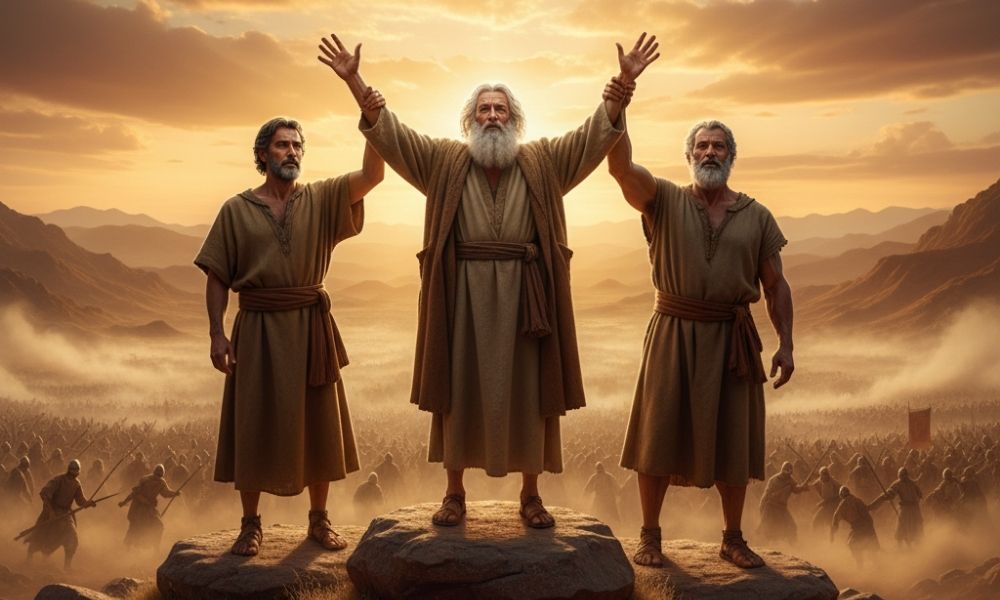
Hur was a respected elder and leader among the Israelites during the Exodus. Though not as widely known as Moses or Aaron, Hur played a vital role in Israel’s early victories and governance. His loyalty, courage, and quiet strength made him a steadfast pillar of support in the nation’s formative years.
Quick Facts
Name: Hur (Hebrew: חוּר, Chur — “Freedom,” “Noble,” or “White”)
Tribe: Judah (according to Jewish tradition)
Era: Exodus and Wilderness period (~13th century BCE)
Role: Elder, leader, and supporter of Moses
Father of: Uri
Grandfather of: Bezalel, the chief artisan of the Tabernacle (Exodus 31:2)
Associates: Moses, Aaron, Joshua
Symbol: Raised hands — symbolizing faith, support, and divine victory
Name Meaning
The name Hur carries meanings such as “noble,” “freedom,” or “pure.” It reflects the dignity and steadfast faith he displayed throughout Israel’s journey. His character exemplified integrity and selfless service — virtues foundational to the nation’s spiritual and moral strength.
Lineage and Family Background
Hur is traditionally believed to be from the tribe of Judah, the same lineage from which King David and later Jesus Christ would descend. His family continued to serve God in important roles:
- His son, Uri, is mentioned in Exodus 31:2.
- His grandson, Bezalel, was filled with the Spirit of God to design and construct the Tabernacle — showing how Hur’s legacy of devotion carried on through his descendants.
Major Life Events
- Battle Against Amalek (Exodus 17:10–13):
When Israel fought against the Amalekites, Hur and Aaron stood beside Moses on a hill. As long as Moses’ hands were raised, Israel prevailed. When his hands grew weary, Hur and Aaron supported them — a powerful image of partnership, prayer, and perseverance in faith. - Leader During Moses’ Absence (Exodus 24:14):
Before ascending Mount Sinai, Moses entrusted the leadership of Israel to Aaron and Hur, showing the deep trust he placed in Hur’s wisdom and integrity. Hur helped maintain order and guidance among the people during this critical time. - Possible Martyrdom (Jewish Tradition):
Some Jewish traditions suggest Hur opposed the people when they demanded the golden calf and was killed for his faithfulness — a testimony to his courage and loyalty to God, though this is not explicitly stated in Scripture.
Character and Virtues
- Loyalty: Always stood by Moses and supported God’s appointed leadership.
- Courage: Fearlessly upheld righteousness, even amid rebellion.
- Faith: Believed in God’s power to deliver and guide His people.
- Humility: Served faithfully behind the scenes without seeking recognition.
- Strength: Offered both physical and spiritual strength when Moses grew weary.
Legacy and Impact
Hur’s influence extended beyond his lifetime. His descendants played key roles in Israel’s worship — most notably his grandson Bezalel, who designed the Tabernacle, the Ark of the Covenant, and other sacred objects. Hur’s example of humble service reminds believers that God honors those who support His work faithfully, even when their roles are quiet or unseen.
He stands as a model of steadfast faith and godly cooperation, demonstrating that great victories often depend on those who faithfully stand alongside their leaders.
Notable Passages
- Exodus 17:10–12: Hur and Aaron uphold Moses’ hands during Israel’s battle with Amalek.
- Exodus 24:14: Moses leaves Hur and Aaron in charge of the people while he ascends Mount Sinai.
- Exodus 31:2: Mentions Bezalel, Hur’s grandson, as the Spirit-filled craftsman of the Tabernacle.
Symbolism and Typology
- Hur — symbolizes faithful support and the strength of community in God’s mission.
- Raised Hands — represent prayer, intercession, and dependence on God.
- His Family Line — signifies how faithfulness in one generation blesses the next.







Leave a Reply