
Ishbosheth was the fourth and youngest son of King Saul, and for two turbulent years, the rival king of Israel against David. His reign represents the desperate, gasping end of the House of Saul. While David was anointed king over the tribe of Judah in Hebron, Ishbosheth was installed as a puppet king over the remaining tribes of Israel by his ambitious general, Abner. His story is one of political intrigue, betrayal, and weakness—a man thrust into a position of power he did not seek and could not hold, ultimately becoming a tragic victim of the violent transition between dynasties.
Quick Facts
- Name: Ishbosheth (born Eshbaal)
- Meaning: “Man of Shame” (originally “Man of Baal/Master”)
- Tribe/Nation: Benjamin, Israel
- Era: Early United Monarchy / Civil War (~1000 BCE)
- Father: King Saul
- Mother: Ahinoam
- General: Abner (his cousin and manipulator)
- Rival: King David
- Death: Assassinated in his bed by his own captains
- Reign: 2 years over “all Israel” (excluding Judah)
Name Meaning
Eshbaal vs. Ishbosheth: His birth name, found in 1 Chronicles 8:33, was Eshbaal (Hebrew: Ish-Baal), meaning “Man of the Lord” or “Man of Baal.” At the time, “Baal” could simply mean “Master” or “Lord” and was sometimes used for Yahweh, though it later became exclusively associated with the Canaanite storm god. The Change: The scribes of 2 Samuel likely altered his name to Ishbosheth (Ish-Bosheth), meaning “Man of Shame,” to avoid pronouncing the name of a pagan deity and to reflect the ignominy of his failed reign.
Lineage / Family Background
Origin: The youngest son of Saul, he survived the Battle of Gilboa simply because he was not present, unlike his brothers Jonathan, Abinadab, and Malki-Shua who died fighting. Succession: As the only surviving legitimate heir, he was the legal claimant to Saul’s throne according to standard succession laws, though not according to divine election.
Biblical Era / Context
The “Long War”: His reign occurred during the “long war between the house of Saul and the house of David” (2 Samuel 3:1). Geopolitics: The kingdom was split. David ruled the south (Judah) from Hebron, while Ishbosheth ruled the north (Israel) from Mahanaim, a city east of the Jordan River, chosen for its safety from the Philistines.
Major Roles / Identity
The Puppet King: The text makes it clear that Abner, the commander of the army, was the true power behind the throne. Abner “made him king” (2 Samuel 2:9) and “strengthened himself in the house of Saul” (2 Samuel 3:6). The Obstacle: He stood as the final human barrier preventing David from uniting the twelve tribes. The Victim: He was murdered not in battle, but in his sleep, by two of his own military captains seeking a reward from David.
Key Character Traits
Passivity: He rarely acts; things are usually done to him or for him. Fear: When Abner threatened to defect to David, Ishbosheth “could not answer Abner a word again, because he feared him” (2 Samuel 3:11). Naivety: He appeared unaware of the treachery brewing within his own ranks.
Main Life Events
Coronation at Mahanaim: Following the disaster at Gilboa, Abner took Ishbosheth across the Jordan to Mahanaim and declared him king over Gilead, the Ashurites, Jezreel, Ephraim, and Benjamin.
The Rift with Abner (2 Samuel 3): Ishbosheth accused Abner of sleeping with Rizpah, one of Saul’s concubines. In the ancient Near East, taking a king’s concubine was a claim to the throne. Though Ishbosheth was likely correct to be suspicious, his confrontation backfired spectacularly. An enraged Abner immediately vowed to hand the kingdom over to David.
Loss of Support: After Abner was killed by Joab (David’s general), Ishbosheth’s “hands were feeble, and all the Israelites were troubled” (2 Samuel 4:1). He knew his reign was over.
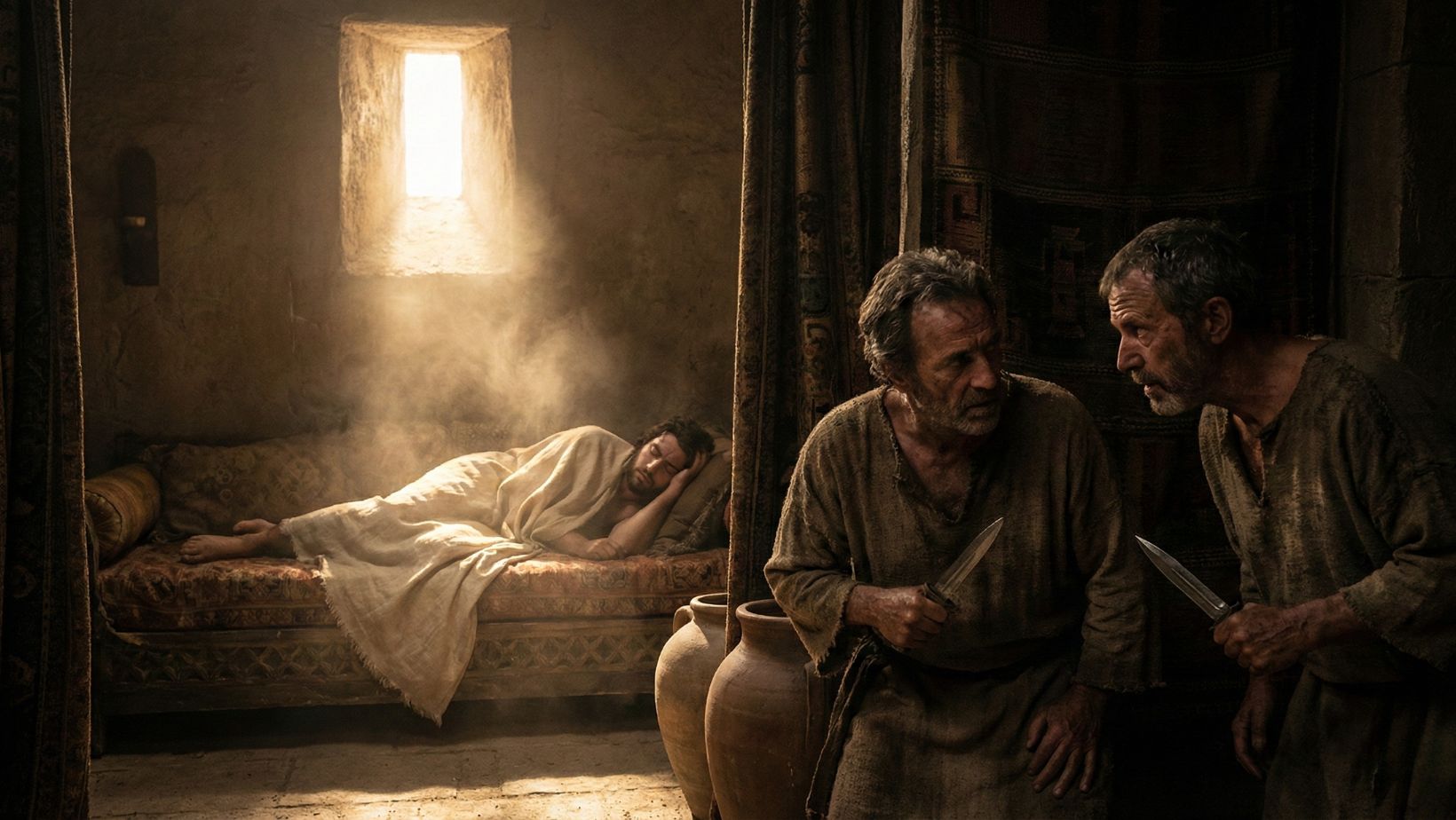
Assassination (2 Samuel 4): Two of his captains, Recab and Baanah, entered his house during the heat of the day while he was napping. They stabbed him in the stomach, beheaded him, and brought his head to David in Hebron, expecting a reward.
David’s Justice: Just as with the Amalekite who claimed to kill Saul, David was horrified. He executed the assassins for killing a “righteous person in his own house upon his bed” and buried Ishbosheth’s head with honor in Abner’s tomb.
Major Relationships
Abner: The definition of a toxic power dynamic. Abner used Ishbosheth for legitimacy but discarded him when convenient. David: The rival he never met. David respected Ishbosheth as “righteous” (innocent of capital crime) and refused to take the throne by murdering him. Mephibosheth: His nephew (Jonathan’s son). Ishbosheth’s death left Mephibosheth as the sole survivor of the house, vulnerable and crippled.
Notable Passages
2 Samuel 2:8–10: “But Abner the son of Ner, captain of Saul’s host, took Ishbosheth the son of Saul, and brought him over to Mahanaim; And made him king… Ishbosheth Saul’s son was forty years old when he began to reign over Israel, and reigned two years.”
2 Samuel 3:11: “And he could not answer Abner a word again, because he feared him.”
2 Samuel 4:5–7: “…and they [Recab and Baanah] came about the heat of the day to the house of Ishbosheth, who lay on a bed at noon… and they smote him… and beheaded him.”
Legacy & Impact
The End of an Era: His death marked the definitive end of the House of Saul as a ruling power. David’s Integrity: The manner of Ishbosheth’s death provided David another opportunity to demonstrate that he did not seize power through assassination, helping to win the trust of the northern tribes.
Symbolism / Typology
The Sleeping King: Ishbosheth is often seen as a symbol of spiritual lethargy and weakness—a leader asleep at the wheel while his kingdom crumbles. “Man of Shame”: A sobering reminder that a legacy built on flesh and blood (lineage) rather than God’s anointing ends in shame.





Leave a Reply