
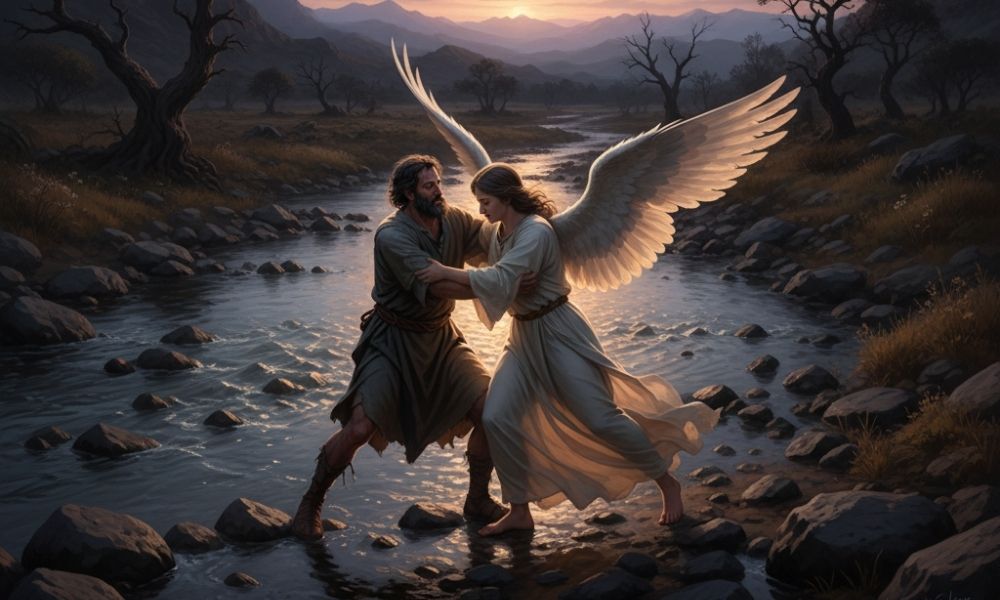
Jacob was one of the great patriarchs of Israel — the son of Isaac and grandson of Abraham. His life is a story of struggle, faith, and transformation. Known for his cleverness and persistence, Jacob wrestled with both man and God, ultimately becoming Israel, the father of the twelve tribes that would form the nation of Israel. His journey from a cunning young man to a man of faith reveals God’s sovereign plan and transforming grace.
Name: Jacob (Hebrew: Ya‘aqov, meaning “Supplanter” or “One who grasps the heel”)
Tribe/Nation: Israel
Era: Patriarchal Period (~19th century BCE)
Father: Isaac
Mother: Rebekah
Twin Brother: Esau
Wives: Leah and Rachel
Concubines: Bilhah and Zilpah
Children: Twelve sons (ancestors of the twelve tribes of Israel) and one daughter (Dinah)
Home: Beersheba → Haran → Canaan → Egypt
Book: Genesis (Chapters 25–50)
Key Virtues: Perseverance, faith, transformation
Legacy: Father of the twelve tribes of Israel; renamed “Israel” by God
Symbol: Ladder to heaven — representing divine connection and revelation
Name Meaning
Jacob means “he grasps the heel” or “supplanter,” referencing his birth holding Esau’s heel (Genesis 25:26). The name foreshadows his early life of striving and struggle — first with his brother, and later with God Himself.
Lineage / Family Background
Jacob was the younger twin son of Isaac and Rebekah, and the grandson of Abraham, to whom God gave the covenant promise. His family lineage established him as a central figure in God’s plan to build a chosen nation.
- Grandfather: Abraham — recipient of God’s covenant
- Father: Isaac — continued the covenant line
- Mother: Rebekah — favored Jacob and helped him secure Isaac’s blessing
- Brother: Esau — elder twin, ancestor of the Edomites
Major Roles / Identity
- Patriarch of the nation of Israel
- Receiver of God’s covenant promise
- Father of the twelve tribes
- Spiritual pilgrim transformed through divine encounters
Key Character Traits
- Determined: Persisted in obtaining blessings, even through struggle
- Clever: Used wit to gain Esau’s birthright and Isaac’s blessing
- Faithful: Eventually trusted fully in God’s promises
- Transformative: His life demonstrates how God refines flawed people
Main Life Events
- Birth and Early Rivalry: Born grasping Esau’s heel; later buys his brother’s birthright (Genesis 25:29–34).
- Deception for the Blessing: With Rebekah’s help, deceives Isaac to receive the firstborn’s blessing (Genesis 27).
- Flight to Haran: Flees from Esau’s anger and finds refuge with his uncle Laban.
- Vision at Bethel: Sees a ladder reaching to heaven, receives God’s covenant promise (Genesis 28:10–22).
- Marriage and Children: Marries Leah and Rachel, and fathers twelve sons and one daughter.
- Wrestling with God: Encounters God and is renamed Israel (“He struggles with God”) after wrestling through the night (Genesis 32:24–30).
- Reunion with Esau: Humbly reconciles with his brother (Genesis 33).
- Return to Canaan: Settles in Canaan and later moves to Egypt during famine (Genesis 46–47).
Major Relationships
- God: Transformed Jacob from a deceiver into a man of faith.
- Esau: Twin brother and rival, later reconciled.
- Rachel: His beloved wife, mother of Joseph and Benjamin.
- Leah: First wife, mother of six sons including Judah (the Messianic line).
- Joseph: His favored son, who rose to power in Egypt.
Notable Passages
- Genesis 28:12–15: Jacob’s dream of a ladder to heaven — God reaffirms the Abrahamic covenant.
- Genesis 32:28: “Your name shall no longer be Jacob, but Israel, for you have struggled with God and with men and have prevailed.”
- Genesis 35:11–12: God blesses him: “A nation and a company of nations shall come from you.”
Legacy & Impact
Jacob’s descendants became the nation of Israel, fulfilling God’s covenant promise to Abraham. His life shows how God’s grace can transform the deceitful into the faithful and how divine purposes triumph through human weakness.
- Father of the twelve tribes of Israel
- His name “Israel” becomes the name of God’s chosen nation
- His faith and transformation symbolize perseverance and redemption
Symbolism / Typology
- Jacob’s Ladder: Symbol of the connection between heaven and earth — God’s revelation to humanity.
- Renaming to Israel: Symbolizes transformation through divine struggle.
- Twelve Sons: Represent the fullness of God’s covenant people.
Extra-Biblical References
- Honored in Jewish, Christian, and Islamic traditions as a patriarch.
- Mentioned in Matthew 8:11 as one who sits in the kingdom of heaven.
- His story is a testament to God’s faithfulness across generations.







Leave a Reply