
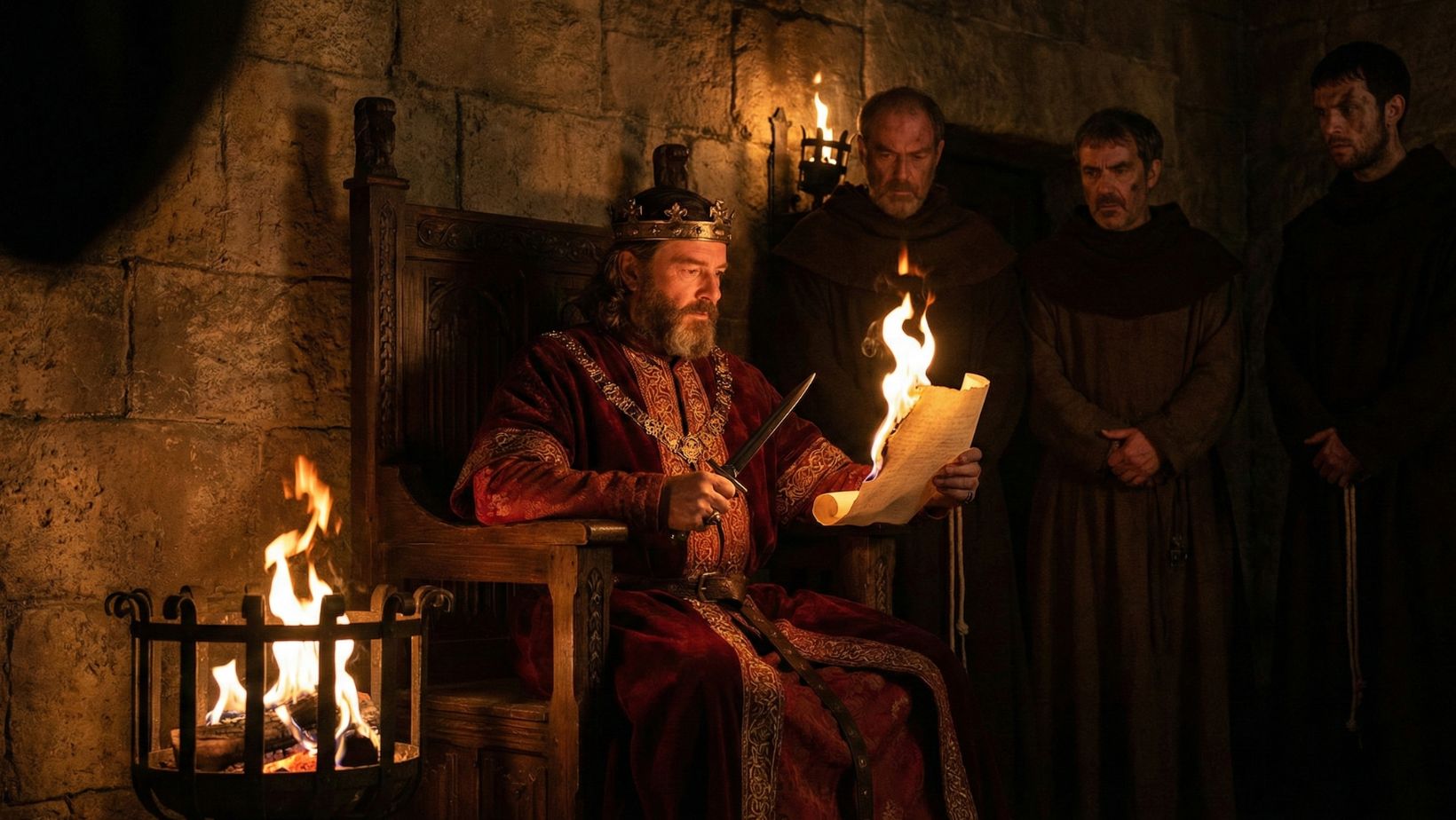
Jehoiakim (reigned 609–598 BC) stands as one of the most antagonistic kings of Judah toward the prophetic word. Born as Eliakim, he was placed on the throne as a puppet king by Pharaoh Neco of Egypt after the deposition of his brother Jehoahaz. His reign was marked by heavy taxation to pay Egyptian tribute, the construction of lavish palaces through forced labor, and religious persecution. The defining moment of his character is recorded in Jeremiah 36, where he brazenly cuts up and burns a scroll containing the prophecies of Jeremiah. Unlike his father Josiah, who tore his clothes in repentance upon hearing God’s Word, Jehoiakim burned the Word in defiance. This act sealed his doom and the inevitable destruction of Jerusalem.
1. The Act of Defiance (Jeremiah 36:21–25 NLT)
21 The king sent Jehudi to get the scroll. Jehudi brought it from Elishama’s room and read it to the king as he stood alongside his officials. 22 It was late autumn, in the ninth month, and the king was in a winterized part of the palace, sitting in front of a fire to keep warm. 23 Each time Jehudi finished reading three or four columns, the king took a knife and cut off that section of the scroll. He then threw it into the fire, section by section, until the whole scroll was burned up. 24 Neither the king nor his attendants showed any signs of fear or repentance at what they heard. 25 Even when Elnathan, Delaiah, and Gemariah begged the king not to burn the scroll, he wouldn’t listen.
2. Detailed Commentary
The Historical Setting (v. 21–22)
- The Date: The text specifies the “ninth month” (Kislev, corresponding to November/December). This provides a vivid setting: it was cold, necessitating a fire.
- The Audience: The king is surrounded by his officials (princes). This was a public, official rejection of the prophetic message, not a private sin.
- The Winter Palace: Jehoiakim is depicted sitting in comfort “in front of a fire.” This imagery contrasts sharply with the content of the scroll, which warned of the coming fire of judgment from Babylon.
The Methodical Destruction (v. 23)
- The Knife: The “scribe’s knife” (penknife) was typically used to sharpen reed pens or trim parchment. Here, it is weaponized against the text itself.
- Piece by Piece: Jehoiakim did not throw the whole scroll in at once in a fit of sudden rage. The text says he waited for “three or four columns” to be read, then cut and burned them. This indicates a cold, calculated, and systematic dismantling of God’s authority. He listened to the warning, processed it, and chose to destroy it.
- Symbolism: By burning the scroll, Jehoiakim believed he could nullify the prophecy. He operated under the magical thinking that destroying the medium would stop the fulfillment.
The Absence of Fear (v. 24)
- Contrast with Josiah: The narrator intends the reader to recall 2 Kings 22:11. When Jehoiakim’s father, King Josiah, heard the Book of the Law, he “tore his clothes” in terror and repentance.
- Hardened Hearts: Verse 24 explicitly notes that neither the king nor his attendants showed fear. This demonstrates a “seared conscience” (1 Timothy 4:2). They had reached a point of spiritual numbness where the threat of divine wrath provoked no emotio1nal or spiritual response.23
The Failed Intercession (v. 25)45
- The Moderate Voices: Elnathan, Delaiah, and Gemariah represent the few officials who still held respect for Yahweh. They “begged” the king to stop.67
- Obstina8cy: The king’s refusal to listen highlights his absolute sovereignty in his own m9ind. He rejected not only God’s voice (Jeremiah) but also the wise counsel of his own cabinet.
3. Theological Significance
The Indestructibility of the Word
- futility of Censorship: Immediately after this passage (Jeremiah 36:27–32), God commands Jeremiah to take another scroll and write the same words again, adding even more judgments against Jehoiakim.
- Doctrine: This teaches that human opposition cannot silence God. Burning the Bible does not destroy its truth; it only guarantees the judgment written within it. “The grass withers and the flowers fade, but the word of our God stands forever” (Isaiah 40:8).
The Nature of Rebellion
- Selective Hearing: Jehoiakim illustrates the human tendency to edit God’s authority. He was willing to be King over God’s people but unwilling to submit to God’s rule.
- Presumption: Jehoiakim presumed that his position (Davidic King) protected him from the requirements of the Covenant. He viewed religion as a tool for state stability, not a submission to a Sovereign God.
Type of the Anti-Christ Spirit
- Persecutor: Earlier in his reign (Jeremiah 26:20–23), Jehoiakim hunted down and murdered the prophet Urijah. His violence against the prophets and the Word identifies him as an archetype of those who violently oppose the Kingdom of God.
4. Comparison: Josiah vs. Jehoiakim
| Feature | King Josiah (Father) | King Jehoiakim (Son) |
| Reaction to Word | Tore his clothes (Repentance) | Cut the scroll (Defiance) |
| Attitude | Humility | Arrogance |
| Treatment of Prophets | Consulted Huldah | Murdered Urijah; Sought Jeremiah |
| Social Policy | Defended the poor (Jer 22:15-16) | Oppressed the poor; Forced labor |
| End of Life | Died in battle; Mourned by all | Died in disgrace; Buried like a donkey |
5. Practical Applications
Response to Correction
- Conviction vs. Anger: When confronted with Scripture that challenges our lifestyle or sin, we have two options: “tear our clothes” (repent) or “burn the scroll” (ignore/attack the message).
- Danger of Gradual Hardening: Jehoiakim didn’t wake up one day deciding to burn scrolls. It began with compromising justice (building his palace) and ignoring smaller warnings. Hardness of heart is a progressive condition.
The Authority of Scripture
- Rejection has Consequences: We cannot veto God’s truth. Ignoring biblical warnings about sin, judgment, or ethics does not remove the reality of those things.
- Legacy: Jehoiakim is remembered solely for his arrogance. Our legacy is defined by how we handle the truth entrusted to us.







Leave a Reply