
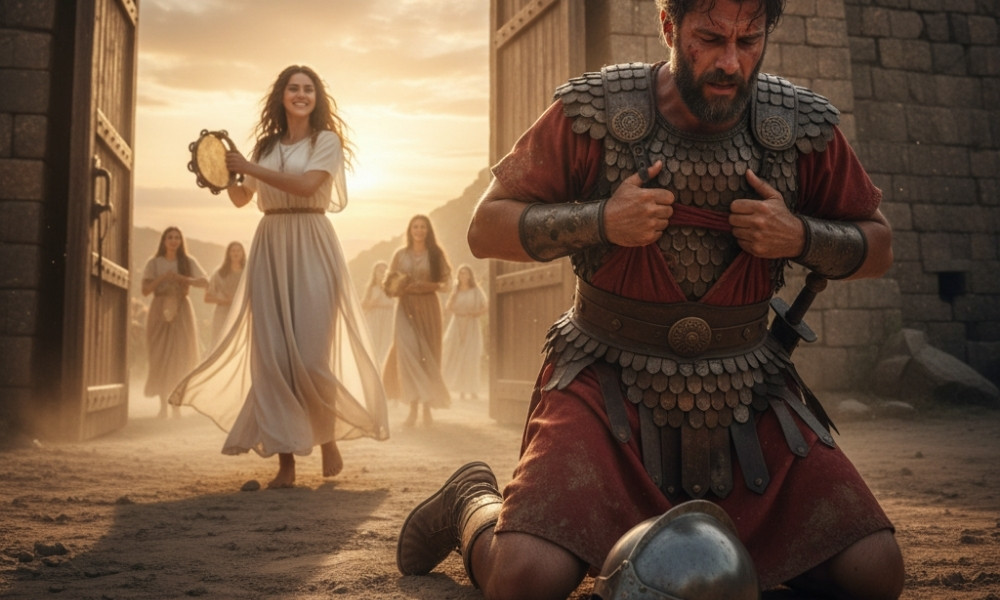
Jephthah is the tragic hero of the Book of Judges. A mighty warrior born of a prostitute and rejected by his family, he rose from being a leader of outcasts to become the deliverer of Gilead. However, his story is overshadowed by a rash and devastating vow that cost him his only child. Jephthah’s narrative is a dark study in the consequences of mixing faith in Yahweh with the pagan concept of transactional sacrifice. He is also famous for the “Shibboleth” incident, a brutal civil war that highlighted the deep fractures within the tribes of Israel.
- Name: Jephthah (Hebrew: Yiftach)
- Meaning: “He Opens” or “God Opens”
- Role: Judge, Bandit Chief, Commander
- Tribe: Manasseh (Gilead region)
- Father: Gilead
- Mother: An unnamed prostitute
- Home: The land of Tob; later Mizpah in Gilead
- Adversary: The Ammonites; The Tribe of Ephraim
- Key Event: The Rash Vow and the sacrifice of his daughter
- Scripture: Judges 11–12
- Legacy: Defeated Ammon; 42,000 Ephraimites killed at the Jordan
Name Meaning
“He Opens”: The name Yiftach is likely a shortened form of Yiftach-el (“God opens” or “God sets free”). Irony: The name carries a bitter irony. Jephthah “opened” his mouth to make a foolish vow (Judges 11:35: “I have opened my mouth to the Lord, and I cannot take it back”), which resulted in the closing of his family line.
Lineage / Family Background
The Outcast: Jephthah was the son of Gilead (either the man or a descendant of the region) and a prostitute. His legitimate half-brothers drove him out to ensure he would not inherit any family property.
The Bandit King: After being exiled, he settled in the land of Tob (modern Syria/Jordan border), where “worthless fellows” (social outcasts/mercenaries) gathered around him. This time in the wilderness honed his skills as a guerilla military commander.
Biblical Era / Context
The Ammonite Threat: The Ammonites, descendants of Lot living to the east, claimed that Israel had stolen their land when they came up from Egypt. They crossed the Jordan to oppress Judah, Benjamin, and Ephraim. Spiritual Confusion: By this point in Judges, Israel was worshiping the gods of seven different nations. Jephthah’s theology reflects this syncretism; he worships Yahweh, but he treats Him like a pagan god who needs to be bribed with human sacrifice.
Major Roles / Identity
The Negotiator: Before fighting, Jephthah engaged in a detailed diplomatic exchange with the King of Ammon, displaying a deep knowledge of Israelite history and the Torah (Numbers 20–21).
The Tragic Father: He is defined by the vow he made to sacrifice “whatever comes out of the doors of my house” if God gave him victory. He expected an animal; he got his daughter.
The Civil War Leader: Unlike Gideon, who de-escalated conflict with the tribe of Ephraim, Jephthah responded to their insults with swords, leading to a massacre at the fords of the Jordan.
Key Character Traits
Transactional Faith: Jephthah viewed his relationship with God as a contract: “If You give me X, I will give You Y.”
Integrity (to a fault): Despite the horror of the outcome, he refused to break his oath to Yahweh. “I have opened my mouth… I cannot take it back.”
Bitterness: His dialogue with the elders of Gilead (“Did you not hate me and drive me out?”) reveals a man deeply wounded by rejection, seeking validation through power.
Main Life Events
The Recall: The elders of Gilead, desperate for a leader against Ammon, begged the exiled Jephthah to return. He agreed only on the condition that he become their permanent head/ruler.
The Diplomacy: Jephthah sent messengers to the Ammonite king, arguing that Israel took the land from the Amorites (Sihon and Og), not the Ammonites, and that Yahweh had given it to them 300 years prior.
The Vow: Inspired by the Spirit of the Lord to fight, but lacking confidence, he vowed to offer a burnt offering of the first thing to greet him upon his return.
The Victory: He devastated the Ammonites, capturing twenty cities.
The Return: As he returned to Mizpah, his only child—a daughter—came out dancing with tambourines to greet him. Jephthah tore his clothes in agony.
The Fulfillment: After allowing her two months to mourn her virginity, he “did to her according to his vow.” (While some argue she was merely dedicated to tabernacle service, the text’s use of “burnt offering” and the grim tone strongly imply human sacrifice).
The Shibboleth Incident: The tribe of Ephraim, angry at being left out of the war (and the loot), threatened Jephthah. Jephthah’s army seized the fords of the Jordan. To identify fleeing Ephraimites, they made them say “Shibboleth.” Ephraimites, unable to pronounce the “sh” sound, said “Sibboleth,” and were executed. 42,000 died.
Major Relationships
Jephthah’s Daughter: A figure of immense pathos. She is unnamed but displayed incredible piety and submission to her father’s rash oath, accepting her fate for the sake of the victory God gave Israel.
The Elders of Gilead: A relationship born of necessity. They used him for his sword; he used them for status.
Notable Passages
Judges 11:30–31: “If you will give the Ammonites into my hand, then whatever comes out from the doors of my house to meet me… shall be the Lord’s, and I will offer it up for a burnt offering.”
Judges 11:35: “Alas, my daughter! You have brought me very low… for I have opened my mouth to the Lord, and I cannot take it back.”
Judges 12:6: “They said to him, ‘Then say Shibboleth,’ and he said, ‘Sibboleth,’ for he could not pronounce it right. Then they seized him and slaughtered him at the fords of the Jordan.”
Legacy & Impact
The Danger of Rash Words: Jephthah serves as a timeless warning against making foolish, impulsive promises to God (Ecclesiastes 5:2).
“Shibboleth”: The word has entered the English language to describe a custom, phrase, or principle that distinguishes one group of people from another (an “in-group” test).
Hall of Faith: Despite his catastrophic error, Jephthah is listed in Hebrews 11:32 for his faith in trusting God for victory over the Ammonites.
Symbolism / Typology
The Sacrifice: Jephthah’s daughter is often seen as an “anti-Isaac.” Where God provided a ram to stop Abraham from sacrificing his son, God remained silent with Jephthah, perhaps allowing the tragic consequence of Jephthah’s pagan-influenced theology to play out.
The Broken Judge: Jephthah represents the deteriorating state of the Judges. Unlike Othniel (who had no flaws), Jephthah is a mix of Spirit-empowered strength and deep theological ignorance.
Extra-Biblical References
Jewish Tradition: The Midrash criticizes Jephthah heavily, suggesting he could have had the vow annulled by the High Priest (Phinehas), but his pride prevented him from going, and Phinehas’s pride prevented him from coming to Jephthah. Both were judged for this failure.
Comparison to Greek Myth: The story bears a striking resemblance to the Greek myth of Idomeneus or Agamemnon (who sacrificed his daughter Iphigenia for favorable winds), reflecting the common ancient Near Eastern tropes of tragic vows.







Leave a Reply