
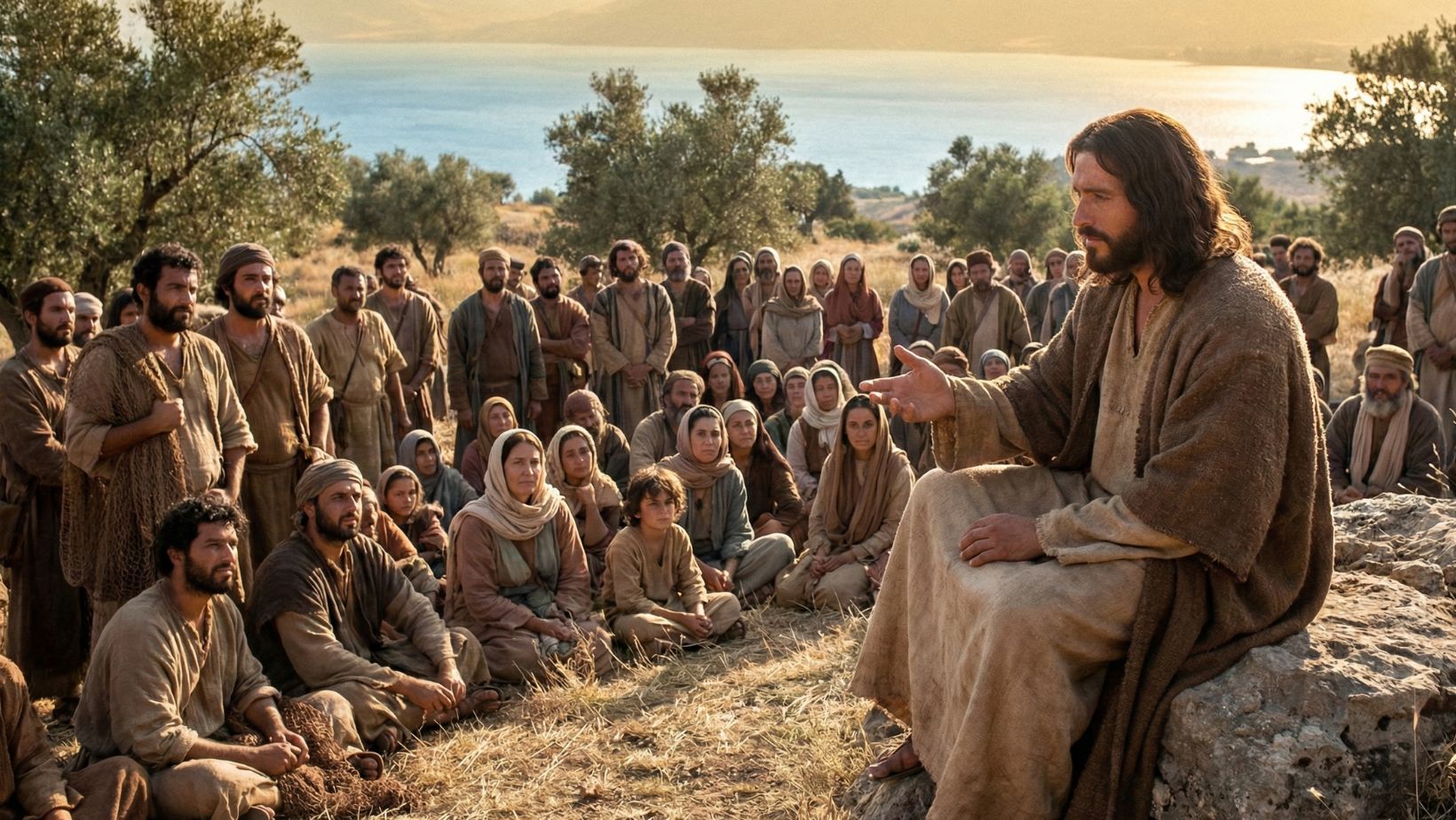
Jesus Christ is the Son of God, the Messiah foretold in the Old Testament, and the Redeemer of humanity. Through His sinless life, sacrificial death, and victorious resurrection, He fulfilled God’s redemptive plan and opened the way for eternal life to all who believe. His teachings, miracles, and love for humanity remain the cornerstone of the Christian faith and the foundation of hope for billions around the world.
- Name: Jesus (Yeshua, Hebrew for “Yahweh saves”)
- Titles: Christ (Messiah), Son of God, Lord, Savior, Lamb of God, King of Kings
- Born: c. 4 BCE, Bethlehem, Judea
- Raised in: Nazareth, Galilee
- Tribe: Judah (descendant of King David)
- Parents: Mary (mother), Joseph (legal father)
- Occupation: Carpenter, Rabbi (Teacher)
- Public Ministry: About 3 years (c. 27–30 CE)
- Key Events: Baptism, Miracles, Crucifixion, Resurrection, Ascension
- Died: c. 30–33 CE, crucified at Golgotha, Jerusalem
- Resurrection: Third day after His death
- Ascension: Taken up to heaven (Acts 1:9–11)
- Core Message: “Repent, for the Kingdom of Heaven is at hand.”
- Legacy: Founder and cornerstone of Christianity
- Symbol: The Cross — representing redemption, love, and victory over sin and death
Meaning of His Name
The name Jesus means “Yahweh is salvation,” signifying His divine purpose: to save humanity from sin (Matthew 1:21). The title Christ comes from the Greek Christos, meaning “Anointed One,” corresponding to the Hebrew Mashiach (Messiah). Together, “Jesus Christ” means “Jesus the Messiah — God’s Anointed Savior.”
Lineage and Birth
Jesus was born into the royal lineage of David, fulfilling prophecies that the Messiah would come from Judah’s tribe (Genesis 49:10; Isaiah 11:1).
- Father (legal): Joseph, a carpenter, descendant of King David (Matthew 1:1–16)
- Mother: Mary, a young virgin chosen by God (Luke 1:26–38)
- Birthplace: Bethlehem (fulfilling Micah 5:2)
- Raised in: Nazareth of Galilee (Matthew 2:23)
- Siblings: James, Joses, Simon, Judas, and unnamed sisters (Matthew 13:55–56)
His virgin birth, foretold in Isaiah 7:14, was miraculous — conceived by the Holy Spirit, marking His divine and human natures united in one person (Luke 1:35; John 1:14).
Historical Context
Jesus lived during the Roman occupation of Judea in the 1st century CE — a period marked by political oppression, religious division, and longing for a Messiah. Into this world, He proclaimed a kingdom “not of this world” (John 18:36), emphasizing spiritual rebirth and reconciliation with God.
Divine Identity and Roles
Jesus’ mission and identity are revealed throughout Scripture and His own words:
- Son of God — the eternal Word made flesh (John 1:1, 14)
- Messiah — the anointed Savior foretold by prophets (Luke 4:18–21)
- Savior and Redeemer — who takes away the sins of the world (John 1:29)
- Teacher and Rabbi — revealing divine truth and wisdom (John 13:13)
- Lamb of God — perfect and sinless sacrifice for humanity (1 Peter 1:19)
- King of Kings and Lord of Lords (Revelation 19:16)
- Mediator and High Priest — interceding for believers before God (Hebrews 7:25; 9:15)
Character and Nature
Jesus embodied perfect holiness and divine love while fully sharing in human experience.
- Compassionate: He healed the sick, welcomed the outcast, and forgave sinners.
- Humble: Born in a manger, He served others and washed His disciples’ feet (John 13:5).
- Obedient: Submitted fully to the Father’s will, even unto death (Philippians 2:8).
- Righteous and Just: Confronted hypocrisy and taught truth without compromise.
- Sinless: “He knew no sin” (2 Corinthians 5:21).
- Loving: Demonstrated the greatest love by giving His life for humanity (John 15:13).
Life and Ministry
1. Birth and Early Years
Born in Bethlehem under miraculous circumstances, Jesus was visited by shepherds and wise men who recognized Him as the promised King (Luke 2:8–20; Matthew 2:1–12). As a child, He astonished temple teachers with His understanding (Luke 2:41–52).
2. Baptism and Temptation
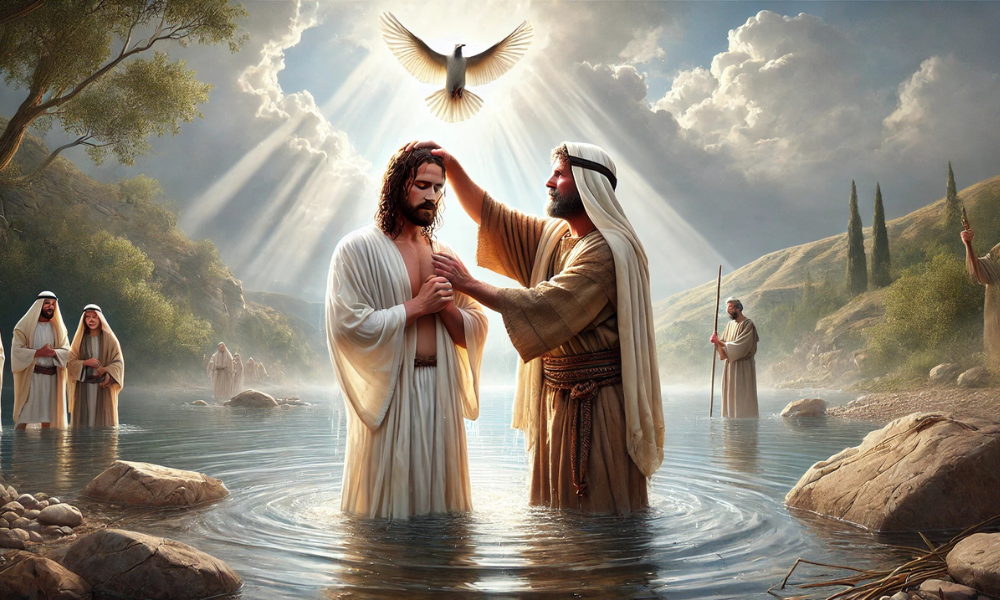
At about 30 years old, He was baptized by John the Baptist in the Jordan River. The Holy Spirit descended on Him, and the Father’s voice declared, “This is My beloved Son” (Matthew 3:17). Immediately after, He fasted 40 days in the wilderness and overcame Satan’s temptations (Matthew 4:1–11).
3. Public Ministry
Jesus traveled through Galilee and Judea preaching the Kingdom of God, performing miracles, and revealing divine truth through parables.
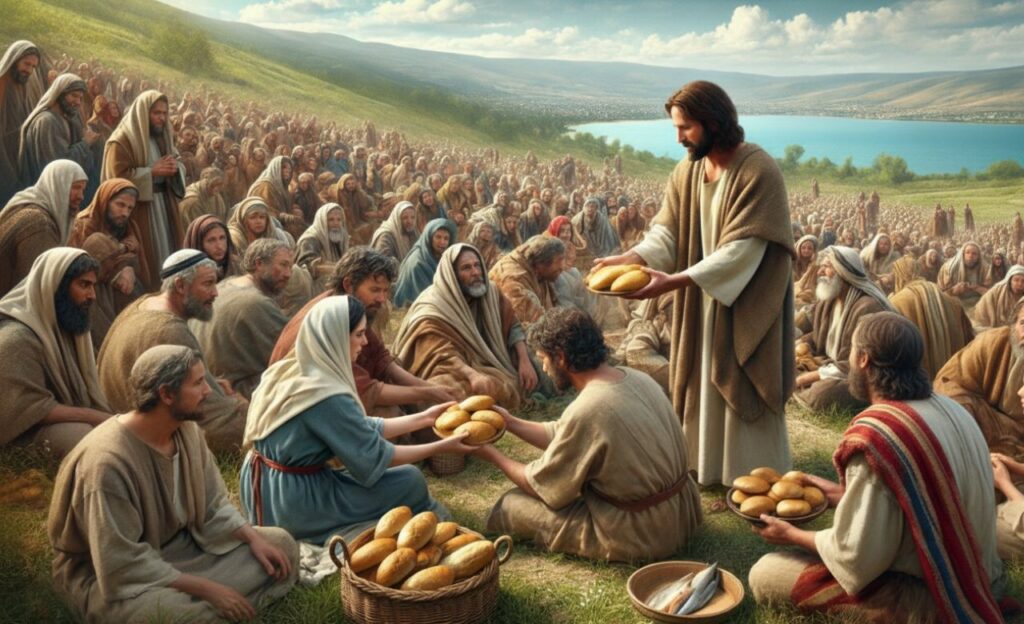
He healed the blind and lame, raised the dead (John 11:43–44), calmed storms (Mark 4:39), and fed thousands with a few loaves and fish (Matthew 14:13–21).
His teachings centered on love, mercy, forgiveness, and righteousness — summed up in the Sermon on the Mount (Matthew 5–7).
4. Crucifixion
Betrayed by Judas, Jesus was arrested, falsely accused, and condemned by Pontius Pilate. He was crucified at Golgotha, bearing humanity’s sins upon Himself. At His death, the temple veil tore — symbolizing direct access to God through His sacrifice (Matthew 27:50–51).
5. Resurrection and Ascension
On the third day, Jesus rose from the grave, appearing to Mary Magdalene, the apostles, and over 500 witnesses (1 Corinthians 15:3–6). His resurrection confirmed His divinity and victory over death. Forty days later, He ascended into heaven, promising to return (Acts 1:9–11).
Teachings and Parables
Jesus’ message revealed the heart of God and the ethics of the Kingdom:
- Love God and your neighbor — the greatest commandments (Matthew 22:37–39)
- The Beatitudes — blessings of humility and purity (Matthew 5:3–12)
- Forgiveness and mercy — “Forgive, and you will be forgiven” (Luke 6:37)
- Faith and repentance — “You must be born again” (John 3:3)
- Servanthood — “The greatest among you will be your servant” (Matthew 23:11)
- The Good Samaritan — love without boundaries (Luke 10:25–37)
- The Prodigal Son — God’s unconditional grace (Luke 15:11–32)
- The Great Commission — “Go and make disciples of all nations” (Matthew 28:19)
Relationships
- Earthly Parents: Mary and Joseph
- Disciples: Peter, James, John, and the Twelve
- Close Friends: Mary, Martha, and Lazarus
- Opponents: Religious leaders (Pharisees, Sadducees), Roman rulers, Satan
- Divine Relationship: God the Father — “The Father and I are one.” (John 10:30)
Legacy and Eternal Impact
- Salvation: Faith in His death and resurrection grants forgiveness and eternal life (Romans 10:9–10).
- Fulfillment of Prophecy: Fulfilled over 300 Old Testament prophecies (Isaiah 53; Psalm 22).
- New Covenant: Established grace through His blood (Luke 22:20; Hebrews 9:15).
- The Church: Founded the spiritual body of believers (Matthew 16:18).
- Transformation: His message shaped global ethics, law, art, and civilization.
- Return: Will come again as Judge and Eternal King (Revelation 22:12–13).
Symbolism and Typology
- Lamb of God: The perfect sacrifice (John 1:29).
- Bread of Life: Spiritual sustenance (John 6:35).
- Light of the World: Dispelled darkness (John 8:12).
- Good Shepherd: Cares for and saves His flock (John 10:11).
- True Vine: Source of life and fruitfulness (John 15:1–5).
- Cornerstone: Foundation of faith and the Church (Ephesians 2:20).
- Second Adam: Restores humanity’s relationship with God (Romans 5:18–19).
Historical and Extra-Biblical Witnesses
- Josephus (Jewish historian): Described Jesus as a wise teacher and miracle worker.
- Tacitus (Roman historian): Recorded His crucifixion under Pontius Pilate.
- Pliny the Younger: Noted early Christians worshiped Christ as divine.
- Suetonius and Lucian: Referenced His followers and teachings.
- Early Church Fathers: Affirmed His divinity and resurrection in creeds such as the Nicene Creed.
Summary
Jesus Christ stands at the center of human history and divine revelation.
He is the fulfillment of prophecy, the embodiment of God’s love, and the bridge between heaven and earth. Through His life, death, and resurrection, He conquered sin and death, offering eternal hope to all who believe. His words continue to transform hearts and nations — declaring that He is “the Way, the Truth, and the Life” (John 14:6).







Leave a Reply