

Jonathan is one of the most noble and selfless figures in the Old Testament. As the eldest son of King Saul and the heir apparent to the throne of Israel, he possessed every earthly reason to view David as a rival. Instead, Jonathan recognized God’s anointing on David and loved him “as his own soul.” His life is a profound study in conflicting loyalties—honoring his unstable father while protecting his best friend—and ultimately choosing the will of God over his own royal inheritance. He stands as the Bible’s ultimate example of covenant friendship and sacrificial love.
- Name: Jonathan (Hebrew: Yehonatan, meaning “Yahweh has given”)
- Tribe/Nation: Benjamin (Israelite)
- Era: United Monarchy (~1000 BCE)
- Father: King Saul
- Best Friend: David
- Son: Mephibosheth
- Home: Gibeah
- Books: 1 Samuel, 2 Samuel
- Key Virtues: Loyalty, bravery, selflessness, spiritual discernment
- Legacy: The archetype of true friendship; the preservation of the Messianic line through his protection of David
- Symbol: The Robe and Sword — symbolizing the voluntary surrender of his rights
Name Meaning
“Jonathan” means “Yahweh has given.” The name reflects a recognition of God’s grace, which Jonathan embodied by freely giving up his God-given rights to the kingship in favor of God’s chosen successor.
Lineage / Family Background
Father: Saul, the first King of Israel. Jonathan often acted as the stabilizing force and military arm of his father’s reign.
Mother: Ahinoam (daughter of Ahimaaz).
Siblings: Michal (David’s wife), Ish-bosheth, and others.
Son: Mephibosheth (originally Merib-baal), who was crippled at age five and later cared for by King David in honor of Jonathan.
Biblical Era / Context
Time: The tumultuous transition from the House of Saul to the House of David.
Setting: The hill country of Benjamin and the battlefields against the Philistines.
Cultural Context: In ancient Near Eastern culture, a king’s son would naturally kill any rival to the throne. Jonathan’s refusal to do so—and his active protection of David—was counter-cultural and politically shocking to his father.
Major Roles / Identity
The Crown Prince: The rightful heir to the throne by lineage, a title he willingly surrendered.
The Warrior: A fearless military leader who initiated key victories against the Philistines, often fighting against overwhelming odds.
The Covenant Friend: The loyal protector of David, forming a bond that Scripture describes as surpassing the love of women.
The Mediator: Constantly stood in the breach between the murderous rage of King Saul and the innocence of David.
Key Character Traits
Bravery: He attacked a Philistine outpost with only his armor-bearer, trusting that “nothing can hinder the LORD from saving by many or by few” (1 Samuel 14:6).
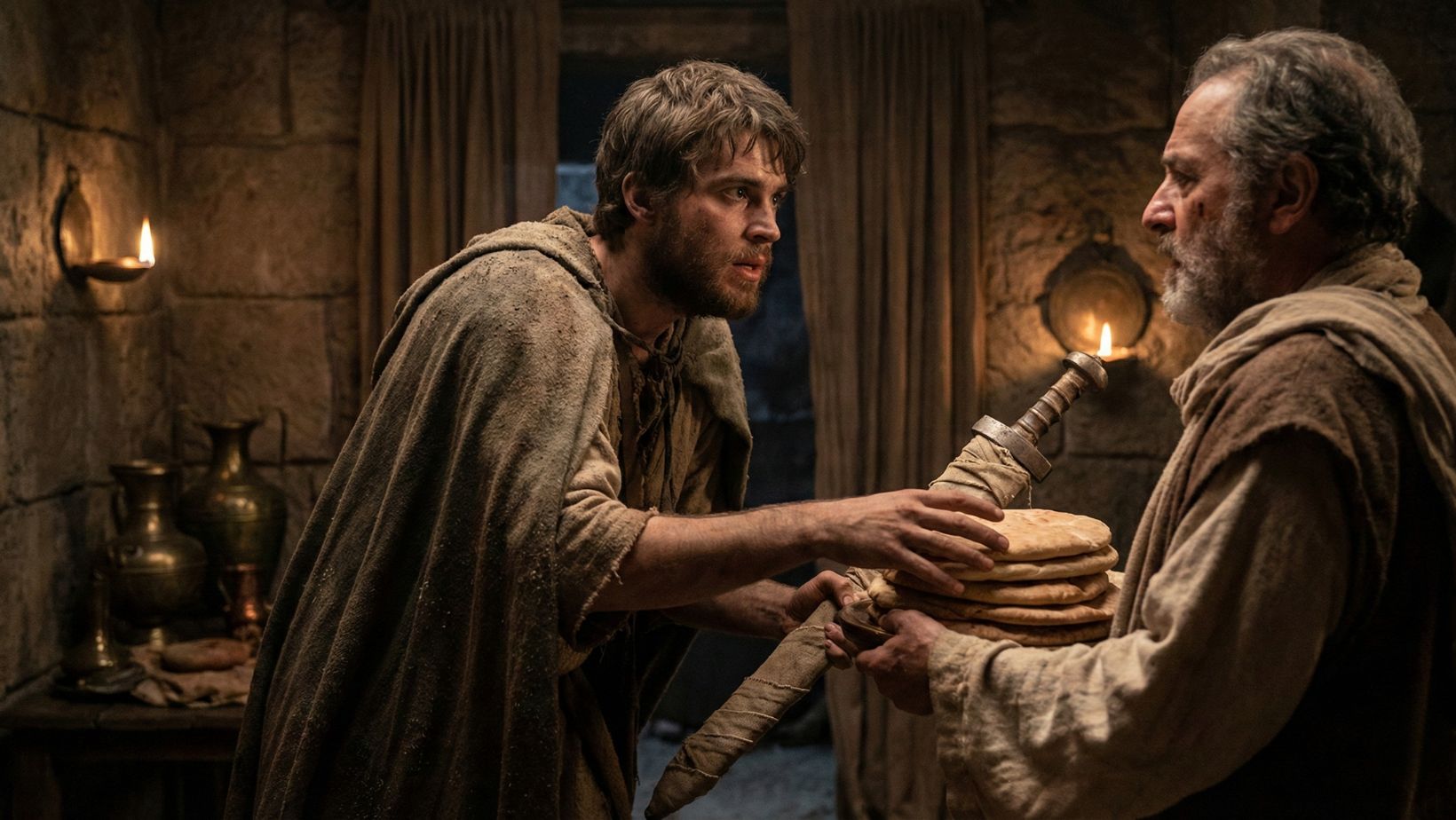
Selflessness: He stripped off his royal robe and gave it to David, symbolically transferring his royal authority to God’s anointed.
Loyalty: He remained faithful to David’s calling but also honored his father, staying by Saul’s side until they died together in battle.
Spiritual Insight: Unlike Saul, Jonathan recognized that God was with David and submitted to that reality without jealousy.
Main Life Events
Victory at Michmash: Jonathan, tired of a stalemate, climbed a cliff with his armor-bearer and defeated a Philistine garrison, sparking a massive panic and victory for Israel (1 Samuel 14).
The Covenant: Immediately after David killed Goliath, Jonathan’s soul was “knit” to David’s. He gave David his robe, tunic, sword, bow, and belt (1 Samuel 18:1–4).
The Warning Arrows: When Saul plotted to kill David, Jonathan devised a secret signal using arrows in a field to warn David to flee, saving his life (1 Samuel 20).
The Final Encouragement: Jonathan visited David in the wilderness of Ziph to “strengthen his hand in God,” reassuring him that he would be king (1 Samuel 23:16–18).
Death on Mount Gilboa: Jonathan fell in battle against the Philistines alongside his father and brothers, a tragic end to a noble life (1 Samuel 31:2).
Major Relationships
David: The defining relationship of his life. It was a bond of mutual respect, spiritual unity, and covenant loyalty.
Saul: A complex relationship. Jonathan often disobeyed Saul’s unjust orders (to kill David) but never rebelled against his authority as king, fighting for him until the end.
The Armor-Bearer: An unnamed servant who trusted Jonathan implicitly, following him into a suicide mission at Michmash.
Notable Passages
1 Samuel 14:6: “Come, let us go over to the garrison of these uncircumcised. It may be that the LORD will work for us, for nothing can hinder the LORD from saving by many or by few.”
1 Samuel 18:1: “…the soul of Jonathan was knit to the soul of David, and Jonathan loved him as his own soul.”
1 Samuel 23:17: “Do not fear, for the hand of Saul my father shall not find you. You shall be king over Israel, and I shall be next to you.”
2 Samuel 1:26: David’s lament: “I am distressed for you, my brother Jonathan; very pleasant have you been to me; your love to me was extraordinary, surpassing the love of women.”
Legacy & Impact
Jonathan set the biblical standard for friendship, prioritizing spiritual kinship over blood ambition.
His survival would have caused a civil war; his death cleared the path for David’s kingship, yet his memory protected his descendants (Mephibosheth).
He serves as a model of how to navigate loyalty to family versus loyalty to what is right.
Symbolism / Typology
The Surrendered Robe: Jonathan stripping himself of his royal garments to clothe David is seen by many theologians as a type of Christ (who stripped Himself of glory) or the believer (who lays down their rights before the true King).
The Faithful Witness: He testifies to the coming King (David) even though he himself will not reign.
The Fellowship of Suffering: Jonathan suffered for his association with the anointed one, foreshadowing the persecution of believers.
Extra-Biblical References
Jewish Tradition: The Talmud often cites Jonathan’s love for David as the prime example of “love that does not depend on a specific cause” (altruistic love).
Military History: His tactic at the Pass of Michmash (climbing the steep cliffs of Bozez and Seneh) was successfully replicated by British Major Vivian Gilbert in WWI to defeat Ottoman forces, using the Bible as his guide.




Leave a Reply