
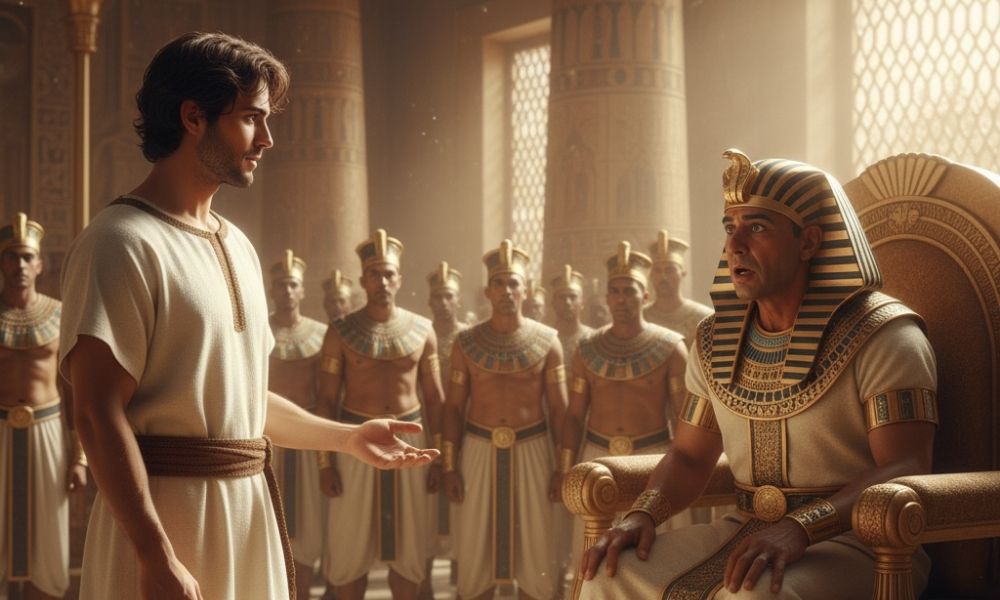
Joseph was the beloved son of Jacob and Rachel — a man of integrity, faith, and forgiveness. His life is one of the most vivid examples of divine providence in Scripture. Betrayed by his brothers, sold into slavery, and later exalted to power in Egypt, Joseph’s story reveals how God can turn human evil into good. Through his wisdom and faithfulness, Joseph preserved not only his family but also the future nation of Israel.
Name: Joseph (Hebrew: Yosef, meaning “He adds” or “May He increase”)
Tribe/Nation: Israel (tribe of Joseph; later divided into Ephraim and Manasseh)
Era: Patriarchal Period (~18th century BCE)
Father: Jacob (Israel)
Mother: Rachel
Brothers: Eleven, including Benjamin (full brother) and Judah (through Leah)
Wife: Asenath (daughter of Potiphera, priest of On in Egypt)
Children: Manasseh and Ephraim
Home: Canaan → Egypt
Book: Genesis (Chapters 37–50)
Key Virtues: Faithfulness, integrity, forgiveness, wisdom
Legacy: Savior of his family and preserver of Israel; a type of Christ in his suffering and glory
Symbol: Coat of many colors — representing favor, destiny, and divine purpose
Name Meaning
Joseph means “He adds” or “God will increase,” reflecting Rachel’s prayer when she said, “May the LORD add to me another son” (Genesis 30:24). His name signifies growth, blessing, and divine increase — themes that define his entire life story.
Lineage / Family Background
Joseph was the eleventh son of Jacob and the firstborn of Rachel, Jacob’s beloved wife. He grew up in Canaan among his brothers, many of whom envied him for his father’s favoritism and his prophetic dreams.
- Grandfather: Isaac
- Great-grandfather: Abraham
- Father: Jacob (Israel)
- Mother: Rachel
- Full brother: Benjamin
- Wife: Asenath
- Sons: Manasseh and Ephraim
Major Roles / Identity
- Favorite son of Jacob
- Dreamer and interpreter of dreams
- Slave in Egypt, later governor under Pharaoh
- Preserver of Israel’s family and covenant line
- Foreshadowing of Christ’s redemption through suffering
Key Character Traits
- Faithful: Trusted God in every circumstance — from prison to palace.
- Pure: Resisted temptation and sin, even under pressure.
- Wise: Interpreted dreams with divine insight and managed Egypt’s resources prudently.
- Forgiving: Showed mercy to his brothers who betrayed him.
- Persevering: Remained steadfast through suffering and exile.
Main Life Events
- Favored by Jacob: Jacob gave Joseph a special robe, marking him as the favored son (Genesis 37:3).
- Prophetic Dreams: Joseph dreamed that his brothers’ sheaves bowed to his and that the sun, moon, and stars honored him (Genesis 37:5–11).
- Sold into Slavery: His jealous brothers sold him to Ishmaelite traders, who brought him to Egypt (Genesis 37:28).
- Servant in Potiphar’s House: Rose to prominence but was falsely accused by Potiphar’s wife and imprisoned (Genesis 39).
- Prison and Dreams: Interpreted the dreams of Pharaoh’s cupbearer and baker (Genesis 40).
- Exalted by Pharaoh: Interpreted Pharaoh’s dreams of famine and abundance; became governor of Egypt (Genesis 41).
- Famine and Reunion: Joseph’s brothers came to Egypt for grain; he tested them and later revealed himself (Genesis 42–45).
- Forgiveness and Restoration: Comforted his brothers, saying, “You meant evil against me, but God meant it for good” (Genesis 50:20).
- Final Years: Reunited with his father Jacob, lived in Egypt, and ensured Israel’s survival. Before his death, he requested his bones be carried back to the Promised Land (Genesis 50:25).
Major Relationships
- Jacob: His father, who loved him deeply and grieved bitterly at his loss.
- Rachel: His mother, who died giving birth to Benjamin.
- Brothers: Initially his enemies but later reconciled through Joseph’s forgiveness.
- Pharaoh: Recognized Joseph’s wisdom and elevated him to rule Egypt’s affairs.
- Asenath: His Egyptian wife and mother of his sons.
- God: His constant companion — Joseph never turned away, even in adversity.
Notable Passages
- Genesis 39:2: “The LORD was with Joseph, and he became a successful man.”
- Genesis 41:38: Pharaoh said, “Can we find anyone like this man, one in whom is the spirit of God?”
- Genesis 45:7: “God sent me ahead of you to preserve for you a remnant on earth and to save your lives by a great deliverance.”
- Genesis 50:20: “You meant evil against me, but God meant it for good.”
Legacy & Impact
Joseph’s story stands as one of Scripture’s most powerful demonstrations of divine providence. His faith turned suffering into salvation — both for Egypt and for Israel. Through him, God positioned His people for the next chapter of His redemptive plan.
- Saved Israel from famine and ensured the continuation of the covenant line
- His sons, Ephraim and Manasseh, became two of the twelve tribes of Israel
- Model of purity, faith, and forgiveness
- Foreshadowed Christ — rejected, suffering, exalted, and saving his people
Symbolism / Typology
- Joseph as a Type of Christ: Rejected by his own, yet became their savior; rose from humiliation to exaltation.
- His Coat: Symbol of divine favor and destiny.
- His Dreams: Foreshadowed God’s sovereign plan over all things.
- The Famine: Represents spiritual hunger satisfied only through God’s provision.







Leave a Reply