
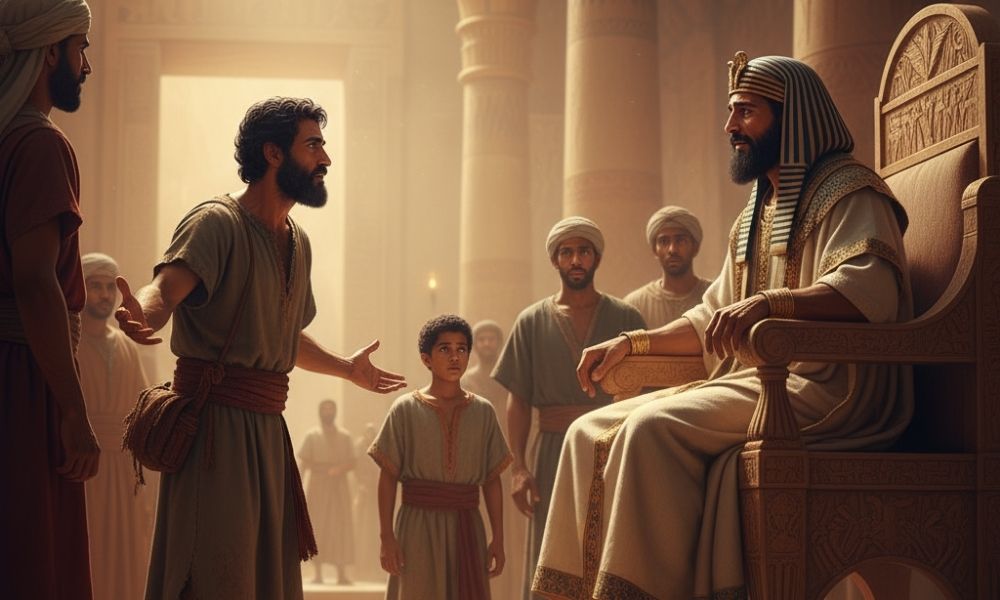
Judah was the fourth son of Jacob and Leah and the forefather of Israel’s royal line — the tribe from which came King David and ultimately Jesus Christ, the Lion of Judah. His life is a remarkable story of failure, repentance, and redemption. Though he once participated in deceit, Judah grew into a man of courage and faith, becoming the chosen vessel for God’s promise of kingship and salvation.
Name: Judah (Hebrew: Yehudah, meaning “Praise” or “Thanksgiving”)
Tribe/Nation: Israel (Tribe of Judah)
Era: Patriarchal Period (~19th century BCE)
Father: Jacob (Israel)
Mother: Leah
Brothers: Reuben, Simeon, Levi, and others (including Joseph and Benjamin)
Home: Canaan → Egypt
Book: Genesis (Chapters 29–50)
Key Virtues: Leadership, repentance, courage, faith
Key Flaws: Deceit, moral failure
Legacy: Ancestor of King David and Jesus Christ
Symbol: Lion — representing kingship, strength, and praise
Name Meaning
Judah means “Praise,” from Leah’s words at his birth: “This time I will praise the LORD” (Genesis 29:35). His name captures gratitude and worship — a theme that echoes throughout his descendants’ royal and messianic legacy.
Lineage / Family Background
Judah was the fourth son of Jacob and Leah, born in Haran. Though not Jacob’s firstborn, Judah rose to prominence among his brothers, and his lineage became the most honored in Israel’s history.
- Grandfather: Isaac
- Great-grandfather: Abraham
- Father: Jacob
- Mother: Leah
- Brothers: Reuben, Simeon, Levi, Joseph, Benjamin, and others
- Tribe: Judah — the royal and messianic tribe
Major Roles / Identity
- Fourth son of Jacob and Leah
- Leader among his brothers
- Ancestor of the royal and Messianic line
- A man transformed through repentance
Key Character Traits
- Courageous: Took leadership during family crises.
- Repentant: Acknowledged his wrongs and changed course.
- Faithful: Offered himself for his brother’s life.
- Respected Leader: Earned Jacob’s prophetic blessing of kingship.
Main Life Events
- Birth: Leah praised God at his birth, giving him the name Judah (Genesis 29:35).
- Plot Against Joseph: Judah proposed selling Joseph instead of killing him — sparing Joseph’s life though still betraying him (Genesis 37:26–27).
- Marriage and Family: Married a Canaanite woman and had three sons — Er, Onan, and Shelah.
- Tamar’s Story: After his sons died, Judah wronged his daughter-in-law Tamar, who later confronted him with his own seal and cord. Judah confessed, “She is more righteous than I” (Genesis 38:26).
- Intercession for Benjamin: Years later, Judah offered himself as a substitute for Benjamin before Joseph in Egypt (Genesis 44:33–34).
- Jacob’s Blessing: Before dying, Jacob blessed Judah with the promise of rulership:
“The scepter shall not depart from Judah, nor the ruler’s staff from between his feet, until he to whom it belongs shall come” (Genesis 49:10).
Major Relationships
- Jacob: His father, who blessed him with kingship.
- Leah: His mother, who praised God for his birth.
- Joseph: His brother, whom Judah once betrayed but later sought to protect by offering his own life.
- Tamar: His daughter-in-law, through whom his line continued (their son Perez became ancestor to David and Jesus).
- God: Worked through Judah’s repentance to bring forth the Messianic promise.
Notable Passages
- Genesis 29:35: “This time I will praise the LORD.”
- Genesis 38:26: “She is more righteous than I.”
- Genesis 44:33: “Now please let your servant remain here as my lord’s slave in place of the boy.”
- Genesis 49:10: “The scepter shall not depart from Judah.”
Legacy & Impact
Judah’s transformation from sinner to servant-leader made him the foundation of Israel’s royal dynasty. His descendants included King David, King Solomon, and ultimately Jesus Christ, the eternal King and Redeemer.
- His tribe led Israel in battle and worship
- Established the Davidic kingship
- The term “Jew” (Yehudi) comes from his name
- Foreshadowed Christ’s sacrificial love and leadership
Symbolism / Typology
- Lion of Judah: Symbol of royal power and the Messiah’s eternal rule (Revelation 5:5).
- Judah’s Repentance: Prefigures redemption through confession and grace.
- Tamar’s Story: Reveals God’s mercy and justice, preserving the Messianic line despite sin.







Leave a Reply