
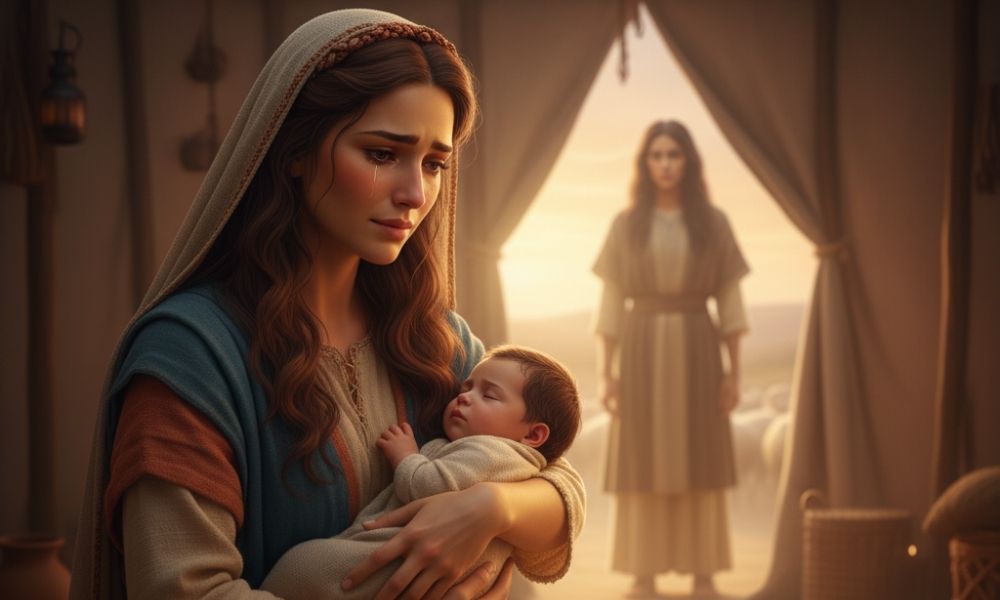
Leah was the first wife of Jacob and the elder sister of Rachel. Though she was less favored by her husband, Leah’s life reveals the deep compassion of God, who saw her sorrow and blessed her richly. Through her, the Messiah’s lineage continued — for from Leah’s son Judah came King David and ultimately Jesus Christ. Her story is one of divine love for the overlooked and of finding worth not in human approval but in God’s favor.
Name: Leah (Hebrew: Le’ah, meaning “Weary” or “Delicate”)
Tribe/Nation: Israel (by marriage to Jacob)
Era: Patriarchal Period (~19th century BCE)
Father: Laban
Sister: Rachel
Husband: Jacob
Children: Reuben, Simeon, Levi, Judah, Issachar, Zebulun, and Dinah
Home: Haran → Canaan
Book: Genesis (Chapters 29–35)
Key Virtues: Faith, perseverance, gratitude
Legacy: Mother of six tribes of Israel, including the royal and priestly lines
Symbol: Olive branch — symbolizing fruitfulness and peace
Name Meaning
Leah means “weary” or “tired,” possibly reflecting her struggles in love and family life. Yet her name also conveys endurance — she bore sorrow with strength and steadfastness, becoming a symbol of faith in affliction.
Lineage / Family Background
Leah was the eldest daughter of Laban, Rebekah’s brother, making her Jacob’s cousin. She grew up in Haran, where her father deceitfully gave her to Jacob in marriage before Rachel.
- Father: Laban — known for his cunning and manipulation
- Sister: Rachel — Jacob’s beloved
- Husband: Jacob — the patriarch of Israel
- Nephews (through Rachel): Joseph and Benjamin
Major Roles / Identity
- First wife of Jacob
- Mother of six sons and one daughter
- Matriarch of the royal (Judah) and priestly (Levi) lines of Israel
- A woman whose faith turned rejection into fruitfulness
Key Character Traits
- Faithful: Remained devoted despite being unloved
- Enduring: Bore hardship with patience and faith
- Grateful: Named her children in praise to God
- Spiritually Insightful: Found her worth in God’s eyes, not man’s affection
Main Life Events
- Marriage to Jacob: Laban deceived Jacob by giving Leah instead of Rachel on their wedding night (Genesis 29:23–25).
- Unloved Yet Blessed: Though Jacob loved Rachel more, God saw Leah’s sorrow and opened her womb (Genesis 29:31).
- Mother of Many Sons: She bore six of Jacob’s twelve sons — Reuben, Simeon, Levi, Judah, Issachar, and Zebulun — and one daughter, Dinah.
- Struggle with Rachel: A rivalry arose between the sisters over Jacob’s affection and bearing children.
- Spiritual Growth: Leah learned to find her joy in the Lord, declaring at Judah’s birth, “This time I will praise the LORD” (Genesis 29:35).
Major Relationships
- Jacob: Husband who loved Rachel more, yet Leah remained devoted and fruitful.
- Rachel: Younger sister and rival, though both were part of God’s redemptive plan.
- God: Her comforter and source of blessing; He honored her faith and turned her sorrow into fruitfulness.
- Children:
Notable Passages
- Genesis 29:31: “When the LORD saw that Leah was unloved, He opened her womb.”
- Genesis 29:35: “She conceived again and bore a son, and said, ‘This time I will praise the LORD.’ Therefore she named him Judah.”
- Genesis 49:31: Leah was buried beside Jacob in the family tomb — the same burial place as Abraham and Sarah, Isaac and Rebekah.
Legacy & Impact
Leah’s legacy is profound — though she was unloved by man, she was chosen by God. Through her son Judah came the royal line of Israel, culminating in Jesus Christ, the Lion of Judah. Through Levi, her son, came the priestly line of Aaron and the Levites.
- Mother of six tribes of Israel
- Ancestor of kings and priests
- Example of God’s compassion toward the humble and rejected
Symbolism / Typology
- Leah as the Unloved Bride: Symbolizes Israel, chosen and loved by God despite rejection.
- Her Fruitfulness: Represents divine blessing given to those who trust in God rather than human favor.
- Judah’s Birth: Foreshadows Christ — praise born out of pain.
Extra-Biblical References
- Honored in Jewish tradition as one of the four matriarchs (alongside Sarah, Rebekah, and Rachel).
- Buried in the Cave of Machpelah (Genesis 49:31), the ancestral burial site of the patriarchs.
- Remembered in Christian typology as the mother of the Messiah’s lineage.







Leave a Reply