
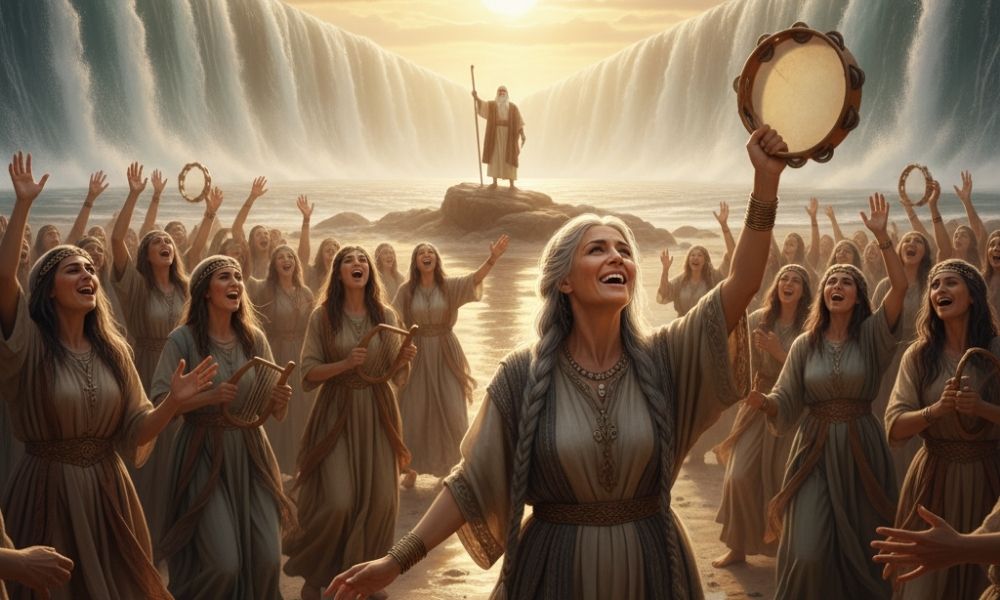
Miriam was the prophetess and sister of Moses and Aaron, a courageous and influential woman in Israel’s early history. From watching over the infant Moses at the Nile to leading Israelite women in worship after the Exodus, she played a vital role in God’s deliverance of His people. Yet, her story also reveals the dangers of pride and envy, showing both leadership and humility lessons for all generations.
Quick Facts
Name: Miriam (Hebrew: Miryam, meaning “beloved,” “rebellious,” or “wished-for child”)
Tribe: Levi
Family: Daughter of Amram and Jochebed; sister to Moses and Aaron
Role: Prophetess, leader, and musician
Born: In Egypt during Israel’s slavery (Exodus 2:1–4)
Died: In Kadesh, during Israel’s wilderness wanderings (Numbers 20:1)
Key Scriptures: Exodus 2:1–10; Exodus 15:20–21; Numbers 12; Numbers 20:1
Symbol: Tambourine — representing praise, deliverance, and celebration
Name Meaning
“Miriam” may mean “beloved,” “rebellious,” or “wished-for child.” Her name reflects both her passionate spirit and the tension between obedience and pride that marked her life.
Lineage / Family Background
Miriam was born into the tribe of Levi, the same tribe later set apart for priestly service. Her parents, Amram and Jochebed, were devout Hebrews who defied Pharaoh’s order to kill male infants. She was the older sister of Aaron and Moses, both central figures in Israel’s deliverance.
Biblical Era / Timeline
Era: The Exodus and wilderness period (~15th–13th century BCE).
Context: Israel was enslaved in Egypt, awaiting God’s deliverance through Moses. Miriam’s faith and courage made her an early participant in that divine plan.
Major Roles / Identity
- Protective sister: Guarded baby Moses on the Nile and arranged for their mother to nurse him (Exodus 2:4–8).
- Prophetess and worship leader: Led Israelite women in song and dance after crossing the Red Sea (Exodus 15:20–21).
- Leader in Israel: Worked alongside Moses and Aaron as one of the three leaders God used to guide His people (Micah 6:4).
- Rebel and learner: Challenged Moses’ authority and was struck with leprosy as discipline (Numbers 12).
Key Character Traits
Strengths:
- Courage and quick thinking — protected her baby brother from Pharaoh’s decree.
- Faith and leadership — inspired others to worship God after the Exodus.
- Spiritual sensitivity — recognized and celebrated God’s mighty acts.
Weaknesses:
- Pride and jealousy — questioned Moses’ unique relationship with God.
- Impulsiveness — allowed personal feelings to lead to public rebellion.
Main Life Events
- Saving Moses: As a child, Miriam stood watch over her baby brother in the basket among the reeds. When Pharaoh’s daughter found him, Miriam boldly offered to bring a Hebrew nurse — her own mother (Exodus 2:1–10).
- Leading in Worship: After God parted the Red Sea and destroyed Pharaoh’s army, Miriam led the women of Israel in song with tambourines, singing: “Sing to the LORD, for He has triumphed gloriously” (Exodus 15:21).
- Rebellion and Leprosy: Later, Miriam and Aaron criticized Moses, possibly out of jealousy or resentment of his Cushite wife. God defended Moses, declaring him uniquely faithful, and struck Miriam with leprosy for seven days (Numbers 12).
- Restoration: Moses interceded for Miriam, and she was healed and restored — an example of both divine justice and mercy.
- Death: Miriam died in Kadesh and was buried there before Israel entered Canaan (Numbers 20:1).
Notable Stories / Passages
- Exodus 2:1–10: Miriam’s quick thinking saves Moses.
- Exodus 15:20–21: Miriam’s song of praise after crossing the Red Sea — one of the earliest recorded songs in Scripture.
- Numbers 12: Miriam’s rebellion and divine discipline.
- Micah 6:4: God includes Miriam among the leaders He sent to deliver Israel.
Legacy & Impact
- First female prophetess named in Scripture (Exodus 15:20).
- Model of worship and leadership: Her song at the Red Sea inspired generations to praise God in victory.
- Lesson in humility: Her punishment for pride shows that even great leaders must submit to God’s order.
- Remembered with honor: Mentioned by the prophet Micah alongside Moses and Aaron as a leader chosen by God (Micah 6:4).
Symbolism / Typology
- The Tambourine: Represents joyful praise and thanksgiving for deliverance.
- The Well of Miriam (Jewish tradition): Symbol of God’s provision — said to have followed Israel in the wilderness because of her merit.
- Foreshadowing of New Testament truth: Her song of deliverance parallels Mary’s Magnificat (Luke 1:46–55), showing continuity between God’s redemption in the Exodus and in Christ.
Legacy in Faith and Teaching
Miriam’s life illustrates that God uses both men and women in His redemptive work, and that leadership requires both courage and humility. Her story begins with protection and praise but ends with correction — a reminder that spiritual gifts must be matched with obedience and reverence for God’s authority.





Leave a Reply