
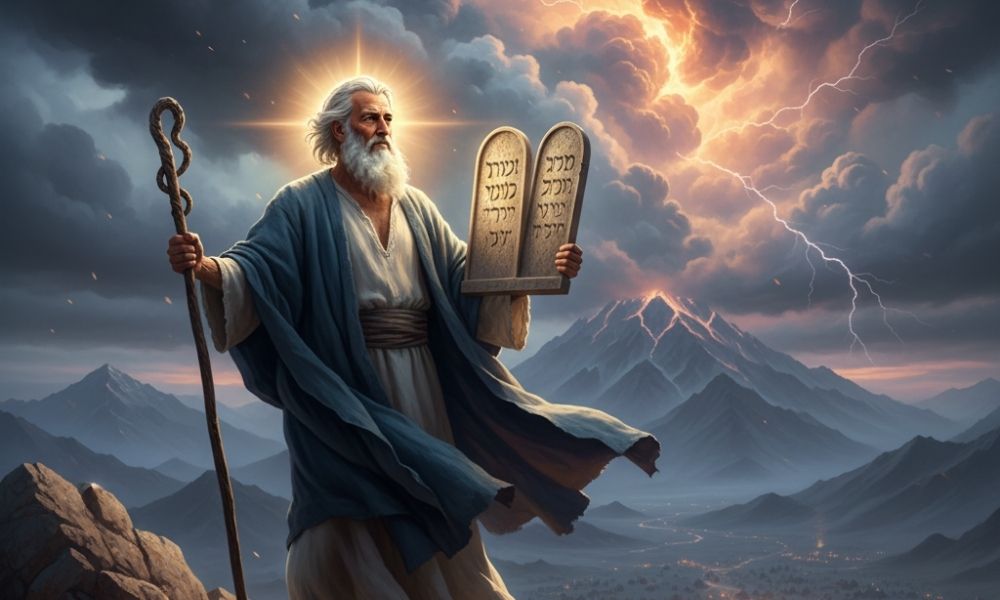
Moses, the great prophet, lawgiver, and leader of Israel, stands as one of the most significant figures in all of Scripture. Chosen by God to deliver His people from slavery in Egypt, Moses guided the nation through forty years in the wilderness and became the mediator of God’s covenant at Mount Sinai. His life — marked by faith, humility, and obedience — reveals God’s sovereign plan to redeem His people and foreshadows the coming of Christ, the greater Deliverer.
Quick Facts
Name: Moses (Hebrew: Moshe, meaning “drawn out”)
Tribe: Levi
Father: Amram
Mother: Jochebed
Siblings: Aaron (older brother), Miriam (older sister)
Born: c. 1526 BCE, in Egypt (during Israel’s enslavement)
Died: c. 1406 BCE, on Mount Nebo, east of the Jordan
Occupation: Prince of Egypt, shepherd, prophet, and national leader
Known For: Leading the Exodus; receiving the Ten Commandments; writing the Torah
Key Verses: Exodus 3; Exodus 14; Exodus 20; Deuteronomy 34
Symbol: The staff — representing divine authority, leadership, and faith
Name Meaning
The name Moses (Moshe) means “drawn out”, referring to how Pharaoh’s daughter drew him out of the Nile River (Exodus 2:10). Spiritually, it symbolizes his divine calling to “draw out” Israel from Egyptian bondage — a deliverer raised by God to lead His people into freedom.
Lineage / Family Background
- Tribe: Levi — a priestly tribe later set apart for temple service
- Parents: Amram and Jochebed, faithful Israelites who defied Pharaoh’s command to kill Hebrew infants
- Siblings:
- Adoptive Family: Raised by Pharaoh’s daughter as an Egyptian prince, giving him education, leadership, and access to power
Biblical Era / Timeline
- Historical Setting: Late Bronze Age, during Israel’s captivity in Egypt
- Major Phases of Moses’ Life (Three Periods of 40 Years):
Major Roles / Identity
- Deliverer: Sent by God to confront Pharaoh and lead Israel out of slavery (Exodus 3–12).
- Prophet: Spoke face to face with God and revealed His laws and commands to Israel (Exodus 33:11).
- Lawgiver: Received the Ten Commandments and the Mosaic Law at Mount Sinai (Exodus 19–20).
- Intercessor: Pleaded for mercy when Israel sinned, often standing between God’s wrath and His people (Exodus 32:11–14).
- Leader: Guided a rebellious nation through the wilderness, demonstrating endurance, faith, and patience.
- Author: Traditionally credited as the writer of the Torah (Genesis–Deuteronomy).
Key Character Traits
Strengths:
- Faith: Trusted God even when circumstances seemed impossible.
- Humility: Described as “more humble than any man on the face of the earth” (Numbers 12:3).
- Courage: Faced Pharaoh and led a vast multitude through the wilderness.
- Obedience: Followed God’s instructions precisely, even under pressure.
- Intercession: Deep compassion for Israel; often prayed for their forgiveness.
Weaknesses:
- Anger: Struck the rock instead of speaking to it (Numbers 20:10–12).
- Self-doubt: Initially resisted God’s call, claiming he was “slow of speech” (Exodus 4:10).
Main Life Events
- Birth and Preservation (Exodus 2:1–10):
Born under Pharaoh’s order to kill all Hebrew male infants, Moses was hidden by his mother and rescued by Pharaoh’s daughter, who raised him in the palace. - Fleeing Egypt (Exodus 2:11–22):
After killing an Egyptian who was beating a Hebrew, Moses fled to Midian, where he married Zipporah, daughter of Jethro, and became a shepherd. - The Burning Bush (Exodus 3–4):
God appeared to Moses on Mount Horeb, calling him to deliver Israel and revealing His divine name: “I AM WHO I AM.” - The Exodus from Egypt (Exodus 5–14):
Through signs and plagues, Moses confronted Pharaoh and led Israel out, culminating in the miraculous crossing of the Red Sea. - The Covenant at Sinai (Exodus 19–24):
God gave the Law — including the Ten Commandments — establishing a covenant with His chosen people. - The Golden Calf Incident (Exodus 32):
When Israel turned to idolatry, Moses interceded and pleaded for God’s mercy, showing his deep love for his people. - Wilderness Leadership (Numbers 11–21):
Moses led the people through trials, rebellions, and hardships, teaching them obedience and dependence on God. - Disobedience at Meribah (Numbers 20):
In a moment of frustration, Moses struck the rock instead of speaking to it, and as a result, was forbidden to enter the Promised Land. - Final Blessing and Death (Deuteronomy 31–34):
Before his death, Moses blessed the twelve tribes, viewed the Promised Land from Mount Nebo, and died at 120 years old, buried by God Himself.
Major Relationships
- God: Spoke with Moses directly, unlike any other prophet (Exodus 33:11).
- Aaron: Brother and co-leader, serving as spokesman and high priest.
- Miriam: Sister and worship leader of Israel.
- Pharaoh: Opponent in the Exodus confrontation.
- Joshua: Faithful assistant and successor who completed the mission of conquest.
Notable Stories / Passages
- The Burning Bush (Exodus 3–4) — God calls Moses and reveals His name.
- The Ten Plagues (Exodus 7–12) — God’s power over Egypt’s gods.
- The Red Sea Crossing (Exodus 14) — Miraculous deliverance from Egypt.
- The Ten Commandments (Exodus 20) — Foundation of God’s covenant.
- The Golden Calf (Exodus 32) — Moses intercedes for sinful Israel.
- Water from the Rock (Numbers 20) — His act of disobedience.
- Death and Legacy (Deuteronomy 34) — God buries him; his strength and vision undiminished.
Legacy & Impact
- The Lawgiver: Established the moral, civil, and ceremonial law of Israel.
- Prophet of God: Set the standard for all prophets to come.
- Deliverer: Foreshadowed Christ, who delivers humanity from sin.
- Author: Wrote the Torah, the foundational texts of Scripture.
- Spiritual Legacy: His leadership shaped Israel’s identity as God’s covenant people.
“Since then no prophet has risen in Israel like Moses, whom the Lord knew face to face.” — Deuteronomy 34:10
Symbolism / Typology
- Type of Christ: As Moses delivered Israel from Egypt, so Jesus delivers believers from sin (Hebrews 3:1–6).
- The Law vs. Grace: Moses represents the Law, while Christ fulfills it with grace and truth (John 1:17).
- The Passover: Instituted under Moses, pointing to Christ, the Lamb of God.
- Mount Sinai and Mount Zion: Sinai symbolizes the Law and judgment; Zion, the grace and salvation through Christ.
Extra-Biblical / Cultural Notes
- Revered in Judaism, Christianity, and Islam as a prophet and leader of unparalleled stature.
- The Mosaic Law forms the ethical and theological foundation for much of Western morality.
- Mentioned by name over 700 times in the Bible — more than any other Old Testament figure.
- Appeared with Elijah during Jesus’ Transfiguration (Matthew 17:1–3), symbolizing the Law and the Prophets fulfilled in Christ.
Summary
Moses was the humble yet powerful servant of God who led Israel from slavery to covenant relationship, spoke with God face to face, and revealed His divine law. His life embodies faith, obedience, and perseverance — pointing forward to Jesus Christ, the ultimate Deliverer and Mediator of the New Covenant.







Leave a Reply