
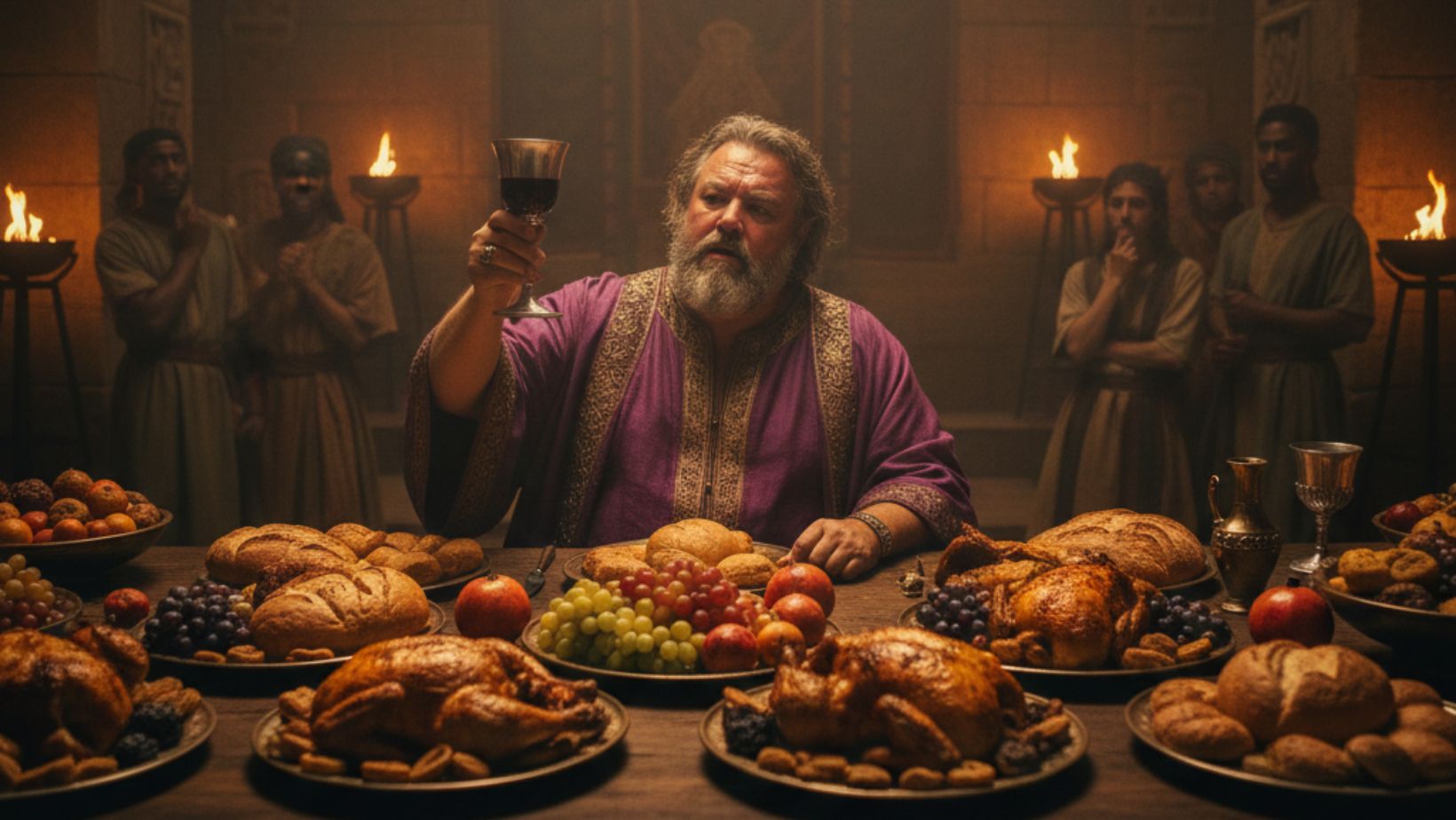
Nabal is presented in the biblical narrative as a cautionary figure of arrogance, greed, and spiritual blindness. A wealthy landowner from the tribe of Judah, his character stands in stark contrast to both his wise wife, Abigail, and the future King David. His story, found in 1 Samuel 25, illustrates the Hebrew concept of a “fool”—not necessarily someone lacking intelligence, but someone who lacks moral sense and lives as if God does not exist. His refusal to show hospitality and his contempt for God’s anointed led to a sudden and divine judgment.
QUICK FACTS
- Name: Nabal (Hebrew: Naval, meaning “Fool,” “Senseless,” or “Disgraceful”)
- Tribe/Nation: Israelite (Clan of Caleb, Tribe of Judah)
- Era: United Monarchy / Reign of King Saul (~11th century BCE)
- Wife: Abigail
- Home: Maon (residence) and Carmel (place of business)
- Book: 1 Samuel (Chapter 25)
- Key Vices: Arrogance, ingratitude, drunkenness, selfishness
- Legacy: A biblical archetype of the wealthy fool whose greed leads to his own destruction
- Symbol: A wine skin and a stone — symbolizing his intoxication and his hardened heart
Name Meaning
Nabal literally means “fool” or “senseless” in Hebrew. In the biblical context, a nabal is a person who is morally deficient and closed-minded toward God. His own wife, Abigail, remarked on the accuracy of his name, stating, “He is just like his name—his name is Fool, and folly goes with him.”
Lineage / Family Background
Origin: He was a Calebite, a descendant of Caleb, the faithful spy who had originally inherited the region around Hebron and Carmel.
Status: He was “very wealthy,” owning 3,000 sheep and 1,000 goats, marking him as a major economic figure in the region of Maon.
Wife: Abigail, a woman described as both beautiful and highly intelligent, though their marriage was clearly a mismatch of character.
Biblical Era / Context
Time: Set during David’s exile. While Saul was king, David and his band of men lived in the wilderness, often acting as a volunteer security force for local shepherds.
Setting: The rugged wilderness of Paran and the hill country of Judah. The climax occurs during the sheep-shearing festival, a time traditionally reserved for extreme generosity and sharing the year’s profits.
Cultural Context: In ancient Near Eastern culture, refusing to share food with those who had actively protected your flocks was a massive violation of social contracts and “covenant-like” hospitality expectations.
Major Roles / Identity
Wealthy Landowner: A man of high social standing due to his immense possessions.
Antagonist to David: He represented the wealthy elite who remained loyal to the failing house of Saul or simply looked down upon David as a “renegade servant.”
Symbol of Folly: He serves as the literary and moral foil to Abigail’s wisdom.
Key Character Traits
Greed: He refused to share any portion of his abundance, even though he had more than enough.
Arrogance: He spoke dismissively of David, asking, “Who is this David? Who is this son of Jesse?” to imply that David was a nobody.
Harsheness: The text describes him as “surly and mean in his dealings,” suggesting he was difficult for both his family and his employees to live with.
Lack of Spiritual Insight: Unlike his wife and his servants, Nabal failed to recognize that God was with David and that David would eventually be king.
Main Life Events
The Request: David sent ten messengers to Nabal during the sheep-shearing festival, politely asking for a gift of food in exchange for the protection David’s men had provided Nabal’s shepherds.
The Insult: Nabal insulted the messengers and David, accusing David of being just another runaway slave and refusing to give “his” bread and “his” meat to men he didn’t know.
The Feast: While David was marching with 400 men to destroy him, Nabal was holding a kingly banquet, getting “very drunk” and oblivious to the impending danger.
The Revelation: The next morning, when Nabal was sober, Abigail told him how close he had come to death and how she had intervened.
Divine Judgment: Upon hearing the news, Nabal’s “heart failed him and he became like a stone.” Ten days later, the Lord struck him and he died.
Major Relationships
Abigail: His wife, who managed the household and ultimately saved his life (briefly) by going behind his back to correct his mistake.
David: Nabal viewed David as a nuisance and a rebel; David viewed Nabal’s insult as a blood-debt that required the total destruction of Nabal’s house.
His Servants: They feared him and knew he was “such a wicked man that no one can talk to him,” leading them to seek help from Abigail instead.
Notable Passages
1 Samuel 25:10–11: Nabal’s defiance — “Who is David? … Why should I take my bread and water, and the meat I have slaughtered for my shearers, and give it to men coming from who knows where?”
1 Samuel 25:37–38: His end — “In the morning, when Nabal was sober, his wife told him all these things, and his heart failed him and he became like a stone. About ten days later, the Lord struck Nabal and he died.”
Legacy & Impact
Nabal’s life serves as a warning that wealth without character or gratitude is a path to ruin.
He illustrates the danger of “social blindness”—being so consumed by one’s own status that one fails to see the value or the divine calling in others.
His death is portrayed as a clear act of divine justice, showing that God protects the honor of His anointed (David) without the anointed having to resort to personal vengeance.
Symbolism / Typology
The Hardened Heart: Nabal becoming “like a stone” before he died is a physical manifestation of his spiritual state—cold, heavy, and unresponsive to God.
The Sheep-Shearing: Often represents a time of judgment or “reckoning” in biblical themes, where the true nature of a person is revealed by how they handle their harvest.
The Contrast of Kings: Nabal feasts like a king while the actual future king (David) is hungry in the wilderness, mirroring the theme of the “rich man and Lazarus.”
Extra-Biblical References
Jewish Tradition: Some commentaries suggest Nabal was a descendant of Caleb but chose to walk in the ways of the wicked, making his folly even more tragic given his noble heritage.
Literary Archetype: Nabal is often cited in theological studies as the personification of “practical atheism”—living as if there is no God to whom one is accountable for their resources.







Leave a Reply