
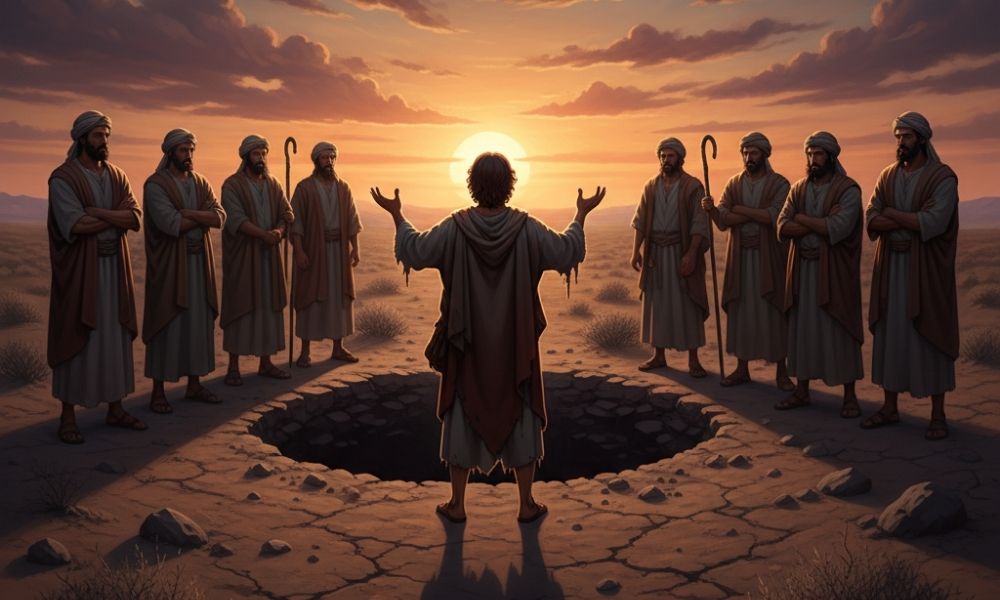
Reuben was the firstborn son of Jacob and Leah — the beginning of Jacob’s strength and the first of the twelve patriarchs of Israel. Though he held the honored place of the eldest, Reuben’s impulsive actions caused him to lose his birthright. His story is one of both privilege and failure, yet also of compassion and repentance. Reuben’s life reminds us that leadership requires not only strength but also integrity and self-control.
Name: Reuben (Hebrew: Re’uven, meaning “Behold, a Son” or “See, a Son”)
Tribe/Nation: Israel (Tribe of Reuben)
Era: Patriarchal Period (~19th century BCE)
Father: Jacob (Israel)
Mother: Leah
Brothers: Eleven (including Simeon, Levi, Judah, Joseph, Benjamin, etc.)
Home: Canaan → Egypt (during the famine)
Book: Genesis (Chapters 29–49)
Key Virtues: Compassion, initiative, repentance
Key Flaws: Impulsiveness, lack of discipline
Legacy: Ancestor of the Tribe of Reuben; lost the birthright due to sin but showed a heart of mercy
Symbol: Mandrake or water — representing instability and lost preeminence (Genesis 49:4)
Name Meaning
Reuben means “Behold, a son!” — a joyful cry from Leah, who said, “Because the LORD has seen my misery; surely my husband will love me now” (Genesis 29:32). His name reflects both Leah’s hope for love and God’s compassion toward her affliction.
Lineage / Family Background
Reuben was the firstborn of Jacob and Leah, born during Jacob’s early years in Haran. As Jacob’s eldest son, Reuben was naturally heir to leadership, inheritance, and priestly rights — positions later divided among Judah, Joseph, and Levi due to Reuben’s sin.
- Grandfather: Isaac
- Great-grandfather: Abraham
- Father: Jacob
- Mother: Leah
- Brothers: Simeon, Levi, Judah, and others
- Half-Brothers: Joseph and Benjamin (Rachel’s sons)
Major Roles / Identity
- Firstborn son of Jacob and Leah
- Patriarch of the tribe of Reuben
- Mediator among his brothers in times of crisis
- A man who struggled between honor and weakness
Key Character Traits
- Compassionate: Tried to protect Joseph from death.
- Impulsive: Acted rashly, often without foresight.
- Remorseful: Showed repentance after his mistakes.
- Courageous yet unstable: Possessed initiative but lacked steadfastness.
Main Life Events
- Birth and Naming: Leah gave birth to Reuben and named him in gratitude to God, hoping Jacob would love her (Genesis 29:32).
- Mandrake Episode: Reuben found mandrakes in the field and brought them to his mother, causing a dispute between Leah and Rachel (Genesis 30:14–15).
- Sin with Bilhah: Reuben dishonored his father by sleeping with Bilhah, Rachel’s maid and Jacob’s concubine (Genesis 35:22), forfeiting his birthright.
- Saving Joseph: When his brothers plotted to kill Joseph, Reuben intervened, suggesting they throw him into a pit instead, intending to rescue him later (Genesis 37:21–22).
- Intercession for Benjamin: Reuben offered his own sons as a guarantee for Benjamin’s safety when the brothers prepared to return to Egypt (Genesis 42:37).
- Jacob’s Prophetic Blessing: Before his death, Jacob acknowledged Reuben’s strength as the firstborn but declared his instability:
“Reuben, you are my firstborn,
my might, the beginning of my strength…
Unstable as water, you shall not excel” (Genesis 49:3–4).
Major Relationships
- Jacob: His father, who loved him as the firstborn but rebuked his failure.
- Leah: His mother, whose affection he tried to uphold.
- Joseph: His younger brother, whom he attempted to protect from harm.
- Bilhah: Jacob’s concubine, with whom his sin caused lasting shame.
- Brothers: Shared leadership but struggled for moral and familial stability.
Notable Passages
- Genesis 29:32: “It is because the LORD has seen my misery. Surely my husband will love me now.”
- Genesis 35:22: “Reuben went in and lay with Bilhah his father’s concubine; and Israel heard of it.”
- Genesis 37:21–22: “When Reuben heard this, he tried to rescue him from their hands… ‘Let’s not take his life.’”
- Genesis 49:3–4: “Unstable as water, you shall not excel.”
Legacy & Impact
Reuben’s life is a study in lost potential and divine justice. Though he forfeited his privileges as the firstborn, his descendants still became a notable tribe in Israel. The tribe of Reuben settled east of the Jordan River and was known for valor and leadership, though it eventually faded in prominence.
- Lost the rights of the firstborn to Joseph (1 Chronicles 5:1–2)
- Remembered for mercy toward Joseph
- His lineage remained part of Israel’s inheritance, showing God’s enduring grace
Symbolism / Typology
- Unstable as Water: Symbol of human weakness and inconsistency when not anchored in faith.
- Firstborn Who Fell: A warning about the cost of moral compromise.
- Reuben’s Compassion for Joseph: Foreshadows Christlike mercy and intercession despite personal failure.
Extra-Biblical References
- In Jewish tradition, Reuben is often portrayed as repentant — one who sincerely sought forgiveness.
- Rabbinic writings note his fasting and mourning after the sin with Bilhah.
- Early Christian commentators saw Reuben as a symbol of believers who begin with zeal but falter without spiritual discipline.







Leave a Reply