
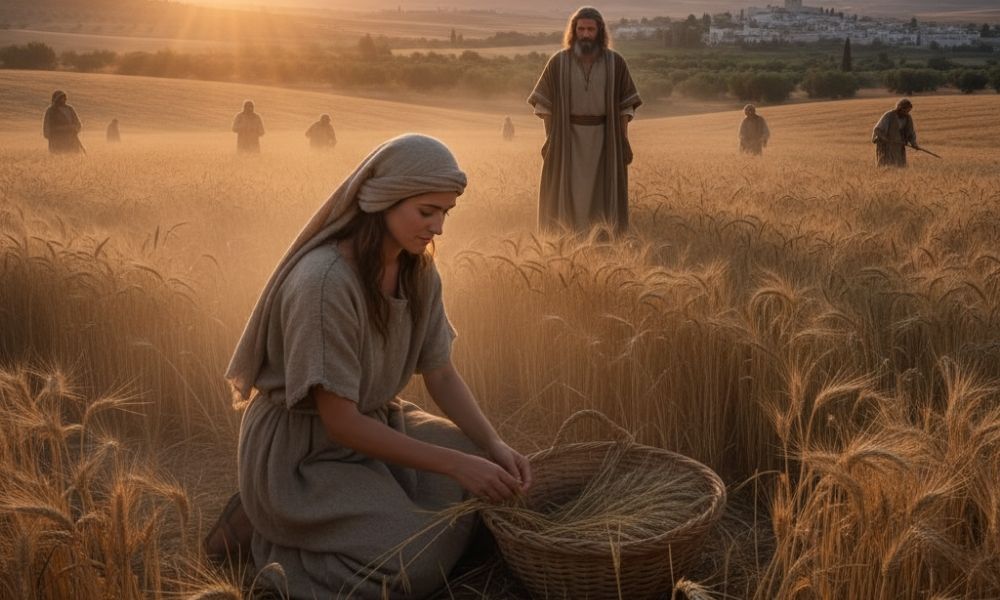
Ruth is one of the most beloved women in the Bible — a Moabite widow whose unwavering loyalty, humility, and faith brought her into the lineage of King David and ultimately Jesus Christ. Her story, found in the Book of Ruth, is one of love, redemption, and divine providence, showing how God’s grace extends beyond boundaries of nation and birth.
Quick Facts
Name: Ruth (Hebrew: Rut, meaning “Friend” or “Companion”)
Tribe/Nation: Moabite (later joined Judah through marriage)
Era: Time of the Judges (~12th century BCE)
Husband: Mahlon (first), later Boaz
Mother-in-law: Naomi
Home: Moab → Bethlehem, Judah
Book: The Book of Ruth (4 chapters)
Key Virtues: Loyalty, kindness, humility, faith
Legacy: Great-grandmother of King David; ancestor of Jesus Christ (Matthew 1:5)
Symbol: Sheaf of barley — representing provision and redemption
Name Meaning
The name Ruth means “friend” or “companion,” perfectly reflecting her steadfast loyalty to Naomi. Her story embodies hesed — a Hebrew word meaning covenant love, kindness, and faithfulness.
Lineage and Family Background
Ruth was a Moabite, from a nation often at odds with Israel. She married Mahlon, son of Elimelech and Naomi, who had fled to Moab due to famine. After Mahlon’s death, Ruth chose to remain with her mother-in-law Naomi, returning with her to Bethlehem. Later, she married Boaz, a kind and godly man who served as her kinsman-redeemer. Their son Obed became the father of Jesse, grandfather of King David.
Biblical Context
The story unfolds during the time of the Judges, a period of moral chaos and instability in Israel. It begins in Moab with loss and ends in Bethlehem with redemption — illustrating how God’s providence works even in times of hardship. Ruth’s acceptance into Israel’s community showcases God’s inclusive grace, extending His covenant blessings beyond Israel.
Key Character Traits
- Loyalty: Refused to abandon Naomi, saying, “Where you go, I will go…” (Ruth 1:16)
- Faith: Chose to follow the God of Israel despite being a foreigner
- Humility: Gleaned in the fields to provide for Naomi and herself
- Kindness: Showed deep love and care for Naomi’s well-being
- Virtue: Called “a woman of noble character” by Boaz (Ruth 3:11)
Main Life Events
- Marriage and Loss: Married Mahlon; widowed after ten years (Ruth 1:4–5)
- Decision of Faith: Chose to follow Naomi and the God of Israel (Ruth 1:16–17)
- Return to Bethlehem: Arrived during the barley harvest (Ruth 1:22)
- Gleaning in Boaz’s Field: Found favor through hard work and humility (Ruth 2)
- Redemption by Boaz: Married through levirate redemption (Ruth 3–4)
- Birth of Obed: Became great-grandmother of King David (Ruth 4:13–17)
Major Relationships
- Naomi: Her mother-in-law and closest companion; the bond of love and loyalty between them drives the story.
- Boaz: The kinsman-redeemer who honored and married Ruth, symbolizing divine redemption.
- God: Ruth’s faith in Yahweh transforms her life and secures her place in salvation history.
Notable Passages
- Ruth 1:16–17: “Where you go, I will go… your people will be my people and your God my God.”
- Ruth 2:12: Boaz’s blessing — “May the LORD repay you for what you have done.”
- Ruth 4:14–17: The women bless Naomi; Obed is born, ancestor of David.
Legacy & Impact
Ruth’s life is a testament to faithfulness, redemption, and divine purpose. Through her, God demonstrates that faith — not ethnicity or background — brings a person into His covenant family. Her story foreshadows Christ’s redeeming love and reveals that God’s grace welcomes all nations into His plan of salvation.
Symbolism / Typology
- Ruth: Represents the faithful Gentile believer embraced by God.
- Boaz: Foreshadows Christ, the Redeemer who saves His people.
- Naomi’s Restoration: Symbolizes God’s faithfulness in turning sorrow to joy.
- Barley Harvest: Signifies new beginnings, provision, and divine blessing.
Extra-Biblical Tradition
In Jewish tradition, the Book of Ruth is read during Shavuot (Feast of Weeks) — celebrating harvest and covenant grace. In Christian thought, Ruth stands as a model of faith and virtue, her inclusion in Jesus’ genealogy (Matthew 1:5) proclaiming God’s redemptive love for all.







Leave a Reply