
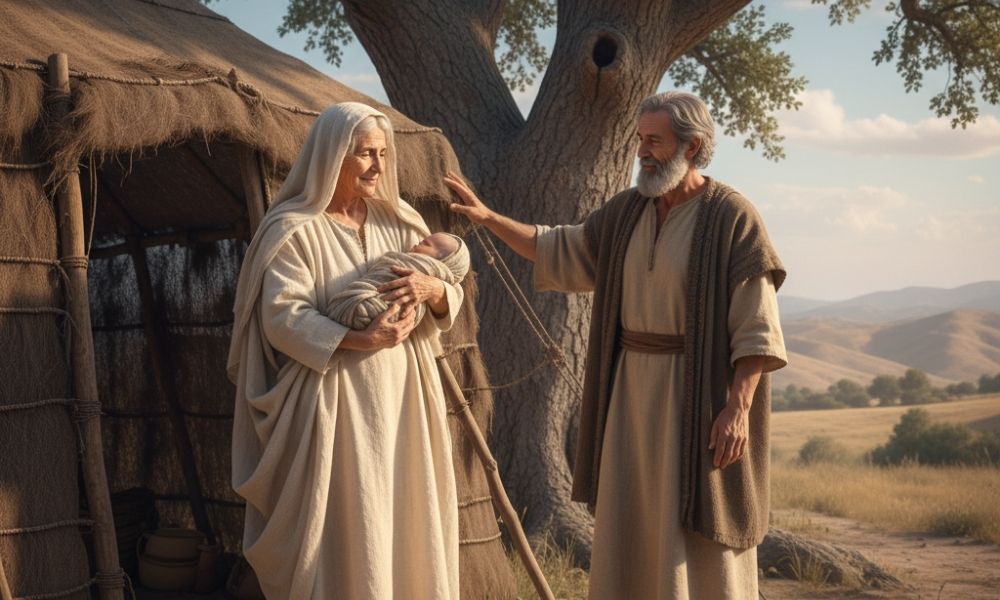
Sarah’s story traces God’s covenant faithfulness through barrenness, delay, and surprising joy. Scripture presents her as both profoundly human and divinely chosen—laughed in doubt, laughed again in fulfillment.
Name: Sarai → Sarah
Meaning: Sarai = “my princess”; Sarah = “princess/noblewoman” (Genesis 17:15–16)
Role: Matriarch; bearer of the covenant line through Isaac
Spouse: Abraham (Genesis 11:29)
Son: Isaac (Genesis 21:1–3)
Lifespan: 127 years (Genesis 23:1)
Era: Patriarchal period (early 2nd millennium BCE)
Homelands Traveled: Ur → Haran → Canaan → (Egypt, Gerar) → Hebron (Genesis 11–23)
Key Texts: Genesis 11–23; Isaiah 51:2; Romans 4; Galatians 4:21–31; Hebrews 11:11; 1 Peter 3:5–6
Symbols: Tent (pilgrimage/hospitality), Laughter (Isaac’s name), Cave of Machpelah (ancestral burial)
Name & Theological Significance
Sarai → Sarah: God changes her name when renewing the covenant (Genesis 17:15–16). The shift from “my princess” to “princess” widens her significance beyond one household to “mother of nations; kings of peoples shall come from her.” Isaac’s name (Yitzḥaq, “he laughs”) memorializes the transformation from skeptical laughter (Genesis 18:12–15) to celebratory laughter (Genesis 21:6).
Family Line & Relationships
- Husband: Abraham, called from Mesopotamia; covenant bearer (Genesis 12:1–3; 15; 17).
- Child of Promise: Isaac—born when Abraham was 100 and Sarah ~90 (Genesis 17:17; 21:5–7).
- Extended Line: Through Isaac → Jacob (Israel) → the twelve tribes (Genesis 25–49).
- Servant: Hagar (Egyptian); mother of Ishmael (Genesis 16; 21:8–21).
- New Testament Echoes: Believers share her lineage by faith (Galatians 3:7, 29; 4:26–31; 1 Peter 3:6).
Chronology of Key Events
- Marriage & Migration (Genesis 11:29–31; 12:1–5): Leaves Ur and Haran for Canaan.
- Famine & Egypt (Genesis 12:10–20): God protects Sarah; plagues on Pharaoh’s house; Sarah restored.
- Barrenness & Human Strategy (Genesis 16): Sarah gives Hagar to Abraham; Ishmael is born; ensuing tension.
- Covenant Renaming & Promise Reaffirmed (Genesis 17:15–19): God names Sarah and promises a son by her.
- Visitors at Mamre (Genesis 18:1–15): Promise dated to “this time next year”; Sarah laughs.
- Gerar Episode (Genesis 20): God again protects Sarah; Abimelech returns her, fearing God.
- Birth of Isaac (Genesis 21:1–7): Promise fulfilled; laughter redeemed.
- Ishmael Sent Away (Genesis 21:8–21): Painful separation; God also blesses Ishmael.
- Death & Burial (Genesis 23): Dies at 127 in Hebron; first purchase of the promised land is her tomb—the Cave of Machpelah.
Character Portrait
Strengths: Loyal partner in pilgrimage (Genesis 12:4–5); hospitality (Genesis 18:6–8); capacity for faith (Hebrews 11:11).
Struggles: Fear (Genesis 18:15), jealousy and harshness toward Hagar (Genesis 16:5–6), reliance on human schemes (Genesis 16:1–4).
Maturity Arc: From doubt to doxology—her laughter becomes a testimony (Genesis 21:6).
Themes & Theology
- Promise vs. Human Expediency: Hagar episode contrasts self-made solutions with God’s timing (Genesis 16; 21).
- Covenant Identity: Sarah’s renaming signals royal/matriarchal vocation (Genesis 17:15–16).
- Grace for the Nations: God protects Sarah among foreigners, previewing blessing to the nations (Genesis 12:3; 12:17–20; 20).
- Freedom & Inheritance: Paul allegorizes Sarah (freewoman) and Hagar (slave) to explain the New Covenant’s liberty and promise (Galatians 4:21–31).
- Sacred Geography: Machpelah becomes Israel’s ancestral anchor in the land (Genesis 23:17–20; 25:9–10; 49:29–32).
Notable Passages (with Notes)
- Genesis 12:10–20; 20: God’s protective interventions underscore the inviolability of the promise.
- Genesis 18:9–15: The Lord questions, “Is anything too hard for the LORD?”—central faith refrain.
- Genesis 21:1–7: Fulfillment formula (“The LORD visited Sarah… as He had promised”) highlights God’s reliability.
- Hebrews 11:11–12: Sarah credited with faith to conceive—God’s power made perfect in weakness.
- 1 Peter 3:5–6: Sarah as exemplar of hope in God and respectful conduct.
- Isaiah 51:2: “Look to Abraham your father and to Sarah who bore you”—model for a restored people.
Ethical/Practical Lessons
- Trust God’s Timing: Delays are not denials; promise ripens under providence.
- Reject Manipulation: “Hagar-solutions” may birth conflict; faith waits.
- Honesty about Doubt: God meets us in laughter that masks unbelief and turns it into joy.
- Honor in Marriage: Partnership in pilgrimage—shared obedience and mutual protection (cf. 1 Peter 3:1–7).
Sarah & Hagar: Tension and Mercy
Conflict: Status, inheritance, and identity converge (Genesis 16; 21).
God’s Mercy: The angel of the LORD seeks Hagar; promises Ishmael a future nation (Genesis 16:7–12; 21:17–21).
Paul’s Use (Galatians 4): Not a dismissal of Hagar’s worth but an allegory about covenants and how inheritance comes—by promise, not law.
Geography & Places
- Ur/Haran: Mesopotamian origins (Genesis 11:31).
- Canaan: Oaks of Mamre at Hebron—home base (Genesis 13:18; 18:1).
- Egypt & Gerar: Episodes reveal God’s protective sovereignty among nations (Genesis 12; 20).
- Machpelah (Hebron): Purchased tomb; first tangible stake in the promised land (Genesis 23:1–20).
Quick Reference Timeline (Approximate)
- Call & Migration: Abram ~75 (Genesis 12:4).
- Ishmael’s Birth: Abram ~86 (Genesis 16:16).
- Covenant Renaming: Abram ~99; promise fixed to Sarah (Genesis 17:1, 15–19).
- Isaac’s Birth: Abraham 100; Sarah ~90 (Genesis 21:5).
- Sarah’s Death: Age 127 at Hebron (Genesis 23:1–2).
Legacy & Reception
- Judaism: First of the Four Matriarchs; Rosh Hashanah readings emphasize Isaac’s birth and the Akedah (Genesis 21–22).
- Christianity: Model of faith and grace; typology for the New Covenant (Hebrews 11; Galatians 4).
- Islamic Tradition: Sarah (Sārah), honored as Abraham’s wife and mother of Ishaq (Isaac).
Key Facts at a Glance
- First woman in Scripture whose age at death is recorded (Genesis 23:1).
- Her burial plot becomes the patriarchal family tomb, later holding Abraham, Isaac, Rebekah, Jacob, and Leah (Genesis 49:29–32).
- Her story frames the covenant with tangible land, lineage, and blessing—promise moving from word to cradle to grave to nation.







Leave a Reply