
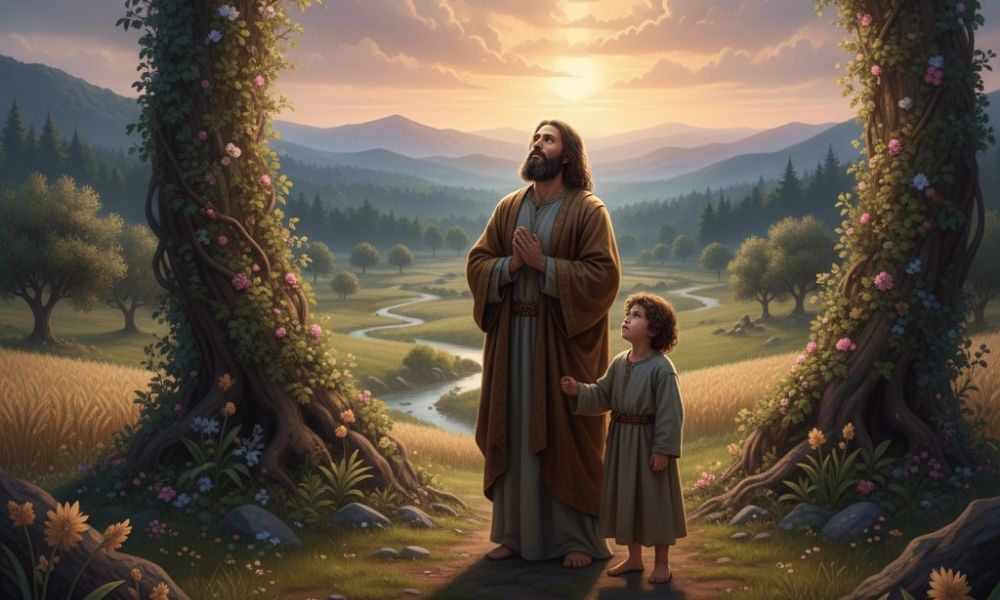
Seth was the third son of Adam and Eve, born after the death of his brother Abel. His name means “appointed” or “granted,” reflecting God’s provision of another righteous offspring to continue the godly line after Cain’s sin and Abel’s death. Seth’s descendants became known as those who “called on the name of the Lord,” marking the continuation of true worship and faith in early humanity.
Quick Facts
Name: Seth (Hebrew: Šēt, meaning “appointed,” “granted,” or “substitute”)
Parents: Adam and Eve
Brothers: Cain (elder) and Abel (deceased)
Children: Enosh and other sons and daughters
Era: Antediluvian (before the Flood)
Tribe/Nation: Early humanity (pre-Israelite)
Key Virtue: Righteousness and faithfulness to God
Notable Descendant: Noah (through Enosh, Kenan, Mahalalel, etc.)
Scriptural References: Genesis 4:25–26; Genesis 5:3–8; Luke 3:38
Symbol: Olive branch or family line — representing peace and godly lineage
Name Meaning
The name Seth means “appointed” or “substitute.” When Eve gave birth to him, she said,
“God has appointed me another seed instead of Abel, whom Cain slew.” (Genesis 4:25)
This name signifies divine replacement — God’s faithfulness in raising up a new righteous line after tragedy.
Lineage and Family Background
Seth was born to Adam and Eve after the death of Abel and the exile of Cain. He became the ancestor of Noah, and thus of all post-flood humanity. Through Seth’s line came men who “walked with God,” including Enoch and Noah. His lineage represents the continuation of godly faith on the earth amid a world growing increasingly corrupt.
Biblical Context
The story of Seth occurs in Genesis 4–5, at the dawn of human history. His birth marks a turning point after the fall and the first murder. While Cain’s descendants developed cities and culture apart from God, Seth’s line preserved faith and worship, forming a spiritual contrast that shaped the unfolding biblical narrative.
Genesis 4:26 records,
“Then began men to call upon the name of the LORD.”
This moment represents the establishment of public worship and devotion — a legacy Seth’s descendants carried forward.
Key Character Traits
- Faithfulness: His line was known for seeking God.
- Righteous Legacy: Ancestor to men like Enoch (who “walked with God”) and Noah (who found grace in God’s eyes).
- Obedience: His life reflects quiet obedience and devotion rather than rebellion.
- Hope: Embodied God’s faithfulness in restoring what was lost through Abel’s death.
Main Life Events
- Birth: Born after Abel’s death, fulfilling God’s promise of continued seed (Genesis 4:25).
- Fatherhood: Became the father of Enosh (Genesis 4:26), from whom worship of Yahweh began to flourish.
- Legacy: His line produced patriarchs who would preserve faith and righteousness before the Flood.
- Death: Lived 912 years (Genesis 5:8).
Major Relationships
- Adam and Eve: His parents; through him, they saw God’s faithfulness despite their earlier loss.
- Cain and Abel: His elder brothers; his life contrasts Cain’s rebellion and follows Abel’s righteousness.
- Enosh: His son, known as the one through whom people began calling on God’s name.
Notable Passages
- Genesis 4:25–26: “God has appointed me another seed instead of Abel… Then men began to call on the name of the LORD.”
- Genesis 5:3: “Adam begot a son in his own likeness, after his image, and called his name Seth.”
- Luke 3:38: In Jesus’ genealogy — “…the son of Enosh, the son of Seth, the son of Adam, the son of God.”
Legacy & Impact
Seth represents God’s faithfulness to preserve a righteous remnant. Through him, the worship of God continued on the earth. His line became the channel of blessing leading to Noah, Abraham, David, and ultimately Jesus Christ — the promised Redeemer. Seth’s story is a reminder that God always provides hope and restoration, even in the midst of human sin and loss.
Symbolism / Typology
- Seth: The appointed seed — foreshadowing Christ, the ultimate “appointed one” who restores righteousness.
- Enosh’s Generation: Symbolizes the beginning of spiritual revival and organized worship.
- Contrast with Cain: Represents the divide between the godly and ungodly lines in early humanity.
Extra-Biblical Tradition
Jewish and early Christian writings honor Seth as the father of the righteous line. Some traditions describe him as a man of great wisdom who preserved the divine knowledge passed down from Adam. He is revered in both Judaism and Christianity as a symbol of divine appointment and faithfulness.







Leave a Reply