
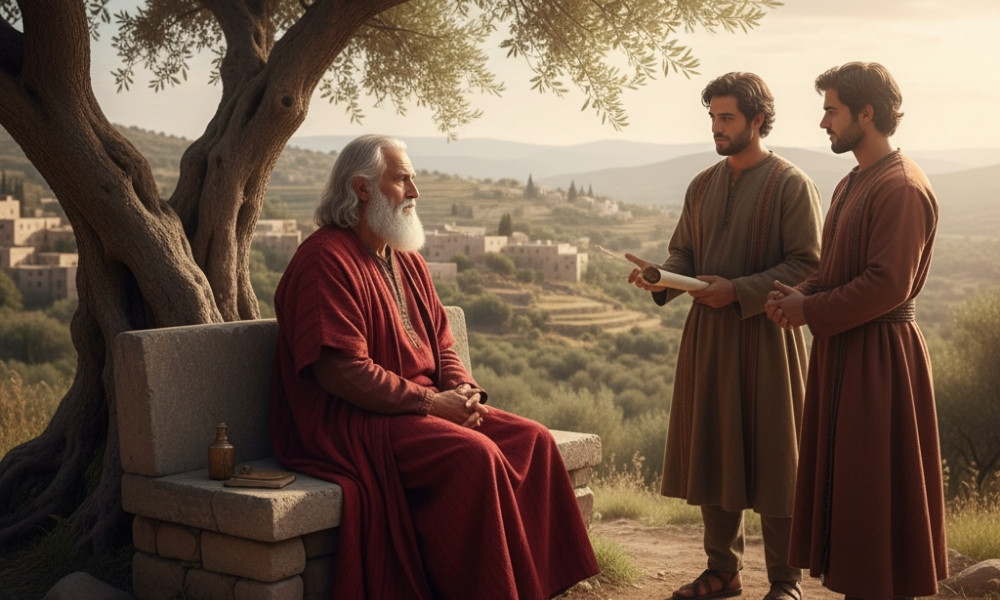
Tola is the first of the “Minor Judges” listed in the Book of Judges. The term “minor” refers only to the brevity of the biblical account (just two verses), not the significance of his impact. Rising immediately after the disastrous and bloody reign of the tyrant Abimelech, Tola’s ministry was one of stabilization and healing. There are no records of him fighting great wars or slaying enemies; instead, his legacy is twenty-three years of quiet, steady governance that allowed Israel to recover from civil strife and spiritual confusion.
- Name: Tola (Hebrew: Tola)
- Meaning: “Crimson Worm” or “Scarlet Stuff”
- Role: Judge, Stabilizer
- Tribe: Issachar
- Father: Puah
- Grandfather: Dodo
- Home: Shamir (in the hill country of Ephraim)
- Era: Period of the Judges (Post-Abimelech, ~1100 BCE)
- Term: 23 Years
- Predecessor: Abimelech
- Successor: Jair
- Scripture: Judges 10:1–2
- Key Virtue: Stability and Restoration
Name Meaning
“Crimson Worm”: The name Tola refers to the Coccus ilicis, a worm used in the ancient world to produce valuable scarlet dye. This suggests his family may have been involved in the textile or dyeing trade.
“Puah”: His father’s name, Puah, means “Splutter” or is derived from a plant used for red dye (madder), reinforcing the family’s connection to the dye trade.
Lineage / Family Background
Tribe of Issachar: Tola was from the northern tribe of Issachar, a tribe often characterized in prophecy as a strong donkey bearing burdens (Genesis 49:14), symbolizing hardworking, settled agriculturalists.
Residence in Ephraim: Interestingly, though he was from Issachar, he lived and judged in Shamir in the hill country of Ephraim. This indicates he moved to the central highlands—the political and religious heart of Israel at the time—to administer justice effectively for the whole nation.
Biblical Era / Context
The Post-Abimelech Trauma: Tola arose “to save Israel” immediately after Abimelech. Abimelech’s reign had caused civil war, the slaughter of the leadership in Shechem, and deep tribal division. Israel was likely fractured, cynical, and spiritually wounded.
A Time of Silence: The lack of recorded battles during Tola’s 23 years suggests a period of effective deterrence or diplomacy. After the internal chaos of Abimelech, boring peace was exactly what the nation needed.
Major Roles / Identity
The Healer: The text says he rose “to save” (or deliver) Israel. Since no foreign enemy is mentioned, he likely “saved” Israel from itself—restoring order, law, and unity after the fratricidal chaos of the previous regime.
The Administrator: Tola represents the judicial side of the “Judge” title. He likely spent his days settling disputes, enforcing the Torah, and rebuilding the social fabric.
Key Character Traits
Steadfastness: To rule for 23 years without a recorded rebellion or invasion implies a steady, consistent hand.
Selflessness: He left his home territory (Issachar) to serve where he was needed most (Ephraim).
Main Life Events
Inauguration: He arose to save Israel following Abimelech’s death.
Relocation: He established his seat of judgment in Shamir, a strategic location in the mountains.
Governance: He judged Israel for twenty-three years.
Death: He died and was buried in Shamir, leaving a peaceful nation to his successor, Jair.
Notable Passages
Judges 10:1–2: “After Abimelech there arose to save Israel Tola the son of Puah, son of Dodo, a man of Issachar, and he lived at Shamir in the hill country of Ephraim. And he judged Israel twenty-three years. Then he died and was buried at Shamir.”
Legacy & Impact
The Value of Normalcy: Tola’s life teaches that God’s deliverance doesn’t always look like a thunderbolt or an earthquake; sometimes, it looks like twenty years of quiet order.
Preparation: His long period of peace allowed the population to grow and recover, strengthening them for the challenges that would arise in the days of Jephthah.
Symbolism / Typology
The Scarlet Worm: In Christian typology, the Tola (crimson worm) is associated with Psalm 22:6 (“But I am a worm and not a man”). The female crimson worm dies while protecting her offspring, staining the wood she is attached to red. This is often seen as a subtle foreshadowing of Christ’s sacrificial death, though Tola the Judge does not explicitly enact this.
Extra-Biblical References
Josephus: The historian Josephus mentions Tola briefly, noting that he was a man of “good courage” and that the state of affairs during his time was “prosperous.”







Leave a Reply