
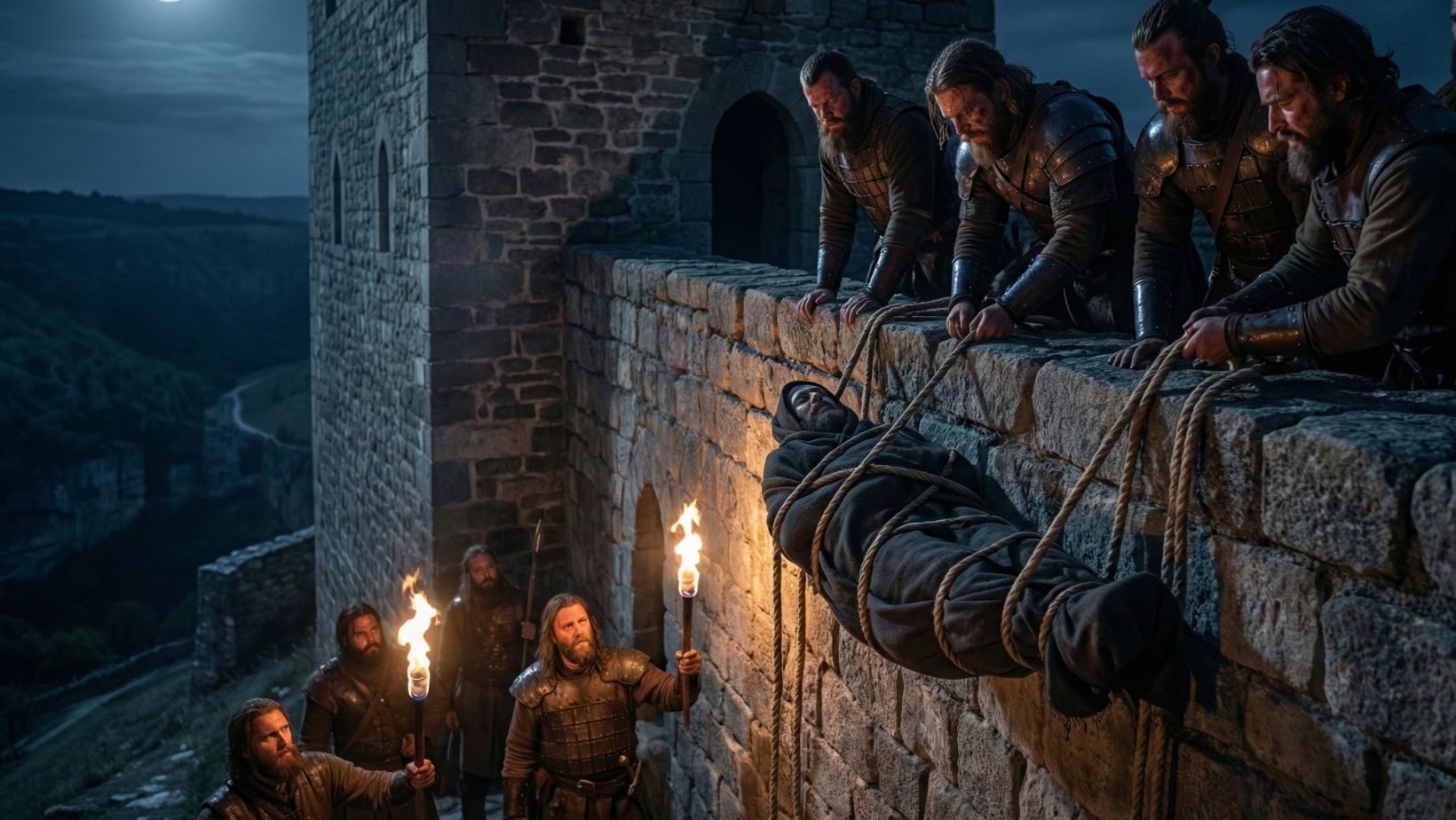
1 Samuel 31 serves as the tragic curtain call for the first King of Israel. The doom pronounced by Samuel in Chapter 15 and reiterated by his spirit in Chapter 28 is now fulfilled with brutal precision. The narrative moves swiftly: the Israelites are routed on Mount Gilboa, Saul’s sons—including the noble Jonathan—are slain, and Saul takes his own life to avoid capture. The chapter ends with a scene of utter humiliation as the Philistines display the royal corpses on a city wall, only for the valiant men of Jabesh-gilead to retrieve them, providing a dignified burial for the king who once saved them. The book closes in darkness, waiting for the light of David’s reign in 2 Samuel.
1. The Death of Saul and His Sons (1 Samuel 31:1–6)
1 Now the Philistines attacked Israel, and the men of Israel fled before them and were slaughtered on the slopes of Mount Gilboa. 2 The Philistines closed in on Saul and his sons, and they killed three of his sons: Jonathan, Abinadab, and Malchishua. 3 The fighting grew very fierce around Saul, and the Philistine archers caught up with him and wounded him severely. 4 Saul groaned to his armor bearer, “Take your sword and kill me before these pagan Philistines come to run me through and taunt and torture me.” But his armor bearer was afraid and would not do it. So Saul took his own sword and fell on it. 5 When his armor bearer realized that Saul was dead, he fell on his own sword and died beside the king. 6 So Saul, his three sons, his armor bearer, and all his men died together that same day.
Commentary:
- The Fulfillment of Prophecy (v. 1-2): Just as Samuel predicted in the seance at Endor (“tomorrow you and your sons will be with me”), the judgment arrives. The death of Jonathan is particularly tragic; he was righteous and loyal to David, yet his destiny was inextricably bound to his father’s rebellion. His death clears the path for David’s throne, removing any potential dynastic rival who might have divided the tribes.
- The Archers (v. 3): Saul is wounded by archers. This highlights a military disparity; the Philistines had superior technology and range.
- Saul’s Final Fear (v. 4): Even in death, Saul is consumed by his image and pride. He refers to the Philistines as “uncircumcised” (pagans), fearing they will “taunt” (abuse/mock) him. He is more afraid of humiliation than death or God’s judgment.
- Irony: Saul fears the Philistines will abuse him, so he kills himself. However, as seen later, the Philistines abuse his body anyway. Suicide did not save his dignity.
- The Suicide (v. 4): Saul takes his own life. In Jewish tradition and Christian theology, this is often viewed as the final tragic act of a man who had cut himself off from God. He dies by the sword, just as he lived by the sword rather than by faith.
- The Armor Bearer (v. 5): The armor bearer’s refusal to kill Saul stems from a deep reverence for the “Lord’s Anointed” (a concept David also respected). Seeing his king dead, he follows him in suicide, showcasing a misplaced but intense loyalty.
- Total Collapse (v. 6): The phrase “died together” emphasizes the totality of the catastrophe. The house of Saul is effectively wiped out in a single day.
2. The Aftermath and Desecration (1 Samuel 31:7–10)
7 When the Israelites on the other side of the Jezreel Valley and beyond the Jordan saw that the Israelite army had fled and that Saul and his sons were dead, they abandoned their towns and fled. So the Philistines moved in and occupied their towns. 8 The next day, when the Philistines went out to strip the dead, they found the bodies of Saul and his three sons on Mount Gilboa. 9 So they cut off Saul’s head and stripped off his armor. Then they proclaimed the good news of Saul’s death in their pagan temple and to the people throughout the land of Philistia. 10 They placed his armor in the temple of the Ashtoreths, and they fastened his body to the wall of Beth-shan.
Commentary:
- The Loss of Land (v. 7): The defeat is strategic as well as symbolic. The Israelites abandon the cities in the Jezreel Valley and even “beyond the Jordan.” This cuts the nation in half physically, separating the north from the south. The Philistine occupation undoes decades of conquest.
- Desecration (v. 9):
- Decapitation: The Philistines cut off Saul’s head. This is a grim parallel to David cutting off Goliath’s head (1 Samuel 17). The giant’s people have now returned the favor to Israel’s giant-like king.
- “Good News”: The Philistines send messengers to proclaim the victory. The Hebrew word used here is often translated as “evangelize”—they are preaching the “gospel” of their idol’s victory over Yahweh’s people.
- The Temple of Ashtoreth (v. 10): Placing Saul’s armor in the temple of Ashtoreth (the Canaanite fertility goddess) and his head in the temple of Dagon (1 Chronicles 10:10) was a theological statement: “Our gods have defeated your God.”
- Beth-shan (v. 10): Beth-shan was a major city at the junction of the Jezreel and Jordan valleys. Fastening the bodies to the wall was a public spectacle intended to terrorize the Israelites and prove that the dynasty was finished.
3. The Heroism of Jabesh-gilead (1 Samuel 31:11–13)
11 But when the people of Jabesh-gilead heard what the Philistines had done to Saul, 12 all their mighty warriors traveled through the night to Beth-shan and took the bodies of Saul and his sons down from the wall. They brought them to Jabesh, where they burned the bodies. 13 Then they took their bones and buried them beneath the tamarisk tree at Jabesh, and they fasted for seven days.
Commentary:
- The Connection to Jabesh-gilead (v. 11): This is a profound “bookend” to Saul’s life. In 1 Samuel 11, Saul’s first act as king was rescuing the city of Jabesh-gilead from the Ammonites. Now, forty years later, the men of that very city return the favor. It is the one bright spot of loyalty in a chapter of darkness.
- The Rescue Mission (v. 12): This was a dangerous raid. The warriors marched all night, infiltrated enemy territory (Beth-shan was occupied), and retrieved the bodies to restore Saul’s dignity.
- Burning the Bodies (v. 12): Cremation was not a standard Jewish practice (which favored burial).
- Reason: It is likely the bodies were already decomposing or had been mutilated/rotted by exposure on the wall. Burning the flesh allowed them to honorably bury the bones.
- Alternative View: Some scholars suggest this was a distinct honor reserved for kings in specific contexts (see Jeremiah 34:5), though here it seems practical due to the state of the corpses.
- The Tamarisk Tree (v. 13): Saul held court under a tamarisk tree in Gibeah (1 Samuel 22:6). Now he is buried under one in Jabesh.
- Fasting (v. 13): A seven-day fast indicates a period of intense mourning, typically reserved for the death of a great leader or a national calamity.
Theological Significance of 1 Samuel 31
- The Failure of the Flesh: Saul represents leadership according to human standards (tall, handsome, strong). His disastrous end demonstrates that natural ability without spiritual submission leads to ruin. The “flesh” cannot please God and eventually destroys itself.
- The Validity of God’s Word: The chapter is terrifying because God’s word came true exactly as spoken. Samuel’s prophecies, though delayed, were not forgotten. This validates the authority of the prophet and the danger of ignoring divine warnings.
- The Necessity of David: The book ends in a vacuum. The throne is empty, the army is scattered, and the land is occupied. This sets the stage for 2 Samuel, where David will not only unite the tribes but also drive out the Philistines. The total failure of the first Adam (Saul) prepares the way for the second (David).
Practical Applications
- Finishing Well: Saul started humble and victorious (1 Samuel 11) but ended proud and defeated (1 Samuel 31). It is not enough to begin the race of faith; one must endure to the end.
- Loyalty Remembered: The men of Jabesh-gilead teach us that we should never forget those who helped us in our time of need. Kindness sown years ago can reap a harvest of dignity when we are at our lowest.
- The Danger of Image: Saul lived for the approval of people and died fearing their mockery. Living for the opinion of others is a trap that can follow us to the grave. We should fear God, not man.
Final Insight
1 Samuel ends not with a bang, but with a funeral. The bright hope of a king “like all the nations” lies as a pile of bones under a tree in Gilead. It is a somber reminder that God’s rejection is real. Yet, amidst the ashes, the silent loyalty of Jabesh-gilead hints that honor is not dead in Israel—and just over the horizon, the shepherd king is ready to take up the scepter.







Leave a Reply