
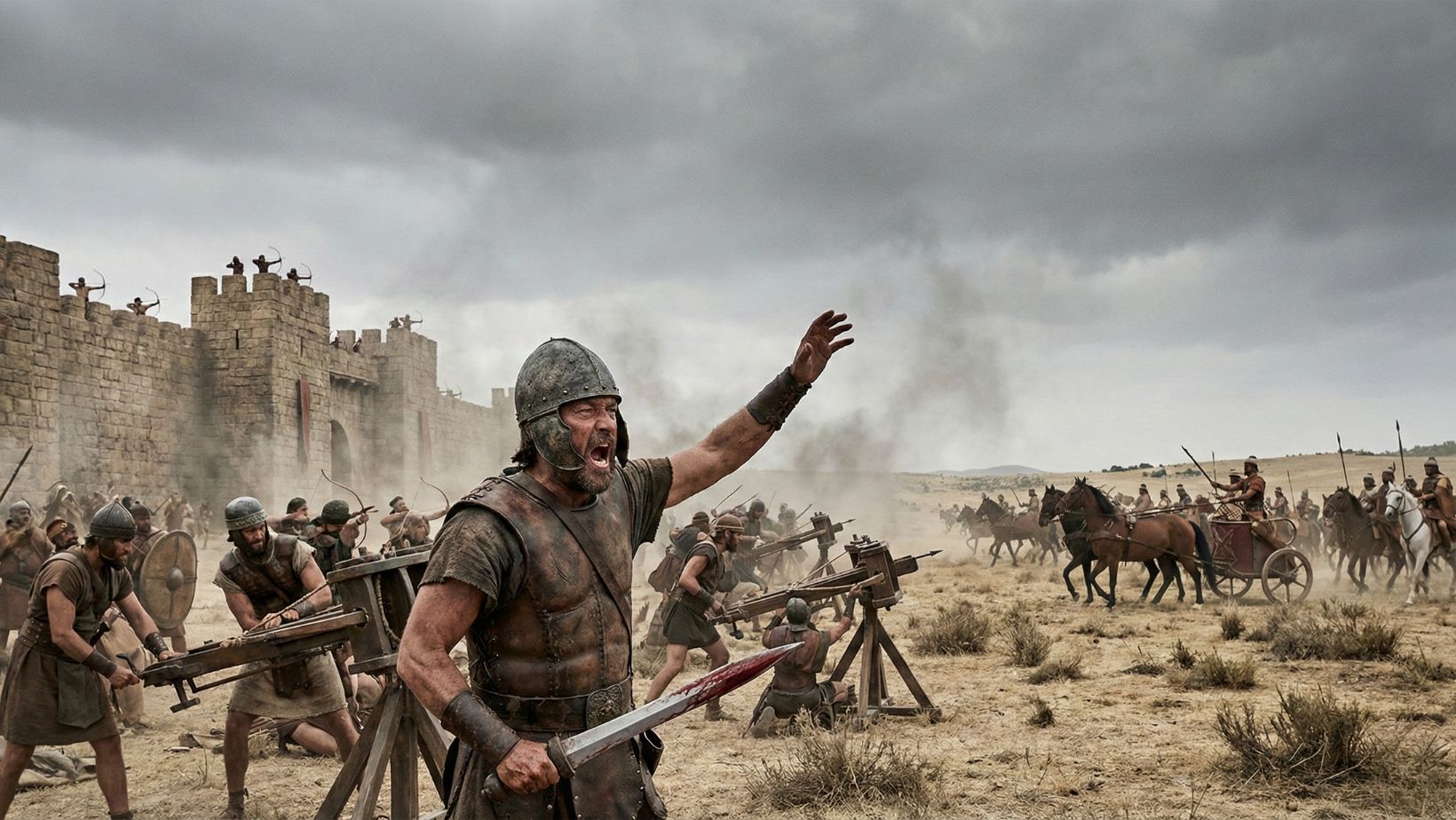
2 Samuel 10 marks a turning point in David’s reign, shifting from the domestic grace of the previous chapter to international conflict. What begins as a diplomatic mission of condolence turns into a major regional war due to a gross miscalculation by the new Ammonite king, Hanun. Hanun humiliates David’s ambassadors, forcing Israel into a defensive war against a coalition of Ammonites and hired Syrian (Aramean) mercenaries. This chapter highlights the military genius of Joab, who navigates a dangerous two-front battle, and concludes with David securing total dominance over the Transjordan region. Crucially, this war sets the stage for the siege of Rabbah in the next chapter, where David’s absence will lead to his greatest moral failure with Bathsheba.
1. The Insult: Kindness Rejected (2 Samuel 10:1–5 NLT)
1 Some time later, King Nahash of the Ammonites died, and his son Hanun became king. 2 David said, “I am going to show loyalty to Hanun just as his father, Nahash, was always loyal to me.” So David sent ambassadors to express sympathy to Hanun about his father’s death. But when David’s ambassadors arrived in the land of Ammon, 3 the Ammonite commanders said to Hanun, their master, “Do you really think these men are coming here to honor your father? No! David has sent them to spy out the city so they can come in and conquer it!” 4 So Hanun seized David’s ambassadors and shaved off half of each man’s beard, cut off their clothes at the buttocks, and sent them away. 5 When David heard what had happened, he sent messengers to tell the men, “Stay at Jericho until your beards have grown out, and then come back.” For they felt deep shame.
Commentary:
- David’s Motive (v. 2): David operates on hesed (loyalty/kindness), just as he did with Mephibosheth in Chapter 9. Though Nahash was a brutal enemy to Saul (1 Samuel 11), he had apparently supported David when David was fleeing from Saul. David seeks to maintain this alliance.
- The Paranoid Counsel (v. 3): The “new guard” of Ammonite princes distrusts David. They project their own aggression onto him, interpreting a peace mission as espionage.
- Historical Note: Paranoia is common in new, insecure leadership. They viewed David’s rising power as an existential threat.
- The Nature of the Insult (v. 4): Hanun’s treatment of the envoys was not a prank; it was a calculated diplomatic atrocity designed to provoke war.
- Shaved Beards: In the Ancient Near East, the beard was a symbol of masculinity, freedom, and dignity. To shave it was to emasculate a man and mark him as a slave. Shaving half made them objects of ridicule.
- Cut Garments: Cutting the robes “at the buttocks” was a sexual humiliation. It violated the strict Hebrew laws of modesty and exposed their nakedness.
- David’s Response (v. 5): David protects the dignity of his men. He does not force them to return to the capital in shame but allows them to recover in Jericho (a border town). He prioritizes the emotional welfare of his servants over immediate debriefing.
Insight: Cynicism destroys relationships. The Ammonite advisors could not conceive of genuine kindness, so they turned a potential ally into a devastating enemy.
2. The Alliance and Joab’s Strategy (2 Samuel 10:6–14 NLT)
6 When the people of Ammon realized how seriously they had angered David, they sent and hired twenty thousand Aramean foot soldiers from Beth-rehob and Zobah, one thousand from the king of Maacah, and twelve thousand from the land of Tob. 7 When David heard about this, he sent Joab and all his warriors to fight them. 8 The Ammonite troops came out and drew up their battle lines at the entrance of the city gate, while the Arameans from Zobah and Rehob and the men from Tob and Maacah positioned themselves to fight in the open fields. 9 When Joab saw that he would have to fight on both the front and the rear, he chose some of Israel’s best troops and led them against the Arameans. 10 He left the rest of the men under the command of his brother Abishai, who was to attack the Ammonites. 11 “If the Arameans are too strong for me, then come over and help me,” Joab told him. “And if the Ammonites are too strong for you, I will come and help you. 12 Be of good courage, and let us fight bravely for our people and the cities of our God. May the Lord do what is good in his sight.” 13 So Joab and his troops attacked the Arameans, and they fled before him. 14 When the Ammonites saw the Arameans running away, they fled from Abishai and retreated into the city. After the battle, Joab returned to Jerusalem.
Commentary:
- The Mercenary Army (v. 6): Realizing they had “stunk” (literal Hebrew translation for “angered”) before David, the Ammonites spend 1,000 talents of silver (1 Chronicles 19:6) to hire Syrian (Aramean) mercenaries. This escalates a border dispute into a regional war. *
- The Tactical Trap (v. 8-9): Joab finds himself in a “pincer movement.”
- Joab’s Solution (v. 9-10): Joab splits his forces—a risky move that violates the military principle of “concentration of force,” but necessary here.
- The Speech (v. 12): This is one of the great speeches of the Bible.
- Duty: “Fight bravely for our people and the cities of our God.”
- Sovereignty: “May the Lord do what is good in his sight.” Joab prepares meticulously but ultimately trusts the outcome to God’s will.
- The Rout (v. 13-14): Joab attacks the stronger force (Syrians) first. Mercenaries, fighting only for pay, break rank quickly when the fighting gets hard. Seeing their expensive allies flee, the Ammonites retreat inside their walls.
Insight: Joab demonstrates that faith is not passivity. He strategizes brilliantly (“If they are too strong, come help me”) while simultaneously trusting God’s sovereignty (“May the Lord do what is good”).
3. Total Victory over Syria (2 Samuel 10:15–19 NLT)
15 The Arameans now realized that they were no match for Israel. So when they regrouped, 16 Hadadezer sent for more Arameans from beyond the Euphrates River. These troops arrived at Helam under the command of Shobach, the commander of Hadadezer’s forces. 17 When David heard what was happening, he mobilized all Israel, crossed the Jordan River, and led the army to Helam. The Arameans positioned themselves in battle formation and fought against David. 18 But again the Arameans fled from the Israelites. This time David’s forces killed seven hundred charioteers and forty thousand foot soldiers, including Shobach, the commander of their army. 19 When all the kings allied with Hadadezer saw that they had been defeated by Israel, they surrendered to Israel and became their subjects. After that, the Arameans were afraid to help the Ammonites anymore.
Commentary:
- Escalation (v. 15-16): The Syrians (Arameans) are embarrassed. Hadadezer, king of Zobah, decides to make this a total war, calling up reserves from “beyond the River” (Mesopotamia).
- David Enters the Fray (v. 17): Initially, Joab led the defense. Now that the threat involves an imperial superpower, King David personally mobilizes “all Israel” and crosses the Jordan.
- The Battle of Helam (v. 17-18): This is a decisive crushing of the Syrian power.
- Casualties: 700 charioteers and 40,000 foot soldiers (a massive blow to ancient demographics).
- Leadership Decapitated: Shobach, the enemy general, is killed.
- Geopolitical Consequence (v. 19):
Insight: David does not just win the battle; he changes the political map. By defeating the coalition, he secures peace for Israel on the northern and eastern fronts, fulfilling the promise of “rest” (though achieved through war).
Theological Significance of 2 Samuel 10
- Misunderstood Grace: David offered comfort, but it was received as a threat. This mirrors the Gospel—God sends Christ as an ambassador of peace, but the world often rejects Him, viewing His claims as a threat to their autonomy (John 1:11).
- The Sovereignty of God in War: Joab’s statement (“May the Lord do what is good in his sight”) is a model of biblical worldview. It avoids fatalism (doing nothing) and arrogance (presuming victory). It combines maximum human effort with total submission to divine will.
- The Defense of the “Cities of God”: The war was not just for territory; it was for the “cities of our God.” The Israelites understood they were fighting to preserve the space where Yahweh was worshiped.
Practical Applications
- Handling Insults: When David’s men were shamed, he didn’t mock them or tell them to “get over it.” He provided a safe place (Jericho) for them to heal and recover their dignity. Leaders must protect the dignity of their people.
- Strategic Partnership: Joab and Abishai had a pact: “If I am in trouble, you help me; if you are in trouble, I help you.” Christians need “foxhole buddies”—partners who will step in when the battle gets too heavy.
- The Danger of Bad Advice: Hanun lost his kingdom’s security because he listened to cynical advisors instead of trusting proven alliances. We must be careful who we listen to, especially when they appeal to our fear or pride.
- Courage in Complexity: Joab was surrounded. Instead of panicking, he made a plan and trusted God. When life attacks us from “front and rear,” we must prioritize, stand firm, and trust the Lord.
Sermon Titles
- When Comfort Causes Conflict.
- Play the Man: Courage in the Crossfire.
- May the Lord Do What is Good.
- Half-Shaved Beards and Cut Robes.
- The High Cost of Cynicism.







Leave a Reply