
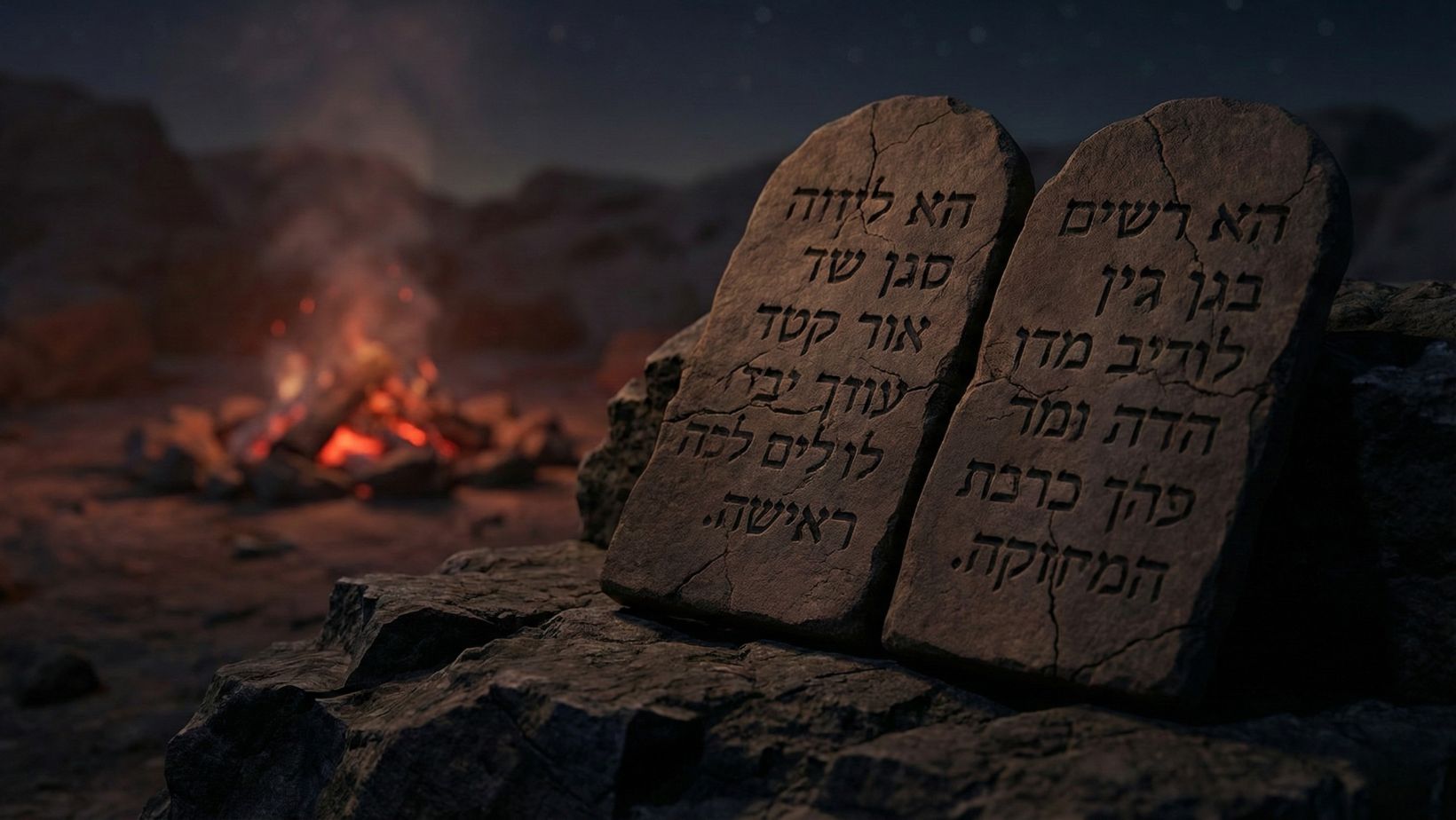
Exodus 20 is one of the most transformative chapters in the Bible, containing the “Ten Words” or the Ten Commandments. Following the dramatic preparation in Chapter 19, God speaks directly to the nation of Israel from the fire and smoke of Mount Sinai. These commandments are not merely a list of rules but the Covenant Charter for a redeemed people. They define how a “kingdom of priests” is to relate to their Deliverer (Commandments 1–4) and to one another (Commandments 5–10). The chapter concludes with the people’s terror at the divine presence, underscoring the need for a mediator between a holy God and a sinful humanity.
1. The Preamble: The Basis of the Law (Exodus 20:1–2 NLT)
1 Then God gave the people all these instructions: 2 “I am the Lord your God, who rescued you from the land of Egypt, the place of your slavery.
Commentary:
- The Divine Initiative (v. 1): The Law is not discovered by human reason but revealed by God. It begins with “Then God gave,” asserting His authority as the Lawgiver.
- Relationship Before Rules (v. 2): God identifies Himself first as “your God” and “your Rescuer.” The commandments are given to a people already saved by grace. Obedience is the response to salvation, not the requirement for it.
- The Identity of Yahweh (v. 2): By referencing the Exodus, God distinguishes Himself from all other ancient deities. He is the God who acts in history to liberate the oppressed.
2. Duties to God: The Vertical Commandments (Exodus 20:3–11 NLT)
3 “You must not have any other god but me. 4 “You must not make for yourself an idol of any kind or an image of anything in the heavens or on the earth or in the fish in the sea. 5 You must not bow down to them or worship them, for I, the Lord your God, am a jealous God who will not tolerate your affection for any other gods. I lay the sins of the parents upon their children; the entire family is affected—even children in the third and fourth generations of those who reject me. 6 But I lavish unfailing love for a thousand generations on those who love me and obey my commands. 7 “You must not misuse the name of the Lord your God. The Lord will not let you go unpunished if you misuse his name. 8 “Remember to observe the Sabbath day by keeping it holy. 9 You have six days each week for your ordinary work, 10 but the seventh day is a Sabbath day of rest dedicated to the Lord your God. On that day no one in your household may do any work. This includes you, your sons and daughters, your male and female servants, your livestock, and any foreigners living among you. 11 For in six days the Lord made the heavens, the earth, the sea, and everything in them; but on the seventh day he rested. That is why the Lord blessed the Sabbath day and set it apart as holy.
Commentary:
- No Other Gods (v. 3): This demands exclusive loyalty. In a polytheistic world, Israel was to be strictly monotheistic.
- No Idols (v. 4-6): God is Spirit and cannot be captured by human craftsmanship. “Jealousy” here is not a petty human emotion but a protective, covenantal passion—like a husband’s desire for his wife’s exclusive love.
- The Name (v. 7): Misusing God’s name involves more than profanity; it includes using God’s name to swear false oaths or manipulating His reputation for selfish gain.
- The Sabbath (v. 8-11): This commandment links human rhythm to the Creation Account. It provides dignity to all—servants and even animals—by mandating rest. It is a weekly protest against the endless production of Egypt.
3. Duties to Neighbor: The Horizontal Commandments (Exodus 20:12–17 NLT)
12 “Honor your father and mother. Then you will live a long, full life in the land the Lord your God is giving you. 13 “You must not murder. 14 “You must not commit adultery. 15 “You must not steal. 16 “You must not testify falsely against your neighbor. 17 “You must not covet your neighbor’s house. You must not covet your neighbor’s wife, his male or female servant, his ox or donkey, or anything else that belongs to your neighbor.”
Commentary:
- Authority in the Home (v. 12): This is the first commandment with a promise. Honoring parents is the foundation of a stable society.
- Sanctity of Life, Marriage, and Property (v. 13-15): These three short commands protect the most basic human rights: the right to live, the integrity of the family unit, and the right to own resources.
- Truthfulness (v. 16): This protects the legal system and the reputation of individuals. A community without truth cannot sustain justice.
- The Heart of the Matter (v. 17): The command against coveting is unique because it deals with internal desire rather than external action. It addresses the root cause of the previous four sins (murder, adultery, theft, and lying).
4. The People’s Fear and the Role of Moses (Exodus 20:18–21 NLT)
18 When the people heard the thunder and the loud blast of the ram’s horn, and when they saw the flashes of lightning and the smoke billowing from the mountain, they stood at a distance, trembling with fear. 19 And they said to Moses, “You speak to us, and we will listen. But don’t let God speak directly to us, or we will die!” 20 “Don’t be afraid,” Moses answered them, “for God has come in this way to test you, and so that your fear of him will keep you from sinning!” 21 As the people stood in the distance, Moses approached the dark cloud where God was.
Commentary:
- The Terror of Holiness (v. 18): The sensory experience of Sinai—the sound of the shofar and the sight of the fire—overwhelmed the people.
- The Need for a Mediator (v. 19): The people realize they cannot survive a direct encounter with the Lawgiver. They plead for Moses to be their intermediary. This sets the stage for the prophetic and priestly roles in Israel.
- The Purpose of Awe (v. 20): Moses clarifies that the “fear of God” is not meant to drive them away, but to keep them from the self-destruction of sin.
5. Proper Worship Defined (Exodus 20:22–26 NLT)
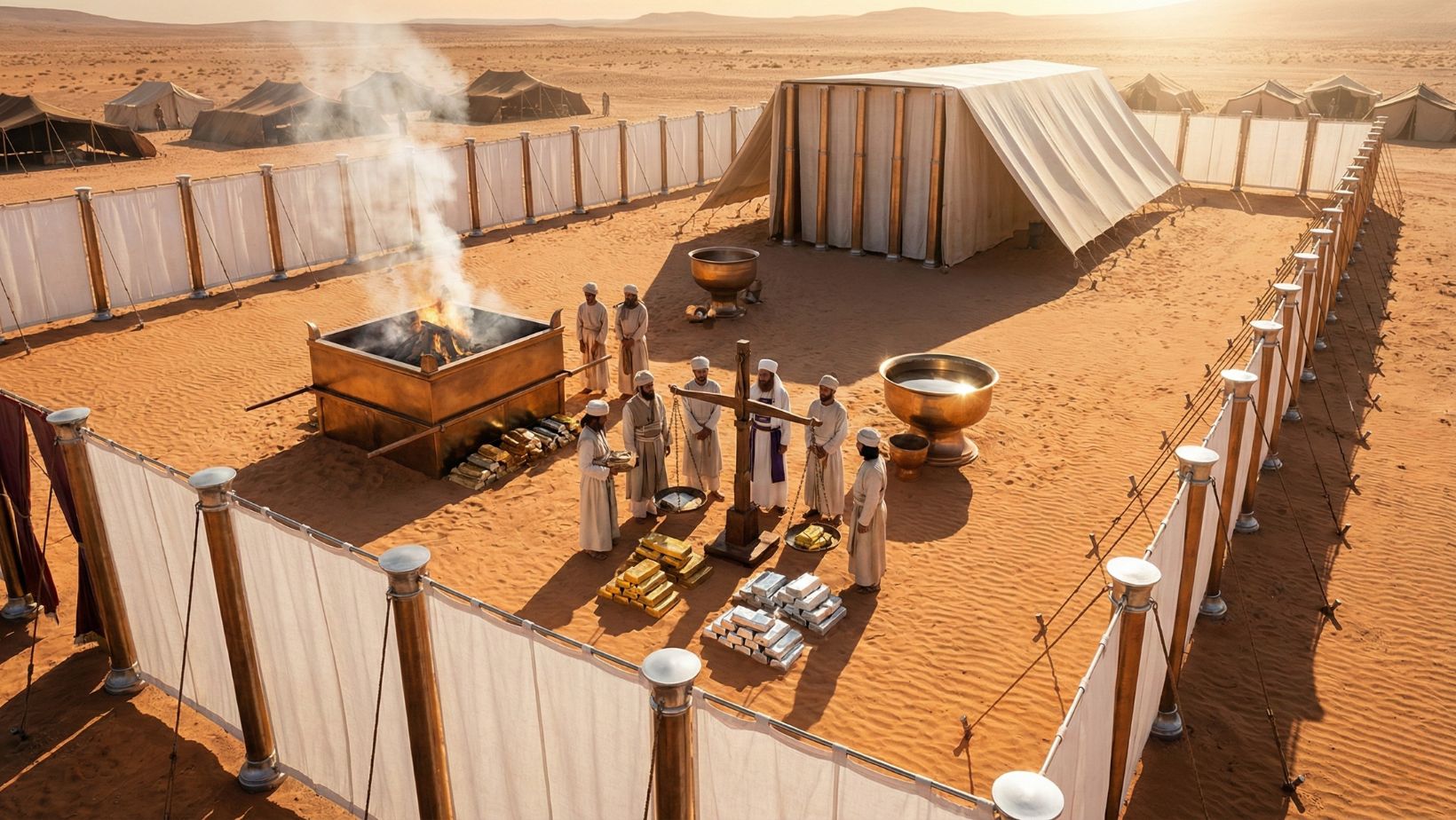
22 And the Lord said to Moses, “Say this to the people of Israel: You saw for yourselves that I spoke to you from heaven. 23 Remember, you must not make any idols of silver or gold to rival me. 24 “Build for me an altar made of earth, and offer your sacrifices to me—your burnt offerings and peace offerings, your sheep and goats, and your cattle. Build my altar wherever I choose to mark my name, and I will come to you and bless you. 25 If you use stones to build my altar, use only natural, uncut stones. Do not shape the stones with a tool, for that would make the altar unfit for holy use. 26 And do not approach my altar by going up steps. If you do, someone might look up under your clothing and see your nakedness.
Commentary:
- Simplicity in Worship (v. 24-25): God commands altars of earth or uncut stone. This prevents the focus from shifting to human artistry or the “shaping” of God’s worship by human hands.
- Modesty and Order (v. 26): Unlike many pagan fertility cults of the time that emphasized ritual nakedness, Yahweh’s worship was to be marked by dignity and modesty.
Theological Significance of Exodus 20
- The Moral Law: While many of the civil laws given in later chapters were specific to ancient Israel, the Ten Commandments represent the timeless moral nature of God.
- The Mirror of the Soul: The Law shows us God’s standard, but as the New Testament explains (Romans 3:20), it also acts as a mirror that reveals our inability to keep it perfectly, pointing us toward our need for a Savior.
- Love as the Fulfillment: Jesus later summarized these two sections of the Law (God and Neighbor) as “Love the Lord your God” and “Love your neighbor as yourself” (Matthew 22:37–40).
Practical Applications
- Check Your Idols: An idol is anything we love, fear, or serve more than God. Modern idols aren’t usually made of wood, but of money, career, or social status.
- Living Truthfully: In an era of “fake news” and “relative truth,” the command against false witness calls us to be people of radical integrity.
- Guarding the Heart: Since “coveting” is the only command targeting the mind, we must practice gratitude to combat the constant urge for “more.”
Possible Sermon Titles
- The Architecture of a Holy Life.
- Freedom Within Boundaries.
- Love Written in Stone.
- The Preamble of Grace.
- Why We Need a Mediator.




Leave a Reply