

Exodus 31 marks the conclusion of God’s first set of instructions to Moses on Mount Sinai. After providing the intricate blueprints for the Tabernacle and the priestly garments, God now identifies the specific individuals chosen to lead the construction. He emphasizes that the skills required for such a holy task are not merely natural talents but are results of being “filled with the Spirit of God.” The chapter concludes with a powerful reiteration of the Sabbath law—serving as a guardrail to ensure that even “God’s work” never supersedes “God’s rest.” Finally, God delivers the tangible evidence of the covenant: the two stone tablets written with His own finger.
1. The Appointment of Bezalel and Oholiab (Exodus 31:1–11 NKJV)
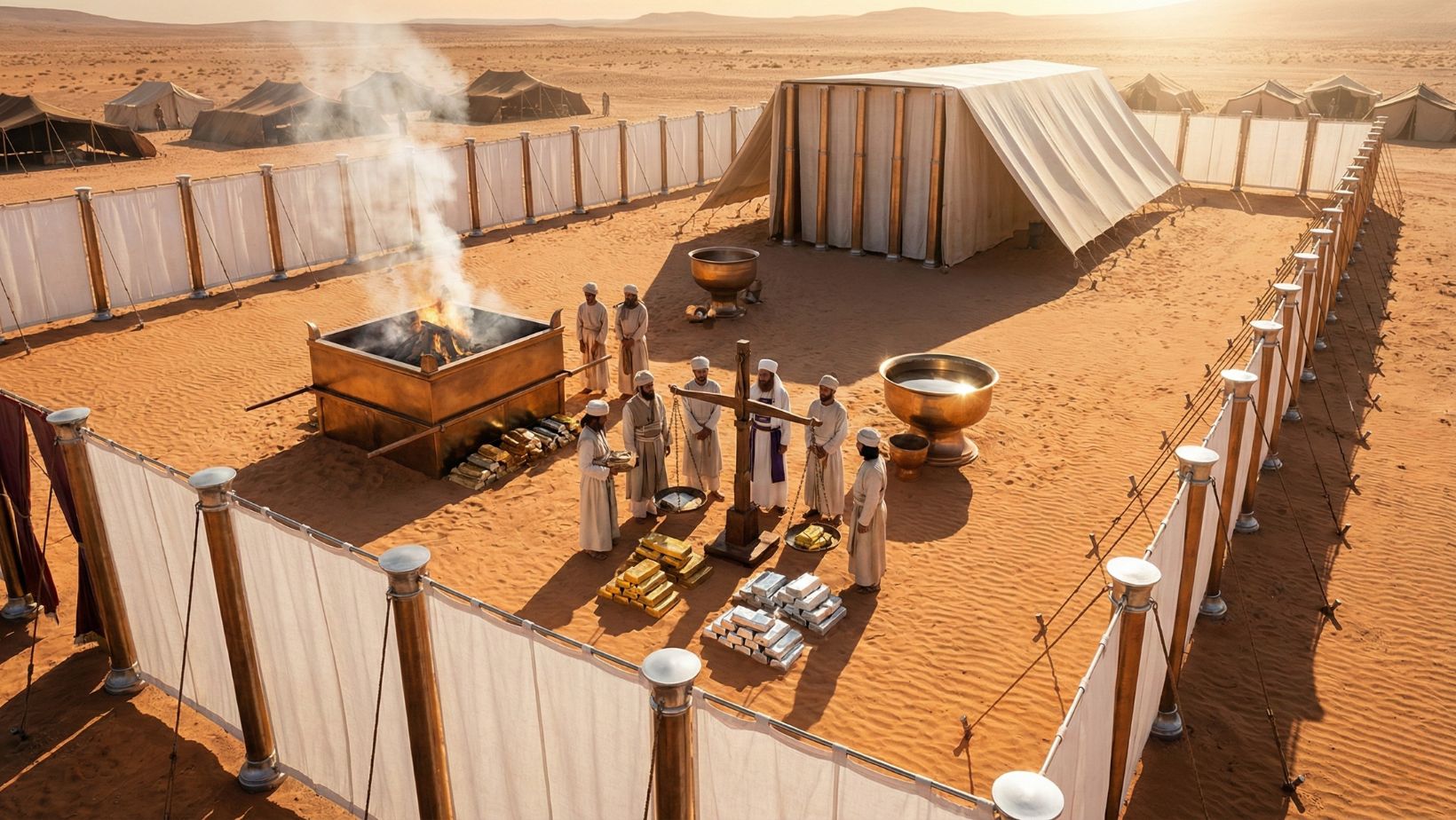
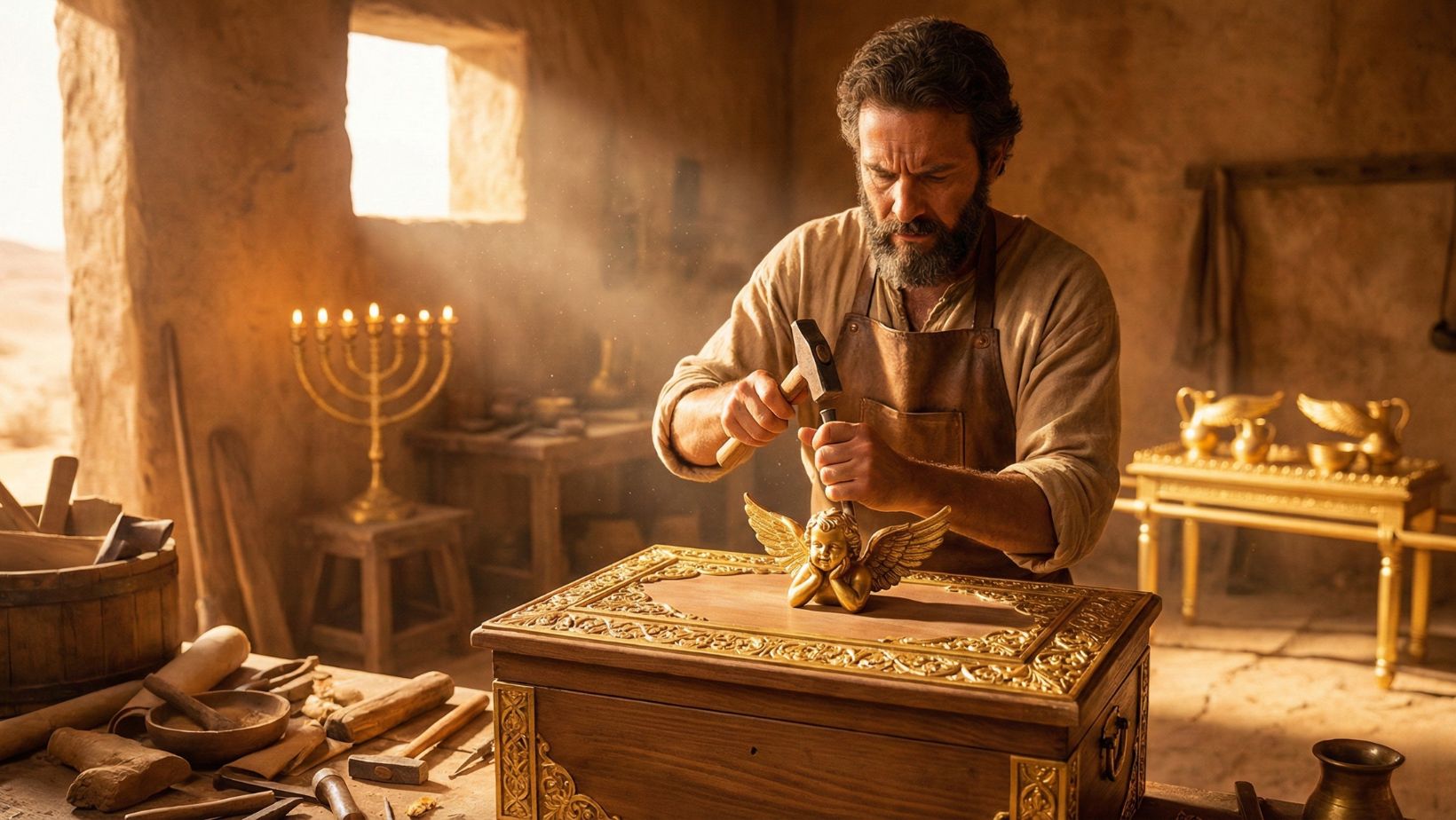
1 Then the Lord spoke to Moses, saying: 2 “See, I have called by name Bezalel the son of Uri, the son of Hur, of the tribe of Judah. 3 And I have filled him with the Spirit of God, in wisdom, in understanding, in knowledge, and in all manner of workmanship, 4 to design artistic works, to work in gold, in silver, and in bronze, 5 in cutting jewels for setting, in carving wood, and to work in all manner of workmanship. 6 “And I, indeed, I have appointed with him Aholiab the son of Ahisamach, of the tribe of Dan; and I have put wisdom in the hearts of all who are gifted artisans, that they may make all that I have commanded you: 7 the tabernacle of meeting, the ark of the Testimony and the mercy seat that is on it, and all the furniture of the tabernacle— 8 the table and its utensils, the pure gold lampstand with all its utensils, the altar of incense, 9 the altar of burnt offering with all its utensils, and the laver and its base— 10 the garments of ministry, the holy garments for Aaron the priest and the garments of his sons, to minister as priests, 11 and the anointing oil and sweet incense for the holy place. According to all that I have commanded you they shall do.”
Commentary:
- Called by Name (v. 1-2): God does not just call a generic workforce; He calls specific individuals. Bezalel’s name means “In the Shadow [Protection] of God.” His genealogy links him to Hur, who helped hold up Moses’ hands during battle (Exodus 17:10-12), suggesting a legacy of faithfulness.
- The First Spiritual Filling (v. 3): It is significant that the first person in the Bible described as “filled with the Spirit of God” is an artist/craftsman, not a priest or a king. This dignifies manual labor and artistic creativity as spiritual callings.
- The Scope of Wisdom (v. 3-5): The Spirit provided four specific dimensions:
- Wisdom (Chokmah): The ability to use knowledge practically.
- Understanding (Tebunah): Discernment or the ability to see the relationship between things.
- Knowledge (Da’at): Technical “know-how” and experience.
- Workmanship: Physical skill and dexterity.
- Collaboration and Diversity (v. 6): Bezalel (from Judah, the leading tribe) is paired with Aholiab (from Dan, a smaller tribe). This demonstrates that God’s work requires the unity of the whole body, regardless of status.
- Artistry for the Sacred (v. 7-11): The artisans were responsible for everything from heavy metallurgy (the Altars) to delicate weaving (the Garments) and chemistry (the Incense). Nothing was too small for God’s detailed oversight.
Insight: God provides the vision (to Moses), but He also provides the provision and the people to carry it out. He qualifies those He calls.
2. The Sabbath: A Sign of the Covenant (Exodus 31:12–17 NKJV)
12 And the Lord spoke to Moses, saying, 13 “Speak also to the children of Israel, saying: ‘Surely My Sabbaths you shall keep, for it is a sign between Me and you throughout your generations, that you may know that I am the Lord who sanctifies you. 14 You shall keep the Sabbath, therefore, for it is holy to you. Everyone who profanes it shall surely be put to death; for whoever does any work on it, that person shall be cut off from among his people. 15 Work shall be done for six days, but the seventh is the Sabbath of rest, holy to the Lord. Whoever does any work on the Sabbath day, he shall surely be put to death. 16 Therefore the children of Israel shall keep the Sabbath, to observe the Sabbath throughout their generations as a perpetual covenant. 17 It is a sign between Me and them forever; for in six days the Lord made the heavens and the earth, and on the seventh day He rested and was refreshed.’”
Commentary:
- The Sabbath as a Sign (v. 13): Just as the Rainbow was a sign to Noah and Circumcision to Abraham, the Sabbath was the specific sign of the Mosaic Covenant. It was an outward witness that Israel belonged to Yahweh.
- The Source of Sanctification (v. 13): The Sabbath reminds Israel that it is not their work that makes them holy, but the Lord who sanctifies them.
- Severity of the Command (v. 14-15): The death penalty highlights that the Sabbath was not a suggestion; it was a matter of spiritual life and death. Breaking the Sabbath was a rejection of the Creator’s authority.
- Divine Example (v. 17): God uses the word “refreshed” (naphash), which literally means “to take breath.” This anthropomorphism emphasizes that if God chose to “pause” and enjoy His creation, His creatures must do the same.
Insight: There is a danger in being so busy with “the work of the Lord” that we forget “the Lord of the work.” The Sabbath protects the worker from becoming a slave to their own productivity.
3. The Giving of the Tablets (Exodus 31:18 NKJV)
18 And when He had made an end of speaking with him on Mount Sinai, He gave Moses two tablets of the Testimony, tablets of stone, written with the finger of God.
Commentary:
- The Finger of God (v. 18): This phrase indicates direct divine action. These were not carved by Moses; they were the tangible, physical manifestation of God’s law.
- The Tablets of Testimony: These served as the “contract” or “charter” of the nation. They were meant to be placed inside the Ark of the Covenant, signifying that God’s law is at the very heart of His presence.
Insight: This verse provides a dramatic “cliffhanger.” As God finishes speaking and hands over the tablets, the scene below (the Golden Calf in Chapter 32) is already descending into chaos. The perfection of the Law is about to meet the corruption of the people.
Theological Significance of Exodus 31
- Pneumatology (Study of the Spirit): This chapter teaches that the Holy Spirit is interested in more than just “religious” tasks. He empowers secular skills for sacred purposes.
- The Theology of Work: Work is not a curse (though it was affected by the Fall); it is a way to reflect the image of the Creator. To build well is to honor God.
- Covenantal Identity: The Sabbath serves as the boundary marker for the people of God. It separates them from a world obsessed with ceaseless labor and consumption.
Practical Applications
- Identify Your Calling: God has “called you by name.” Ask Him to reveal how your specific skills—whether in business, art, technology, or homemaking—can be used to build His “Tabernacle” today.
- Seek the Spirit’s Filling: Don’t rely solely on your education or natural talent. Ask for “wisdom, understanding, and knowledge” from the Holy Spirit for your daily work.
- Protect Your Rest: If you are too busy to observe a Sabbath, you are busier than God intended you to be. Rest is an act of trust, declaring that the world will not fall apart if you stop for 24 hours.
- Value the Team: Like Bezalel and Aholiab, we need others. Respect the different “tribes” and talents in your community; it takes everyone to complete the task.
Possible Sermon Titles from the Chapter
- Spirit-Filled Workmanship.
- Called by Name: The Artisan’s Vocation.
- The Sign of the Rested Soul.
- Written with the Finger of God.
- The Danger of Holy Busyness.





Leave a Reply