
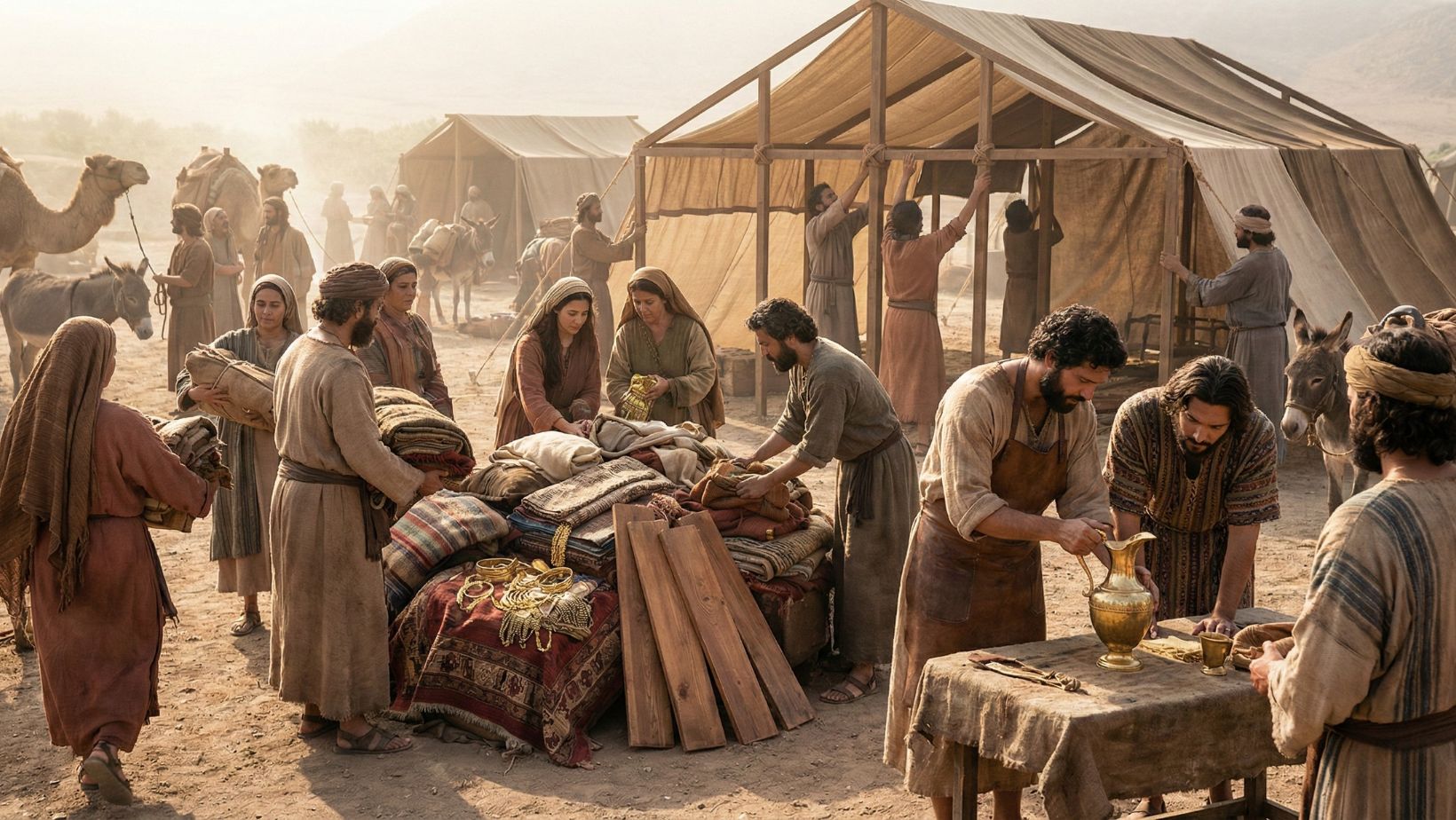
Exodus 35 marks the transition from the theoretical instructions for the Tabernacle to their practical execution. Having been restored to God’s favor after the Golden Calf incident, the Israelites now demonstrate their renewed commitment through radical generosity and skilled labor. The chapter begins with a reminder of the Sabbath—emphasizing that work for God must never replace rest in God. It then details the “freewill offering,” where the people contribute the very materials they once used for an idol to now build God’s dwelling place. The chapter highlights the partnership between divine empowerment (the Spirit of God) and human craftsmanship, specifically through the appointment of Bezalel and Oholiab.
1. The Sabbath Reminder (Exodus 35:1–3 NLT)
1 Moses called the whole community of Israel together and said, “These are the instructions the Lord has commanded you to follow. 2 You have six days each week for your ordinary work, but the seventh day must be a holy day of rest dedicated to the Lord. Anyone who works on that day must be put to death. 3 You must not even light a fire in any of your homes on the Sabbath.”
Commentary:
- Priority of Rest (v. 2): Before Moses asks for a single contribution or hour of labor for the Tabernacle, he reiterates the Sabbath. This is crucial: even the most “holy” work (building God’s house) does not excuse one from the command to rest. God values our being with Him more than our doing for Him.
- The Penalty (v. 2): The death penalty for Sabbath-breaking underscores its importance as a sign of the covenant. To work on the Sabbath was to declare independence from God’s provision.
- Practical Restrictions (v. 3): The prohibition against lighting a fire was a way to ensure that the Sabbath was a day of total cessation from the labor of food preparation and household maintenance.
Insight: In our eagerness to serve God, we must not violate the rhythms He has established for our spiritual health. We do not work for God’s favor; we work from the rest He provides.
2. The Call for a Freewill Offering (Exodus 35:4–9 NLT)
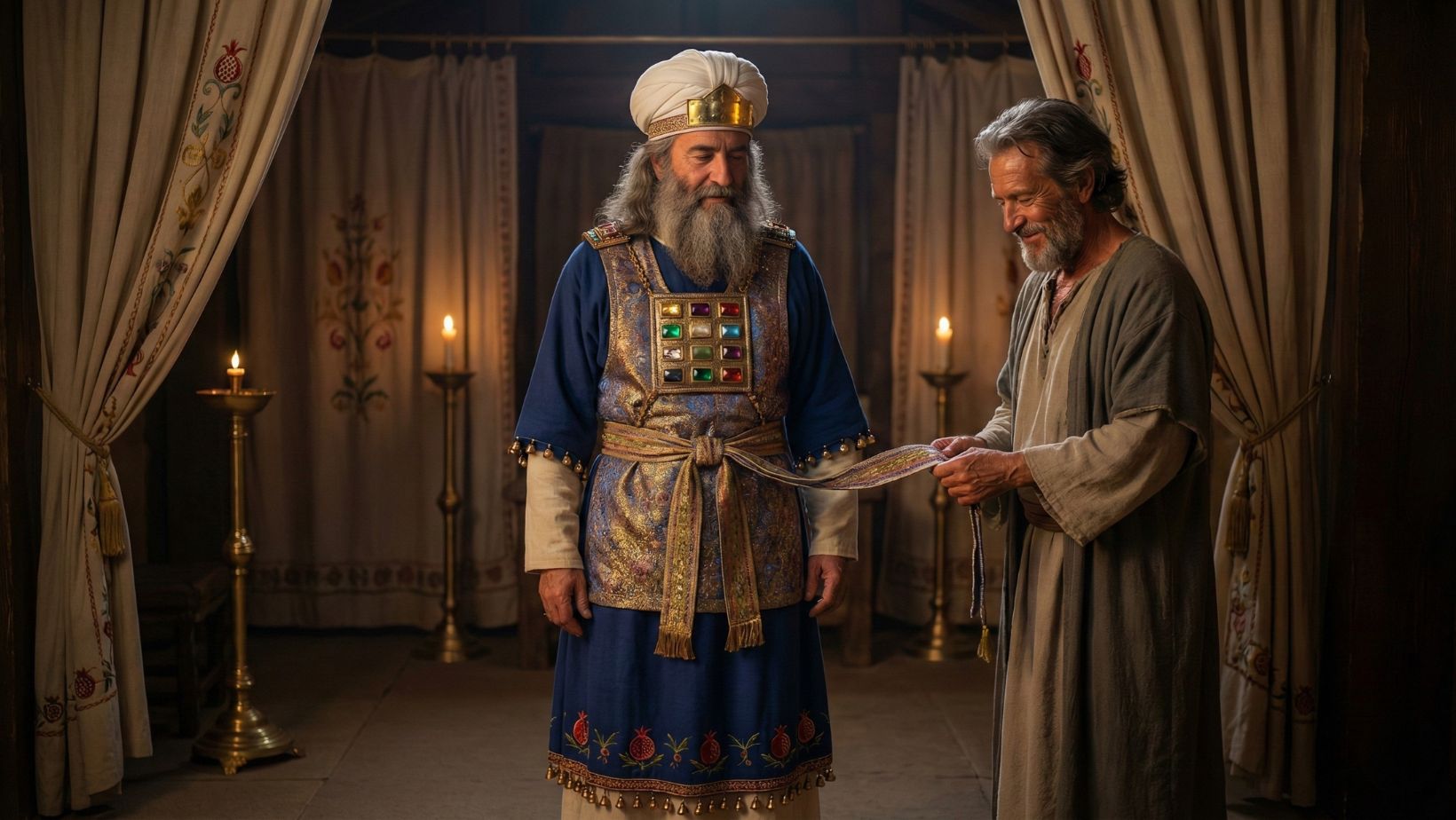
4 Then Moses said to the whole community of Israel, “This is what the Lord has commanded: 5 Take a sacred offering for the Lord. Let those with generous hearts bring the following gifts to the Lord: gold, silver, and bronze; 6 blue, purple, and scarlet thread; fine linen and goat hair for cloth; 7 tanned ram skins and fine goat-skin leather; acacia wood; 8 olive oil for the lamps; spices for the anointing oil and the fragrant incense; 9 onyx stones, and other gemstones to be set in the ephod and the priest’s chestpiece.
Commentary:
- The Condition of the Heart (v. 5): Moses specifically asks for those with “generous hearts” (Hebrew nedib libbo—willing or noble hearts) to give. God does not want coerced taxes; He wants voluntary expressions of love.
- Materials of the Tabernacle (v. 5–9): The list includes precious metals, expensive dyes, and rare woods. Interestingly, much of this wealth was given to the Israelites by the Egyptians during the Exodus (Exodus 12:35–36). God gave them the wealth so they could eventually give it back to Him.
- Gemstones (v. 9): These were destined for the high priest’s garments, symbolizing that the names of the tribes of Israel were carried on the heart of the priest before God.
Insight: True stewardship is recognizing that everything we “own” was actually provided by God to be used for His purposes. Generosity is the outward sign of an inward heart-transformation.
3. The Call for Skilled Workers (Exodus 35:10–19 NLT)
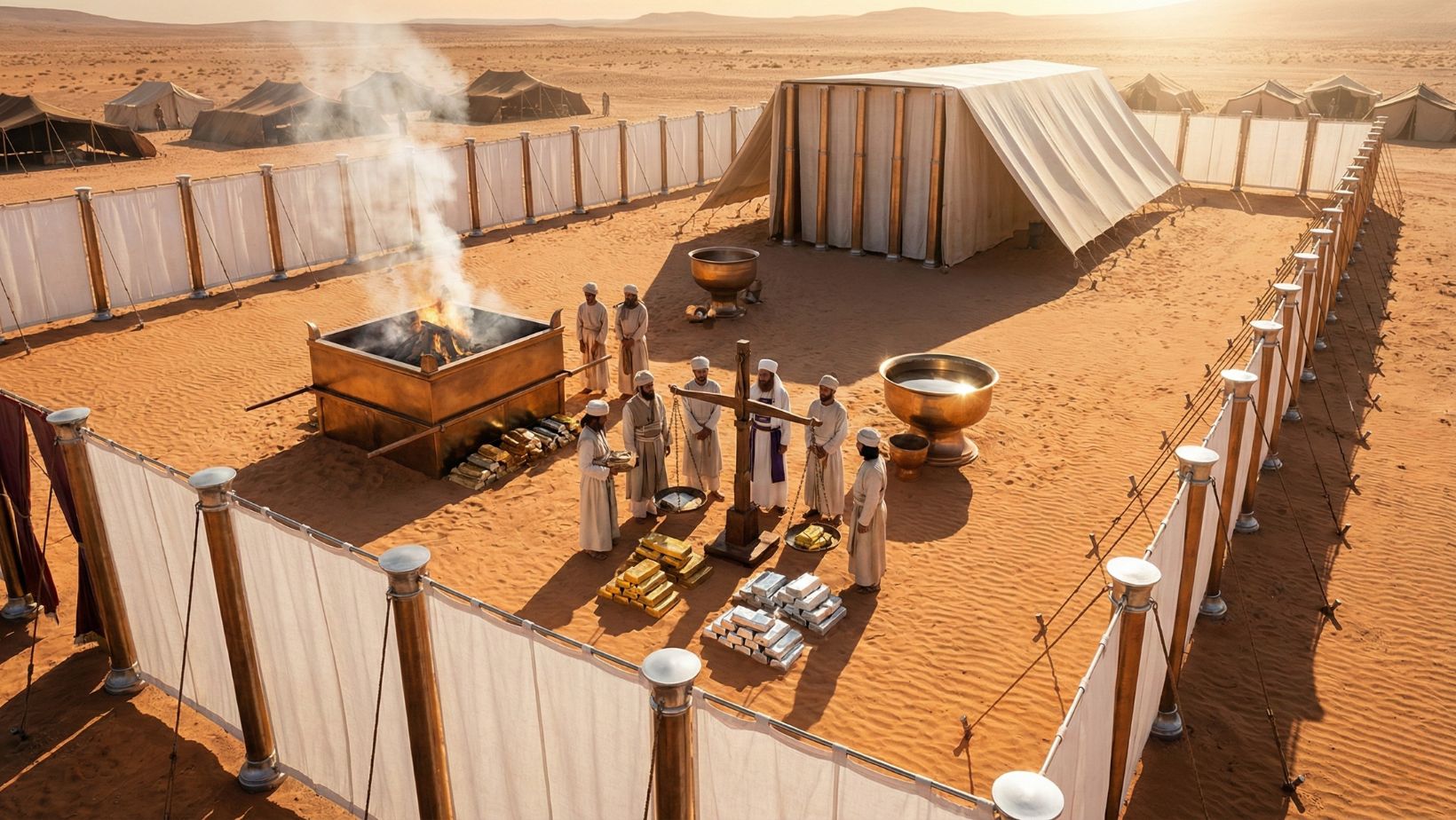
10 “Come, all of you who are gifted craftsmen. Construct everything that the Lord has commanded: 11 the Tabernacle and its sacred tent, its covering, clasps, frames, crossbars, posts, and bases; 12 the Ark and its carrying poles; the Ark’s cover—the place of atonement; the inner curtain to shield the Ark; 13 the table and its carrying poles and all its utensils; the Bread of the Presence; 14 the lampstand and its utensils, lamp cups, and the oil for lighting; 15 the incense altar and its carrying poles; the anointing oil and the fragrant incense; the curtain for the entrance of the Tabernacle; 16 the altar of burnt offering; the bronze grating of the altar and its carrying poles and utensils; the washbasin with its stand; 17 the curtains for the walls of the courtyard; the posts and their bases; the curtain for the entrance to the courtyard; 18 the tent pegs of the Tabernacle and courtyard and their ropes; 19 the beautifully stitched garments for the priests to wear while ministering in the Holy Place—the sacred garments for Aaron the priest, and the garments for his sons to use as they minister as priests.”
Commentary:
- The Gift of Skill (v. 10): God does not only call for “stuff”; He calls for “skill.” The “gifted craftsmen” (literally “wise of heart”) were to use their natural and spiritual talents to execute God’s design perfectly.
- The Detail of Design (v. 11–19): This list mirrors the instructions given in chapters 25–31. It serves as a checklist for the community, ensuring that the “copy and shadow of heavenly things” (Hebrews 8:5) is built according to the divine blueprint.
Insight: God is the Great Architect, but He invites us to be His builders. Every peg, curtain, and utensil had a purpose, just as every member of the body of Christ has a specific function.
4. The Response: Radical Generosity (Exodus 35:20–29 NLT)
20 So the whole community of Israel left Moses and went to their tents. 21 All whose hearts were stirred and whose spirits were moved came and brought their sacred offerings to the Lord. They brought all the materials needed for the Tabernacle, for the performance of its rituals, and for the sacred garments. 22 Both men and women came, all whose hearts were willing. They brought to the Lord their offerings of gold—brooches, earrings, rings from their fingers, and necklaces. They presented gold objects of every kind as a special offering to the Lord. 23 All those who owned blue, purple, and scarlet thread, or fine linen, or goat hair for cloth, or tanned ram skins, or fine goat-skin leather, brought them. 24 And all who had silver or bronze objects gave them as a sacred offering to the Lord. And those who had acacia wood brought it for use in the project. 25 All the women who were skilled in sewing and spinning prepared blue, purple, and scarlet thread, and fine linen cloth. 26 All the women who were willing used their skills to spin the goat hair into yarn. 27 The leaders brought onyx stones and the other gemstones to be set in the ephod and the priest’s chestpiece. 28 They also brought spices and olive oil for the light, the anointing oil, and the fragrant incense. 29 So the people of Israel—every man and woman who was willing to help in the work the Lord had given them through Moses—brought their freewill offerings to the Lord.
Commentary:
- Heart-Stirred Giving (v. 21): The phrase “all whose hearts were stirred” emphasizes that this was a spiritual movement. The people were so grateful for God’s forgiveness after the Golden Calf that they couldn’t help but give.
- Inclusion (v. 22–26): Note the repeated emphasis on “men and women.” This was a total community effort. Women played a vital role, particularly in the intricate weaving and spinning required for the Tabernacle’s textiles.
- The Gold of Repentance (v. 22): The very jewelry they had used to create the Golden Calf (Exodus 32:2-3) is now surrendered for the true Tabernacle. This is the fruit of genuine repentance—turning the instruments of sin into instruments of worship.
Insight: When the Spirit of God moves, the hands of God’s people open. Revitalized worship always leads to revitalized giving.
5. The Appointment of Bezalel and Oholiab (Exodus 35:30–35 NLT)
30 Then Moses said to the people of Israel, “The Lord has specifically chosen Bezalel son of Uri, grandson of Hur, of the tribe of Judah. 31 The Lord has filled him with the Spirit of God, giving him great wisdom, ability, and expertise in all kinds of crafts. 32 He is a master craftsman, expert in working with gold, silver, and bronze. 33 He is skilled in engraving and mounting gemstones and in carving wood. He is a master at every craft. 34 And the Lord has given both him and Oholiab son of Ahisamach, of the tribe of Dan, the ability to teach their skills to others. 35 The Lord has given them special skills as engravers, designers, embroiderers in blue, purple, and scarlet thread on fine linen cloth, and weavers. They are excel as master craftsmen and designers.
Commentary:
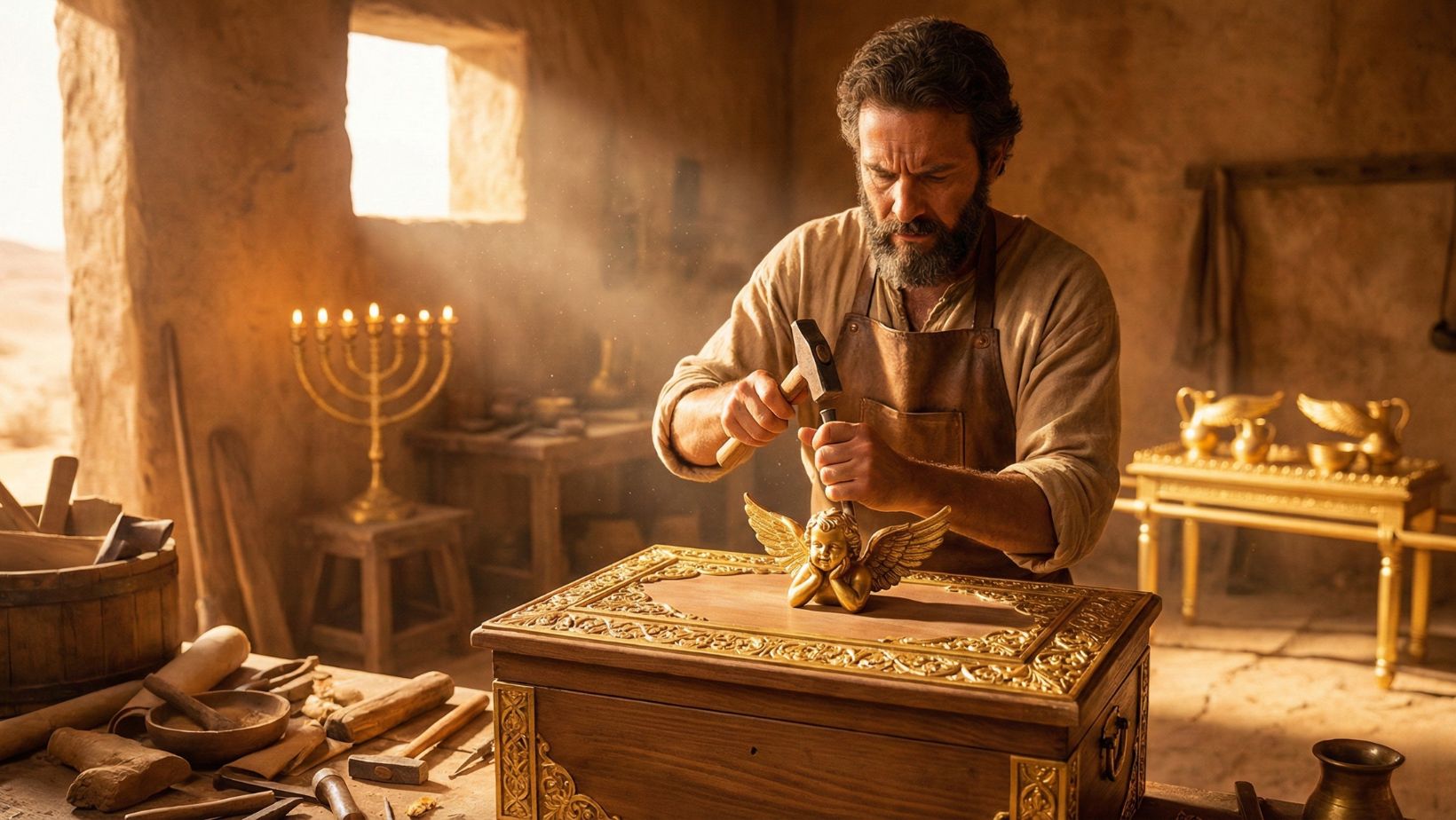
- Spiritualized Skill (v. 31): Bezalel is the first person in Scripture described as being “filled with the Spirit of God.” Interestingly, the Spirit’s first recorded filling was not for preaching or miracles, but for artistry and craftsmanship.
- The Gift of Teaching (v. 34): Bezalel and Oholiab weren’t just solo artists; they were teachers. They multiplied their impact by equipping others. This ensures the sustainability of the work.
- Diversity of Talents (v. 35): Between the two of them, they mastered metallurgy, lapidary, carpentry, and textiles. God provides the exact mix of talents needed for His vision to become a reality.
Insight: There is no “secular” talent for the believer. Whether you are an artist, an engineer, or a teacher, your skills are gifts from the Spirit intended for the glory of God and the building of His Kingdom.
Theological Significance of Exodus 35
- Atonement and Participation: The people who deserved death for the Golden Calf are now invited to build God’s house. This is the practical outworking of the grace revealed in Chapter 34.
- The Tabernacle as a Community Project: God could have spoken the Tabernacle into existence, but He chose to let the people build it. This fosters a sense of ownership and intimacy with the dwelling place of God.
- The Holy Spirit and Creativity: This chapter elevates the “manual” arts to a spiritual level. It teaches that creativity is a divine attribute and that using our hands to create beauty is a form of worship.
- Willingness Over Wealth: God measures the gift not by its market value, but by the “stirring of the heart.”
Practical Applications
- Check Your Calendar Before Your Checkbook: Make sure you are resting in God (Sabbath) before you try to work for Him. Service without rest leads to burnout and legalism.
- What’s in Your Hand?: The Israelites gave what they had—jewelry, wood, thread. God doesn’t ask you for what you don’t have; He asks for a willing heart to give what He has already placed in your hands.
- Dedicate Your Skills: Whatever your “craft” is, ask the Holy Spirit to fill you so that your work becomes a testimony to His wisdom and excellence.
- Teach Others: Like Bezalel and Oholiab, look for opportunities to pass your skills and spiritual maturity on to the next generation.
Possible Sermon Titles from the Chapter
- Stirred Hearts and Open Hands.
- The Spirit of the Craftsman.
- Building God’s House Together.
- Rest Before the Work.
- From Idols to Offerings: The Gold of Repentance.




Leave a Reply