
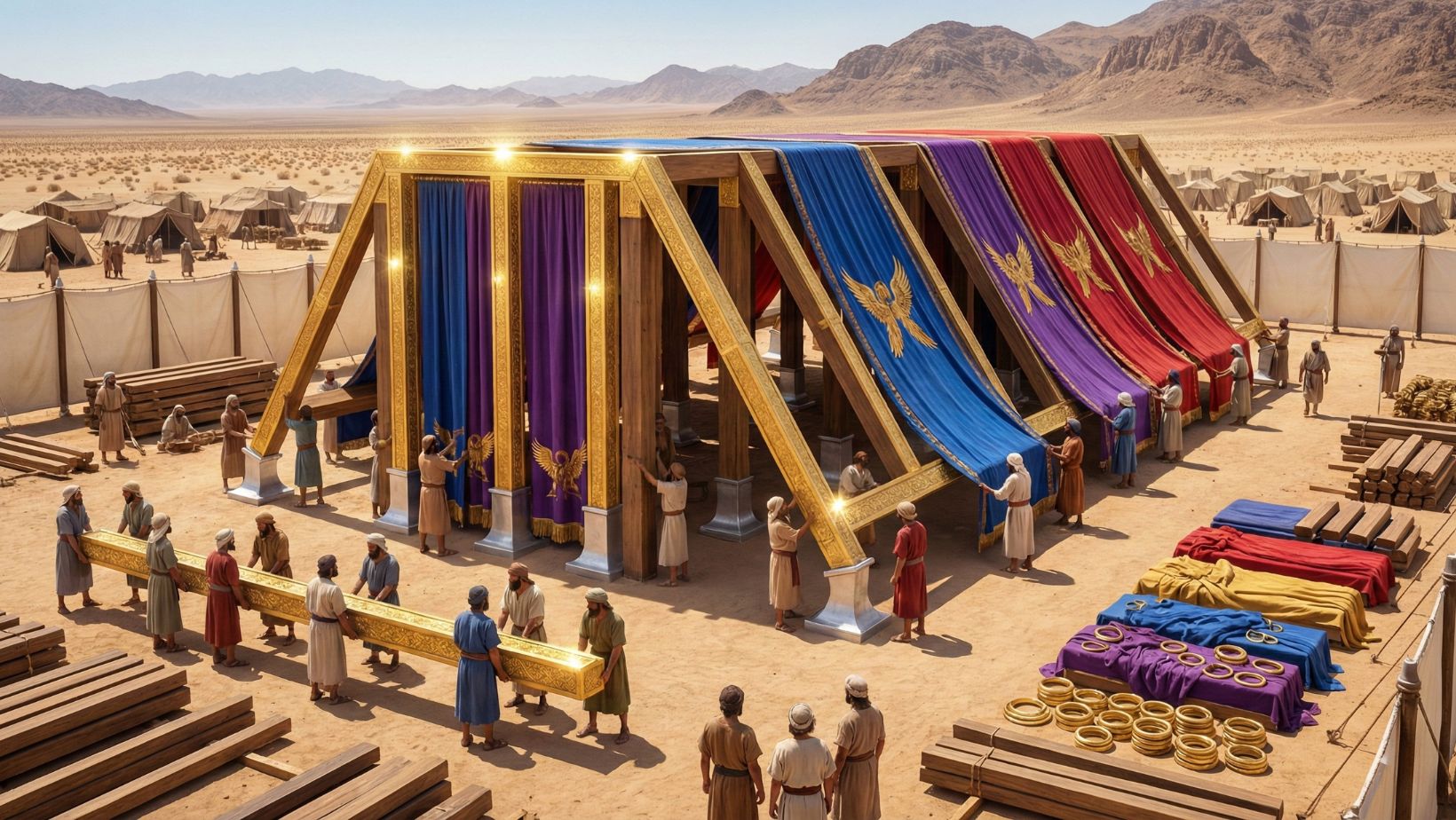
Exodus 36 chronicles the actual construction of the Tabernacle. It serves as a testament to what happens when divine empowerment meets human obedience and radical generosity. The chapter begins with a remarkable problem: the people of Israel are so “stirred in heart” that they bring more than enough materials, forcing Moses to command them to stop giving. This is a rare moment in biblical history where the resources for God’s work exceed the need. The rest of the chapter details the precise craftsmanship of the Tabernacle’s exterior—the curtains of fine linen, the protective coverings of goat hair and skins, and the wooden framework that provided the structure’s stability.
1. The Surplus of Generosity (Exodus 35:1–7 NLT)
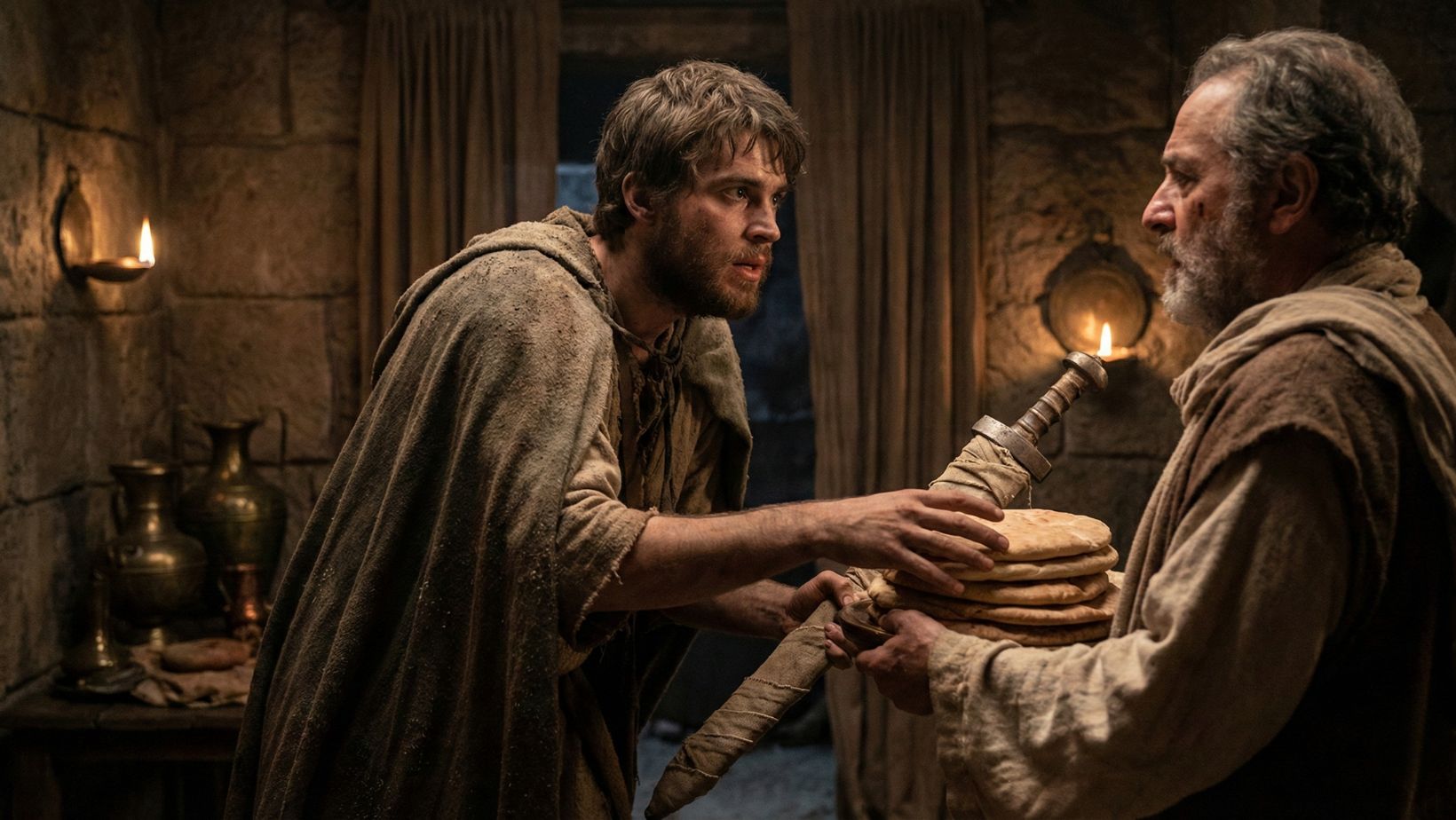
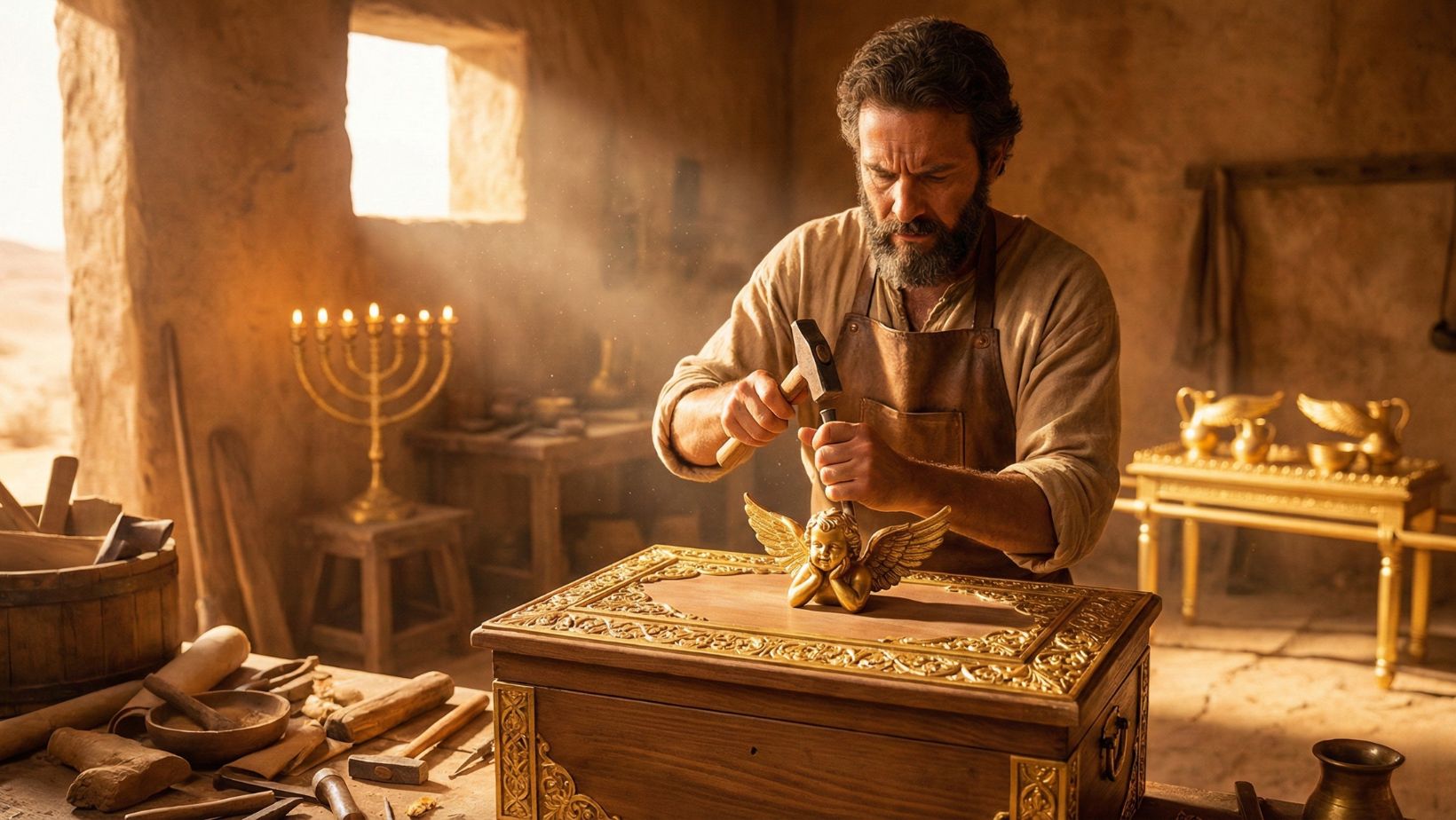
1 “Bezalel, Oholiab, and the other craftsmen whom the Lord has gifted with wisdom and understanding to know how to do all the work of constructing the sanctuary are to begin work as the Lord has commanded.” 2 So Moses summoned Bezalel and Oholiab and all the others who were specially gifted by the Lord and were eager to get to work. 3 Moses gave them the materials donated by the people of Israel as sacred offerings for the completion of the sanctuary. But the people continued to bring additional gifts every morning. 4 Finally, all the craftsmen who were working on the sanctuary left their work. 5 They went to Moses and reported, “The people have given more than enough materials to complete the job the Lord has commanded us to do!” 6 So Moses gave the command, and this message was sent throughout the camp: “Men and women, don’t prepare any more gifts for the sanctuary. We have enough!” So the people stopped bringing their sacred offerings. 7 Their contributions were more than enough to complete the whole project.
Commentary:
- The Eagerness to Work (v. 2): Notice the combination of being “specially gifted” and “eager.” God-given talent is most effective when paired with a willing spirit. The craftsmen didn’t just have the ability; they had the passion to see God’s dwelling place completed.
- The “Problem” of Abundance (v. 5): This is one of the few places in Scripture where a “stop giving” order is issued. In the previous chapter (Exodus 35), the people were invited to give with a “willing heart.” The result was an overflow of resources.
- Morning Devotion (v. 3): The text mentions they brought gifts “every morning.” This suggests a daily, rhythmic commitment to the project. Their repentance for the Golden Calf had turned into a daily pursuit of Yahweh.
- Integrity of the Craftsmen (v. 4-5): The workers showed great integrity. Instead of stockpiling extra gold or materials for themselves, they honestly reported the surplus to Moses.
Insight: When a community is truly revived and focused on God’s glory, the needs of the ministry are met with ease. The “more than enough” mindset is a hallmark of a people who have experienced God’s “more than enough” grace.
2. The Inner Curtains of the Tabernacle (Exodus 36:8–13 NLT)
8 The skilled craftsmen made ten curtains of finely woven linen for the Tabernacle. Then Bezalel decorated the curtains with blue, purple, and scarlet thread and with skillfully embroidered cherubim. 9 All ten curtains were exactly the same size—42 feet long and 6 feet wide. 10 Five of these curtains were joined together to make one long curtain, and the other five were joined to make a second long curtain. 11 He made fifty loops of blue yarn and put them along the edge of the last curtain in each set. 12 The fifty loops along the edge of one set mirrored the fifty loops along the edge of the other set. 13 Then he made fifty gold clasps and fastened the long curtains together with the clasps. In this way, the Tabernacle was made of one continuous piece.
Commentary:
- The Fine Linen (v. 8): The inner-most layer of the Tabernacle was the most beautiful. It was made of “finely woven linen,” representing purity and the righteousness of God.
- The Colors (v. 8): Blue (heavenly origin), purple (royalty), and scarlet (blood/sacrifice) were the colors of the sanctuary, pointing toward the character of the coming Messiah.
- The Cherubim (v. 8): These angelic figures were embroidered into the fabric. Since the Tabernacle was a “miniature Eden,” the cherubim reminded the people that they were entering a space where heaven and earth meet—the same beings who guarded the way to the Tree of Life now watched over the sanctuary.
- Unity of Design (v. 13): The fifty gold clasps made the curtains “one continuous piece.” This symbolizes the unity of God’s dwelling and His people.
Insight: The most beautiful parts of the Tabernacle were on the inside, visible only to the priests who ministered there. God values the hidden beauty of the heart and the sanctuary of private worship as much as the visible exterior.
3. The Protective Coverings (Exodus 36:14–19 NLT)
14 He made eleven curtains of goat hair to be used as a covering for the Tabernacle. 15 These eleven curtains were all exactly the same size—45 feet long and 6 feet wide. 16 Bezalel joined five of these curtains together to make one long curtain, and the other six were joined to make a second long curtain. 17 He made fifty loops for the edge of each large curtain. 18 He also made fifty bronze clasps to fasten the plans of the goat-hair curtains together. In this way, the tent covering was made of one continuous piece. 19 He completed the tent covering with a layer of tanned ram skins and a layer of fine goat-skin leather.
Commentary:
- Goat Hair (v. 14): This layer acted as a tent over the fine linen. Goat hair was a standard material for Bedouin tents, providing durability and insulation.
- Bronze vs. Gold (v. 18): Notice that while the inner curtains were joined by gold clasps (v. 13), the outer goat-hair curtains were joined by bronze clasps. As one moves from the inside (God’s presence) to the outside, the materials transition from the most precious to the most durable.
- The Multi-Layered Roof (v. 19):
- Tanned Ram Skins: Dyed red, symbolizing sacrifice.
- Fine Goat-Skin Leather (or Sea Cow/Dugong skins): The outermost layer was tough and weather-resistant. To a casual observer from the outside, the Tabernacle looked like a plain, dark, leathery tent. The glory was all within.
Insight: Just as the Tabernacle’s exterior was humble while its interior was glorious, Jesus “had no beauty or majesty to attract us to him” (Isaiah 53:2), yet in Him “all the fullness of the Deity lives in bodily form” (Colossians 2:9).
4. The Framework and Bases (Exodus 36:20–34 NLT)
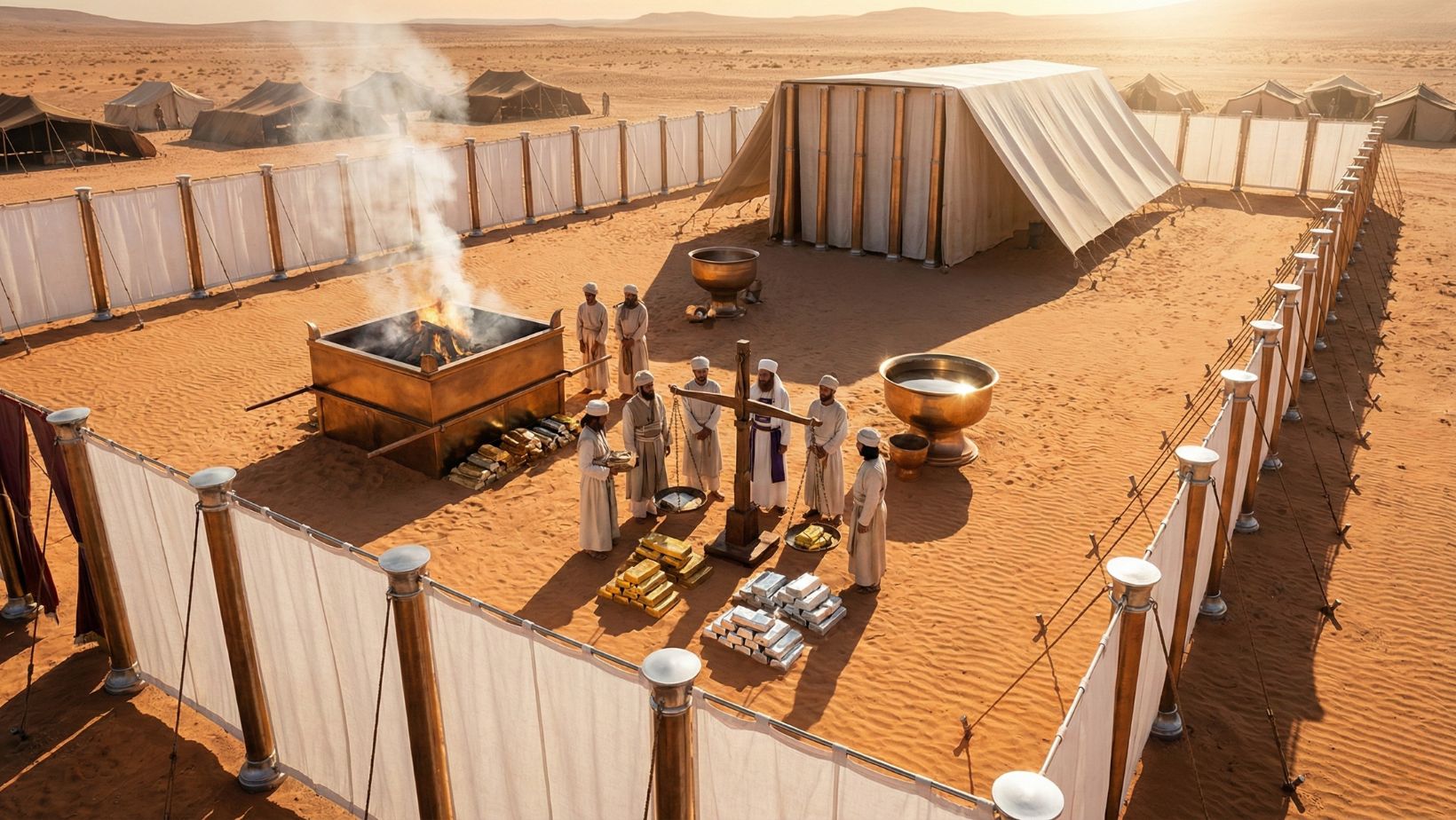
20 For the framework of the Tabernacle, Bezalel made frames of acacia wood standing upright. 21 Each frame was 15 feet high and 27 inches wide, 22 with two pegs under each frame to correspond to the silver bases. All the frames were made this way. 23 He made twenty frames for the south side of the Tabernacle. 24 He also made forty silver bases—two bases under each frame, with the pegs fitting securely into them. 25 For the north side of the Tabernacle, he made another twenty frames, 26 with their forty silver bases—two bases under each frame. 27 He made six frames for the rear—the west side of the Tabernacle— 28 along with two additional frames to reinforce the rear corners. 29 These corner frames were matched at the bottom and firmly attached at the top with a single ring, forming a single unit. Both of these corner frames were made the same way. 30 So there were eight frames at the rear of the Tabernacle, set in sixteen silver bases—two bases under each frame. 31 Then he made five crossbars of acacia wood to tie the frames on one side of the Tabernacle together. 32 He made five crossbars for the other side of the Tabernacle and five crossbars for the rear on the west side. 33 He made the middle crossbar to run through the entire length of the frames from one end to the other. 34 He overlaid the frames with gold and made gold rings to hold the crossbars. Then he overlaid the crossbars with gold as well.
Commentary:
- Acacia Wood (v. 20): Known for being hard, dense, and resistant to decay, acacia was the perfect material for a structure that would be moved through the desert for forty years.
- Silver Bases (v. 24): These bases (each weighing about 75 pounds) provided a heavy, stable foundation in the shifting desert sands. Significantly, the silver for these bases came from the “atonement money” paid by every Israelite (Exodus 30:11-16). The entire Tabernacle literally stood on the foundation of atonement.
- Gold Overlay (v. 34): Though the frames were wood, they were covered in gold. This represents the combination of the human (wood) and the divine (gold).
- The Middle Crossbar (v. 33): This bar ran through the center of the boards, invisible from the outside, holding the entire structure together.
Insight: The “middle bar” is often seen as a type of the Holy Spirit—the invisible force that binds the “living stones” of God’s house together in unity.
5. The Inner Veil and Entrance Screen (Exodus 36:35–38 NLT)
35 For the inside of the Tabernacle, Bezalel made a special curtain of finely woven linen. He decorated it with blue, purple, and scarlet thread and with skillfully embroidered cherubim. 36 For the curtain, he made four posts of acacia wood and four gold hooks. He overlaid the posts with gold and set them in four silver bases. 37 Then he made another curtain for the entrance to the sacred tent. He made it of finely woven linen and embroidered it with blue, purple, and scarlet thread. 38 This curtain was connected by five hooks to five posts. He overlaid the posts’ heads and their hooks with gold and set the five posts in five bronze bases.
Commentary:
- The Veil (v. 35): This is the “Veil of the Temple” that separated the Holy Place from the Most Holy Place. It was a physical barrier between a holy God and sinful man. This is the veil that would eventually be torn in two at the crucifixion of Jesus (Matthew 27:51).
- Entrance vs. Veil (v. 37-38): The entrance to the tent sat on bronze bases, while the inner veil sat on silver bases. Again, as one moves closer to the Ark of the Covenant, the materials become more precious.
Theological Significance of Exodus 36
- The Theology of “Enough”: This chapter challenges the scarcity mindset. When God’s people are aligned with His Spirit, there is always “more than enough” for His mission.
- The Foundation of Atonement: The fact that the Tabernacle stood on silver bases paid for by the ransom of souls (Exodus 30) teaches that our relationship with God is built entirely on His redemptive work.
- God in the Details: The repetition of measurements and materials shows that God is interested in the “how” of our service, not just the “that.” Excellence is a form of worship.
- The Humble Exterior: God’s presence often dwells in things that look ordinary or even unattractive to the world (like a goat-skin tent), but contains infinite glory within.
Practical Applications
- Be an “Enough” Person: Are you someone who gives until the need is met, or do you hold back? The Israelites gave so much they had to be stopped. May we have such “noble hearts.”
- Don’t Overlook the Foundation: Just as the Tabernacle stood on silver bases, your life must be founded on the atonement of Christ. Without that foundation, the “framework” of your life will collapse in the desert winds.
- Cultivate Inner Beauty: The most beautiful parts of the Tabernacle were internal. Spend more time decorating your “inner man” with the blue, purple, and scarlet of Christ’s character than worrying about your outward appearance.
- Integrity in Ministry: If you handle resources for God’s work, be like the craftsmen—transparent, honest, and more concerned with the mission than personal gain.
Possible Sermon Titles from the Chapter
- When Giving Becomes a Problem.
- Standing on the Silver of Atonement.
- The Glory is on the Inside.
- The Middle Bar: The Secret of Unity.
- Construction According to the Pattern.




Leave a Reply