
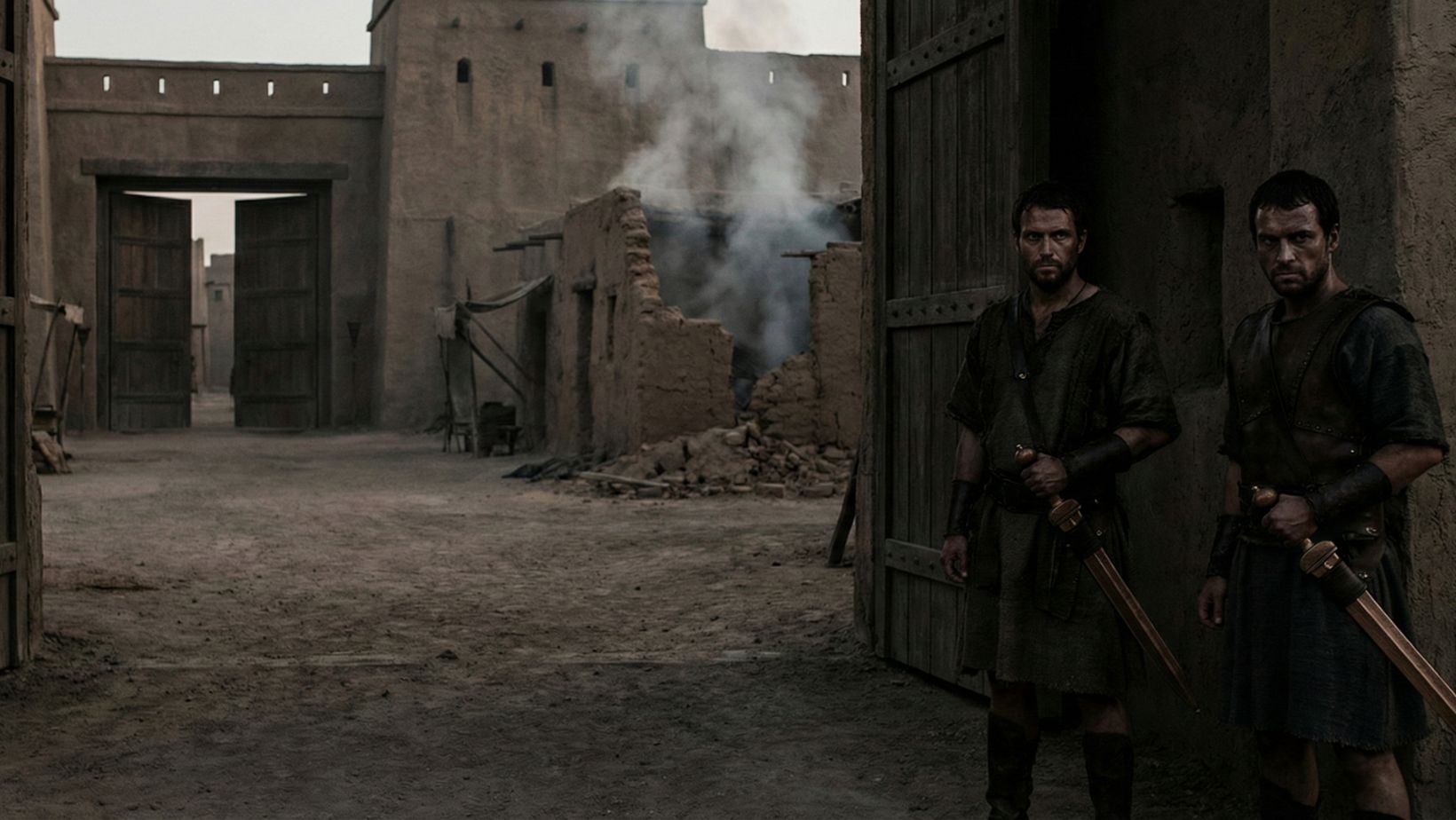
Genesis 34 is one of the most harrowing and difficult chapters in the book of Genesis. It stands in stark contrast to the reconciliation of the previous chapter. While Jacob had settled near the city of Shechem, a peaceful coexistence is shattered when Prince Shechem violates Jacob’s daughter, Dinah. The narrative shifts from a story of divine promise to a gritty tale of violated honor, deceptive diplomacy, and brutal vengeance. This chapter highlights the dangers of the patriarchs “settling” too close to Canaanite culture and introduces the growing violence and spiritual instability within Jacob’s own household, particularly in his sons Simeon and Levi.
1. The Violation of Dinah (Genesis 34:1–12 NLT)
1 One day Dinah, the daughter of Leah and Jacob, went to visit some of the local women. 2 When Shechem son of Hamor, the Hivite prince of that region, saw her, he took her and violated her. 3 But Shechem’s pride was shattered, and he fell in love with the young woman. He spoke tenderly to her and tried to win her affection. 4 Then he said to his father, Hamor, “Get me this young woman. I want her to be my wife.” 5 Jacob soon heard that Shechem had defiled his daughter, Dinah. But since his sons were out in the fields with the livestock, he said nothing until they returned. 6 Hamor, Shechem’s father, came to discuss the matter with Jacob. 7 Meanwhile, Jacob’s sons had come in from the fields as soon as they heard what had happened. They were shocked and furious that their sister had been raped. Shechem had done a disgraceful thing against Jacob’s family, something that should never be done. 8 Hamor tried to speak with them. “My son Shechem is truly in love with your daughter,” he said. “Please let him marry her. 9 In fact, let’s link our families by marriage. We will give you our daughters, and you can give us yours. 10 You may live among us; the land is open to you. Settle here and trade with us, and feel free to buy property for yourselves.” 11 Then Shechem himself spoke to Dinah’s father and brothers. “Please be kind to me and let me marry her,” he begged. “I will give you whatever you ask. 12 No matter how high you set the bride price or the gift, I will pay it—only give me the young woman as my wife.”
Commentary:
- The Exposure of Dinah (v. 1): Dinah goes out to visit “the local women.” This suggests that Jacob’s family was integrating with the Canaanites more than was spiritually wise, leading to a loss of the protective separation God intended.
- The Crime (v. 2): The Hebrew text is explicit about the lack of consent. Prince Shechem abuses his power, treating the daughter of the covenant-bearer as a commodity.
- The Paradox of Shechem (v. 3–4): The narrative notes that Shechem “fell in love” after the act. However, in the biblical world, “love” following a violation does not negate the initial crime. His desire to marry her is a mixture of genuine affection and a desire to possess.
- Jacob’s Silence (v. 5): Jacob’s passivity is notable. Unlike the “Israel” who wrestled with God, here he is quiet, waiting for his sons. This suggests a failure of leadership that allows his sons to take control of the situation.
- Cultural Clashes (v. 7): The author notes that this was a “disgraceful thing… that should never be done.” This sets the Israelites’ moral code against the perceived lawlessness of the Hivites.
- The Commercialization of Marriage (v. 8–12): Hamor and Shechem offer a deal based on economics and land rights. They aren’t seeking justice; they are seeking a merger. This represents a threat to the purity of the messianic line through intermarriage.
2. The Deceptive Proposal (Genesis 34:13–24 NLT)
13 But Jacob’s sons responded deceitfully to Shechem and his father, Hamor, because of the way Shechem had defiled their sister, Dinah. 14 They said to them, “We couldn’t possibly allow this, because you are not circumcised. It would be a disgrace to us. 15 We will agree to this only on one condition: You must become like us by having every male among you circumcised. 16 Then we will give you our daughters, and we will take yours. We will live among you and become one people. 17 But if you don’t agree to be circumcised, we will take our daughter and be gone.” 18 Hamor and Shechem were pleased with this proposal. 19 Shechem, who was a highly respected young man in his father’s house, wasted no time in following through with their request, for he was so in love with Jacob’s daughter. 20 So Hamor and Shechem went to the town gate and said to the men of the city, 21 “These men are our friends. Let’s let them live among us and trade in our land. The land is certainly large enough to hold them. We can take their daughters as wives and let them marry ours. 22 But they will consider staying here and becoming one people with us only if every male among us is circumcised, just as they are. 23 If we do this, won’t all their livestock and possessions eventually be ours? Let’s agree to their condition, and they will settle here with us.” 24 So all the men who went out to the town gate agreed with Hamor and Shechem, and every male in the city was circumcised.
Commentary:
- Weaponizing the Covenant (v. 13–15): The sons of Jacob use circumcision—the holy sign of God’s covenant—as a tool for mass murder. This is a profound spiritual perversion. They use a symbol of “cutting away the flesh” for God to physically “cut down” their enemies.
- The Motive of the Hivites (v. 21–23): The men of Shechem aren’t interested in the God of Israel. They agree to the painful rite because they think they can eventually absorb Jacob’s wealth (“won’t all their livestock… eventually be ours?”). Both sides are acting with greed and deception.
- The Power of Influence (v. 24): The city’s willingness to undergo circumcision shows the immense social power and influence Shechem and Hamor held.
3. The Revenge of Simeon and Levi (Genesis 34:25–31 NLT)
25 But three days later, when their wounds were still sore, two of Jacob’s sons, Simeon and Levi, who were Dinah’s full brothers, took their swords and entered the town without opposition. Then they slaughtered every male there, 26 including Hamor and his son Shechem. They killed them with their swords, then they rescued Dinah from Shechem’s house and left. 27 Meanwhile, the other sons of Jacob came upon the scene and plundered the town because their sister had been defiled there. 28 They took all the sheep, goats, cattle, and donkeys—everything they could find in the city and in the fields. 29 They looted all the wealth and took all the children and wives as captives; they took everything in the houses. 30 Afterward Jacob said to Simeon and Levi, “You have ruined me! You have made me a stink to all the people of this land—the Canaanites and the Perizzites. We are so few that they will join forces and crush us. I will be destroyed, and my entire household with me.” 31 “But why should we let him treat our sister like a prostitute?” they retorted.
Commentary:
- The Brutal Slaughter (v. 25–26): Simeon and Levi wait until the third day, when post-surgical inflammation and fever are at their peak, rendering the men helpless. Their response is disproportionate; while Shechem was guilty of a crime, the slaughter of the entire innocent male population was a barbaric act of “over-justice.”
- Looting (v. 27–29): The other sons join in not for “honor,” but for profit. This shows a family-wide moral collapse.
- Jacob’s Fear vs. Honor (v. 30): Jacob’s rebuke is not based on the immorality of the act, but on his own safety. He is worried about his “brand” (“made me a stink”) and his survival. He fears the local tribes will form a coalition against him.
- The Final Word (v. 31): The chapter ends without a resolution. The brothers’ question—”should we let him treat our sister like a prostitute?”—silences Jacob. It highlights the tension between a weak father and violent sons.
Theological Significance of Genesis 34
- The Danger of Compromise: Jacob settled at Shechem instead of going to Bethel as God commanded. Proximity to pagan culture without divine boundaries led to tragedy.
- The Perversion of Religion: Using sacred rites (circumcision) for secular or violent ends is a grave sin. This chapter warns against “weaponizing” faith.
- Total Depravity: Even the “chosen family” is capable of horrific acts. This reinforces the idea that the covenant is based on God’s grace, not the family’s righteousness.
- Consequences of Sin: The actions of Simeon and Levi here will lead to them being passed over for the leadership of Israel. In Genesis 49, on his deathbed, Jacob will curse their anger and scatter their descendants.
Practical Applications
- Guard Your Household: Be mindful of the environments where you “pitch your tent.” Influence is a two-way street.
- Anger Must Be Governed: Simeon and Levi had a legitimate grievance, but their uncontrolled anger led to a sin greater than the one they were trying to avenge.
- Lead with Courage: Jacob’s silence in verse 5 created a vacuum that his sons filled with violence. Fathers and leaders must engage with conflict directly to prevent it from escalating.
Possible Sermon Titles
- When Faith Becomes a Weapon
- The High Cost of Settling Too Soon
- Silence in the Face of Sin
- Honor, Anger, and Aftermath
- The Stain on the Family of Promise







Leave a Reply