
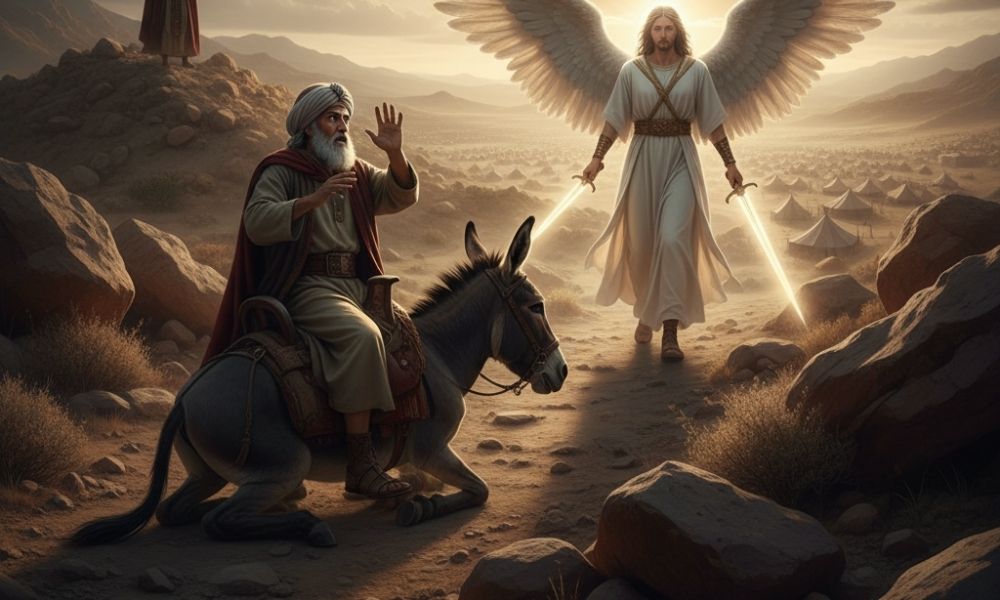
The story of Balaam and Balak reveals the clash between human ambition and divine will. Balak, the king of Moab, sought to curse Israel out of fear of their growing power, while Balaam, a renowned prophet, was hired to pronounce that curse. Yet God overruled their plans, turning intended curses into blessings — a powerful testament to God’s sovereignty and protection over His people.
Quick Facts
Balaam: Prophet or diviner from Pethor, near the Euphrates (Numbers 22:5)
Balak: King of Moab, son of Zippor (Numbers 22:2)
Era: Wilderness period (~13th century BCE)
Tribe/Nation: Balaam (Aram or Mesopotamia), Balak (Moab)
Key Events: Balak hires Balaam to curse Israel; Balaam’s donkey speaks; Balaam blesses Israel instead of cursing them
Symbol: Speaking donkey and altar of blessing — representing God’s control over human intentions
Name Meanings
- Balaam (בִּלְעָם) — “Not of the people” or “Destroyer of the people.”
- Balak (בָּלָק) — “Devastator” or “Waster.”
Both names reflect their destructive intentions, which God ultimately overturned for His glory.
Major Events
- Balak’s Fear: After Israel defeated neighboring nations, Balak, king of Moab, feared Israel’s advance and sought supernatural help to stop them (Numbers 22:2–4).
- Balaam’s Summons: Balak sent messengers offering Balaam wealth and honor if he would curse Israel. Though God forbade it, Balaam’s greed led him to entertain the offer (Numbers 22:7–19).
- The Angel and the Donkey: On his way to Moab, Balaam’s donkey saw the Angel of the LORD blocking the path and spoke after Balaam struck her — a divine warning against defying God (Numbers 22:21–35).
- Blessings Instead of Curses: From the heights of Moab, Balaam tried three times to curse Israel but was compelled by God’s Spirit to bless them each time, declaring Israel’s divine favor (Numbers 23–24).
- Prophecy of the Messiah: Balaam foretold a coming ruler — “a Star out of Jacob” (Numbers 24:17), a prophecy later seen as pointing to the Messiah.
- Balaam’s Downfall: Though he blessed Israel, Balaam later advised Balak to corrupt Israel through idolatry and immorality (Numbers 31:16; Revelation 2:14), leading to his death (Numbers 31:8).
Character and Lessons
- Gifted but compromised — a prophet drawn by greed and divided loyalty.
- Represents those who know God’s will yet seek personal gain.
- A fearful ruler who opposed God’s people instead of seeking peace.
- His failure shows that no earthly power can overturn God’s blessing.
Legacy and Impact
The story of Balaam and Balak stands as a warning against spiritual compromise and opposition to God’s plan. It demonstrates that God’s blessing cannot be reversed, even when human intentions are evil. Balaam’s downfall reminds believers that spiritual gifts without obedience lead to destruction, while Balak’s defeat shows that God protects those He has chosen.







Leave a Reply