
David is one of the most prominent figures in the Bible, celebrated as a man after God’s own heart, a fearless warrior, a gifted poet, and Israel’s greatest king. His life story, spanning from the sheep pastures of Bethlehem to the throne of Jerusalem, is a testament to God’s anointing and grace. While he is revered for his deep faith and the establishment of the Messianic lineage, Scripture also portrays his humanity and flaws, including moments of deceit—such as his lie to Ahimelech—and moral failure. Despite his imperfections, David’s legacy is defined by his genuine repentance and the everlasting covenant God established with his house.
- Name: David (Hebrew: Dawid)
- Tribe/Nation: Judah (Israelite)
- Era: United Monarchy (~1000 BCE)
- Father: Jesse
- Hometown: Bethlehem
- Wives: Michal, Abigail, Ahinoam, Maacah, Haggith, Abital, Eglah, Bathsheba
- Key Roles: Shepherd, Musician, Warrior, King of Israel, Psalmist
- Key Virtues: Faith, courage, repentance, worship
- Notable Flaws: Lust, passivity with children, deceit (e.g., lying to Ahimelech)
- Legacy: Founder of the Davidic Dynasty; Ancestor of Jesus Christ
- Symbol: Harp (worship) and Sling (faith/warfare)
Name Meaning
Meaning: “Beloved.” The name reflects his status as the chosen of God and the favored king of Israel. It appears over 1,000 times in the Bible, signifying his central role in redemptive history.
Lineage / Family Background
Father: Jesse, an Ephrathite of Bethlehem.
Great-Grandparents: Boaz and Ruth (linking him to the Moabite convert).
Tribe: Judah, the royal tribe of Israel.
Children: Amnon, Absalom, Adonijah, Tamar, Solomon (among others).
Descendant: Jesus Christ is frequently called the “Son of David” (Matthew 1:1).
Biblical Era / Context
Time: Transition from the period of Judges to the Monarchy (approx. 1040–970 BCE).
Setting: Begins in the hills of Judea, moves through the wilderness while fleeing Saul, and culminates in Jerusalem (Zion).
Cultural Context: A time of tribal consolidation and warfare against the Philistines. David unified the tribes and established Jerusalem as the political and religious capital.
Major Roles / Identity
Shepherd King: His early life tending sheep prepared him to shepherd God’s people.
Giant Slayer: Defeated Goliath, symbolizing trust in God over military might.
Psalmist: Attributed author of nearly half the Psalms, expressing the full range of human emotion in prayer.
Fugitive: Spent years fleeing King Saul’s jealousy, learning total dependence on God.
Key Character Traits
Heart after God: Desired to please God and prioritize His will (Acts 13:22).
Repentance: Unlike Saul, when David sinned (e.g., with Bathsheba), he offered genuine, brokenhearted repentance.
Courage: Faced lions, bears, and giants, trusting in Yahweh’s deliverance.
Fallibility: He was capable of fear and deceit. In 1 Samuel 21, fleeing Saul, David lied to the priest Ahimelech, claiming he was on a secret mission for the king. This lie had tragic consequences, leading to the massacre of the priests at Nob by Doeg the Edomite.
Main Life Events
Anointing: Samuel anoints the young shepherd David as the future king (1 Samuel 16).
Defeating Goliath: David kills the Philistine champion with a sling and a stone (1 Samuel 17).
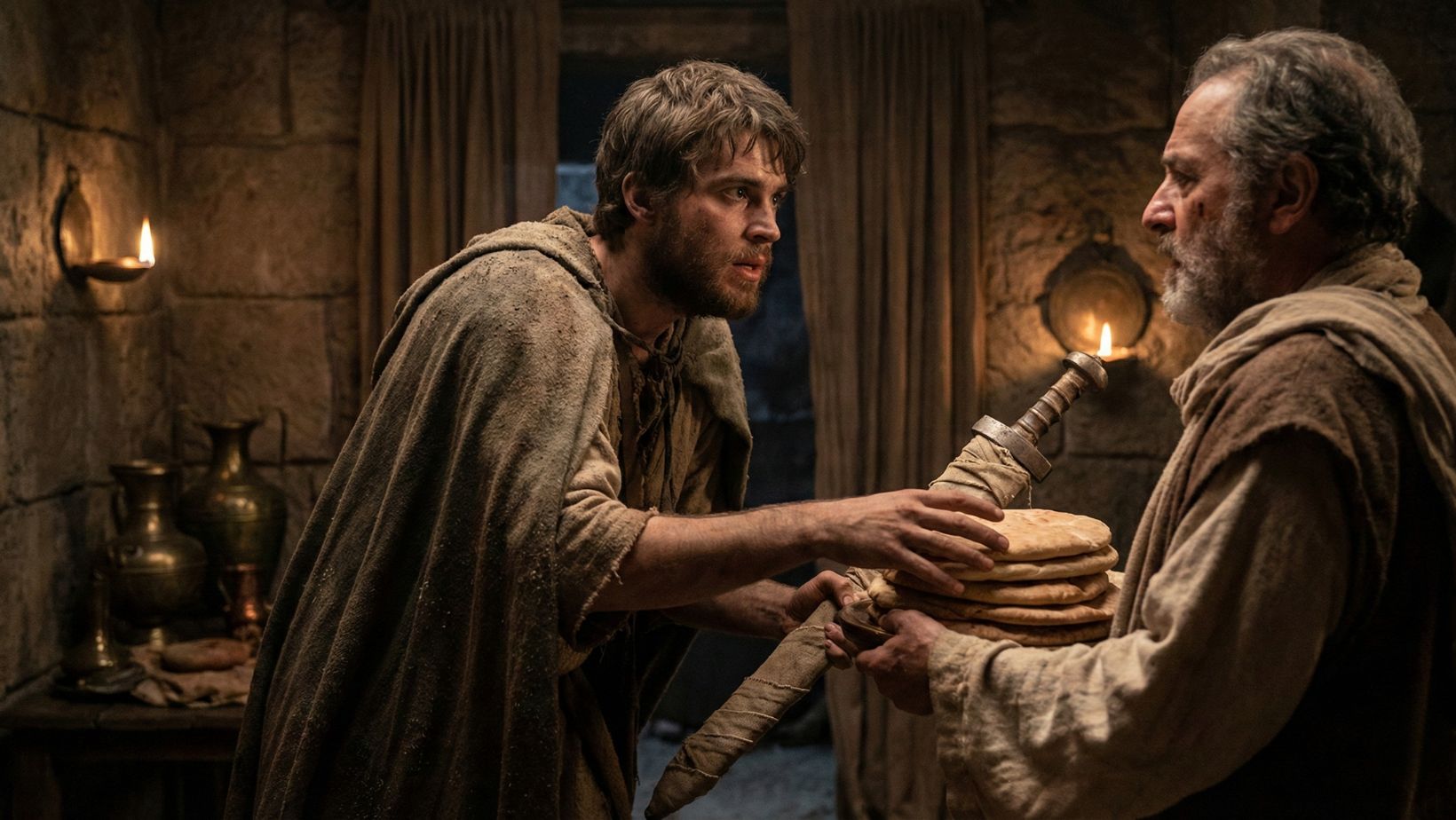
The Lie at Nob: In desperation while fleeing Saul, David deceives Ahimelech the priest to obtain holy bread and Goliath’s sword (1 Samuel 21:1–9).
Covenant with God: God promises David an eternal dynasty (2 Samuel 7).
Sin with Bathsheba: Commits adultery and orchestrates the death of Uriah; later rebuked by Nathan the prophet (2 Samuel 11–12).
Absalom’s Rebellion: His son usurps the throne, forcing David into exile again, a consequence of internal family dysfunction (2 Samuel 15–18).
Major Relationships
Saul: The first king of Israel; David served him faithfully but became the target of his murderous jealousy.
Jonathan: Saul’s son; David’s closest friend, with whom he shared a covenant of brotherhood.
Ahimelech: The High Priest at Nob whom David deceived; an interaction that highlights the collateral damage of David’s fear.
Nathan: The prophet who held David accountable, famously declaring, “You are the man!”
God: The defining relationship of his life, characterized by intimate worship and honest prayer.
Notable Passages
1 Samuel 17:45: “You come against me with sword and spear and javelin, but I come against you in the name of the LORD Almighty.”
1 Samuel 21:2: The moment of deceit — “The king charged me with a certain matter…” (David lying to Ahimelech).
Psalm 23: The Shepherd Psalm — “The LORD is my shepherd, I lack nothing.”
Psalm 51: The Psalm of Repentance — “Create in me a pure heart, O God, and renew a steadfast spirit within me.”
2 Samuel 7:16: The Davidic Covenant — “Your house and your kingdom will endure forever before me; your throne will be established forever.”
Legacy & Impact
The Davidic Covenant: God’s promise that a descendant of David would rule forever is the theological foundation for the Messiah.
The Psalms: His writings remain the prayer book of the Bible, used by Jews and Christians for millennia.
Jerusalem: Established the “City of David” as the spiritual center of God’s people.
Complex Humanity: His life serves as a dual lesson: a model of faith and worship, but also a warning about the consequences of sin and the ripple effects of deceit.
Symbolism / Typology
David as King: Foreshadows Jesus, the King of Kings.
David as Sufferer: Many of his Psalms (like Psalm 22) prophetically describe the suffering of Christ on the cross.
The Shepherd: Typifies Jesus as the “Good Shepherd.”
Extra-Biblical References
Tel Dan Stele: An archaeological artifact discovered in 1993 containing the inscription “House of David,” providing historical evidence for his dynasty.
Josephus: The Jewish historian provides extensive commentary on David’s reign and his interactions with the priesthood.







Leave a Reply