
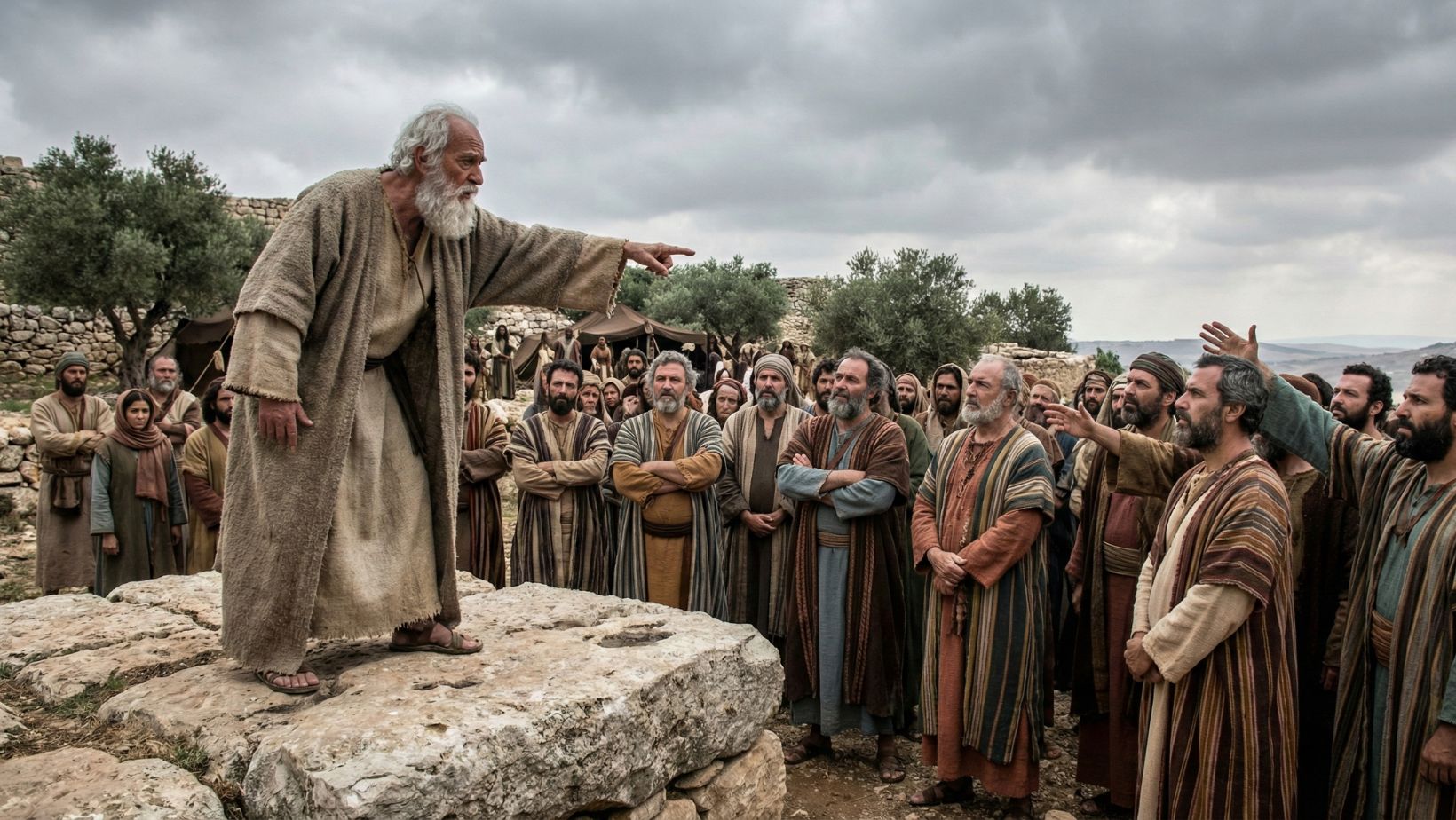
The demand for a king is the defining political and spiritual crisis of the book of 1 Samuel. It marks the end of the Theocracy (where God ruled directly through judges/prophets) and the beginning of the Monarchy. Recorded in 1 Samuel 8, this event was triggered by a vacuum of leadership: Samuel was aging, and his sons were corrupt. However, the request revealed a deeper spiritual sickness in Israel—a desire to conform to the pagan nations around them rather than trust in the invisible protection of Yahweh. It is a profound lesson on the difference between God’s perfect will and His permissive will.
- Event: Israel Demands a King
- Scripture: 1 Samuel 8
- Location: Ramah (Samuel’s hometown)
- Key Characters: Samuel, The Elders of Israel, God
- Trigger: The corruption of Samuel’s sons (Joel and Abijah)
- Core Motivation: To be “like all the nations” and have a military leader
- God’s Verdict: A rejection of His kingship, not Samuel’s leadership
- Result: God grants the request but warns of the heavy cost
The Context: A Crisis of Succession
The Failure of the Family: Samuel, though a godly prophet, failed to raise godly successors. His sons, Joel and Abijah, were appointed judges in Beersheba, but they “turned aside after dishonest gain, took bribes, and perverted justice” (1 Samuel 8:3). The External Threat: The Philistines remained a constant military threat, and the Ammonites were gathering strength in the east. The Political Structure: Israel was a loose confederation of tribes. The elders believed they needed a centralized government and a standing army to survive.
Detailed Event Description
1. The Confrontation (1 Samuel 8:4–5)
The elders of Israel gathered together and came to Samuel at Ramah. They presented a logical argument based on two facts:
- “You are old.”
- “Your sons do not walk in your ways.”
- The Demand: “Now appoint a king to lead us, such as all the other nations have.”
2. Samuel’s Reaction and Prayer (1 Samuel 8:6)
Samuel was “displeased” (literally, the thing was evil in his eyes). He felt rejected personally, seeing his life’s work as a failure. However, his immediate response was not to argue, but to pray to the LORD.
3. God’s Assessment (1 Samuel 8:7–9)
God comforted Samuel by revealing the true nature of the request.
- The Rejection: “It is not you they have rejected, but they have rejected me as their king.”
- ** The Pattern:** God noted that this was consistent with their behavior since the Exodus—forsaking Him for idols.
- The Instruction: God told Samuel to listen to them, but to solemnly warn them about what a king would cost them.
4. The Warning: The Rights of the King (1 Samuel 8:10–18)
Samuel delivered a speech known as the Mishpat HaMelech (The Manner of the King). He warned that a human king would be a “taker”:
- Drafting Sons: For chariots, horsemen, and commanders.
- Drafting Daughters: For perfumers, cooks, and bakers.
- Seizing Property: Taking the best fields and vineyards to give to his officials.
- Taxation: Taking a tenth of their grain and flocks (effectively making the king a second “god” demanding a tithe).
- Slavery: “You yourselves will become his slaves.”
5. The People’s Refusal (1 Samuel 8:19–20)
Despite the warning of tyranny, the people refused to listen.
- The Declaration: “No! We want a king over us. Then we will be like all the other nations, with a king to lead us and to go out before us and fight our battles.”
- The Capitulation: God told Samuel, “Listen to them and give them a king.” Samuel sent the men home, preparing to anoint Saul.
Theological Analysis
The Sin of Conformity: The core sin was not wanting a leader, but wanting to be “like all the other nations.” Israel was designed to be a “kingdom of priests and a holy nation” (Exodus 19:6)—set apart and unique. By asking for a king, they were voluntarily surrendering their distinctiveness to become just another Near Eastern monarchy.
Trust in Visible vs. Invisible: The judges were raised up by God’s spirit when needed. A king was a permanent, visible institution. The people wanted a system they could see and rely on, rather than relying on faith in an invisible God to raise up a deliverer.
God’s Permissive Will: This event is a classic example of God giving people what they want to teach them a lesson. He granted the request, but the monarchy eventually led to the division of the nation and the Exile. As Hosea 13:11 later says, “So in my anger I gave you a king, and in my wrath I took him away.”
Character Dynamics
Samuel: He stands as the faithful mediator. Even though the request hurt him, he advocated for the people to God, and brought God’s word back to the people. He did not let his personal ego stop him from obeying God’s command to anoint his replacement.
The Elders: They represent pragmatism over piety. They saw a political problem (corruption/security) and sought a political solution, ignoring the spiritual reality that their safety depended on their covenant with God, not their form of government.







Leave a Reply