
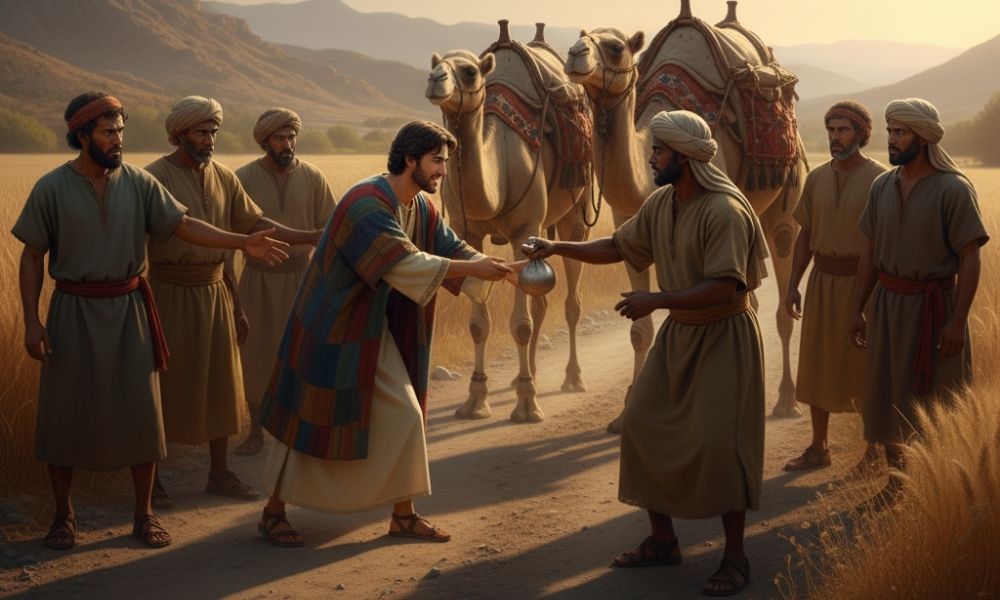
Joseph’s sale into slavery is one of the most tragic yet redemptive turning points in the book of Genesis. Betrayed by his jealous brothers and sold to traders bound for Egypt, Joseph’s suffering becomes the pathway through which God accomplishes His greater plan of salvation. What began as an act of hatred would ultimately lead to deliverance for his entire family and the preservation of Israel.
Quick Facts
Event: Joseph is betrayed by his brothers and sold into slavery in Egypt
Key Figures: Joseph, his brothers (especially Reuben and Judah), Ishmaelite/Midianite traders, Jacob
Primary Source: Genesis 37:12–36
Era: Patriarchal Age
Location: From Dothan (in Canaan) to Egypt
Method: Joseph is thrown into a cistern, then sold to traders for twenty shekels of silver
Consequence: Joseph is taken to Egypt, where he later rises to prominence under God’s providence
Context of the Event
Joseph, the beloved son of Jacob, was hated by his brothers for two main reasons—his father’s favoritism and his prophetic dreams that suggested his future rule over them. When Jacob sent Joseph to check on his brothers as they tended flocks near Shechem, they saw an opportunity to get rid of him once and for all.
“Here comes that dreamer!” they said. “Come now, let’s kill him and throw him into one of these cisterns…” (Genesis 37:19–20, NIV)
But divine providence was already at work, even in their evil intentions.
The Betrayal
- Reuben’s Intervention: Reuben, the eldest, persuaded his brothers not to kill Joseph but to throw him into a pit, intending to rescue him later.
- The Pit: The brothers stripped Joseph of his colorful robe—a symbol of his father’s love—and threw him into an empty cistern.
- The Sale: While Reuben was away, a caravan of Ishmaelite (Midianite) traders passed by, heading to Egypt. Judah proposed selling Joseph instead of killing him, saying, “What will we gain if we kill our brother… Come, let’s sell him to the Ishmaelites.” (Genesis 37:26–27, NIV)
The brothers agreed, and Joseph was sold for twenty shekels of silver.
The Deception of Jacob
After Joseph was taken away, the brothers devised a cruel deception. They dipped his robe in goat’s blood and presented it to their father Jacob, saying, “We found this. Examine it to see whether it is your son’s robe.” Believing Joseph had been torn apart by a wild animal, Jacob tore his clothes and mourned bitterly, refusing comfort.
“I will continue to mourn until I join my son in the grave.” (Genesis 37:35, NIV)
Meanwhile, in Egypt, Joseph was sold to Potiphar, an officer of Pharaoh and captain of the guard—marking the beginning of a new and painful chapter in his life that would lead to glory.
Key Characters
- Joseph: The favored son betrayed by his own brothers, a foreshadowing of God’s redemptive plan through suffering.
- Reuben: The eldest brother who tried to prevent Joseph’s death but failed to save him.
- Judah: The brother who suggested selling Joseph, whose later repentance plays a major role in Joseph’s story.
- Jacob: The grieving father, deceived just as he had once deceived others.
- The Traders: The means by which God moved Joseph from Canaan to Egypt, setting the stage for future deliverance.
Major Themes
- Jealousy and Betrayal: Envy drives Joseph’s brothers to commit a terrible act, illustrating the destructive power of jealousy.
- Deception Repeated: The deceiver (Jacob) becomes the deceived, showing how sin echoes through generations.
- God’s Providence: Even in betrayal and suffering, God’s plan moves forward—turning evil into good (Genesis 50:20).
- Suffering as Preparation: Joseph’s hardship becomes the foundation for his later leadership and faith.
- Foreshadowing of Redemption: Joseph’s betrayal by his brothers anticipates Christ’s betrayal by His own people for silver.
Key Passages
- Genesis 37:23–24 (NIV):
“So when Joseph came to his brothers, they stripped him of his robe… and they took him and threw him into the cistern.” - Genesis 37:28 (NIV):
“When the Midianite merchants came by, his brothers pulled Joseph up out of the cistern and sold him for twenty shekels of silver to the Ishmaelites, who took him to Egypt.” - Genesis 37:35 (NIV):
“All his sons and daughters came to comfort him, but he refused to be comforted.”
Theological Significance
Joseph’s sale into slavery reveals the mystery of divine providence—how God can work through human sin to accomplish His purposes. Though Joseph was betrayed, God was with him, turning a moment of despair into the beginning of deliverance for an entire nation. This episode teaches that God’s plans are not thwarted by evil; He redeems suffering and uses it to fulfill His promises.







Leave a Reply