
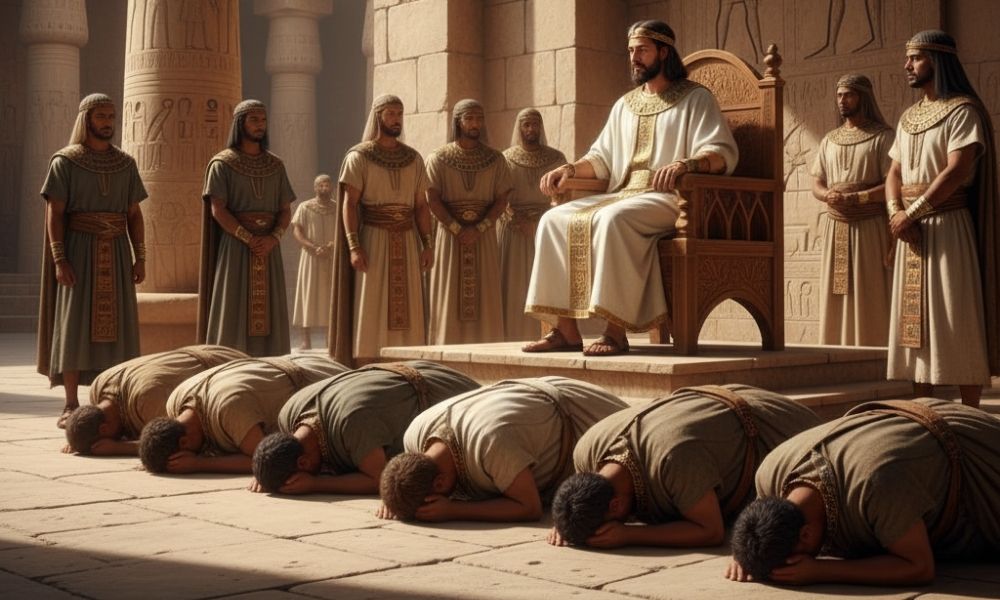
Joseph’s brothers’ first journey to Egypt is one of the most dramatic moments in Genesis. Driven by famine and desperation, the same brothers who once sold Joseph into slavery unknowingly bow before him—fulfilling his youthful dreams. Though Joseph recognizes them, they do not recognize him. What follows is a story of divine justice, mercy, and reconciliation unfolding through wisdom, restraint, and testing.
Quick Facts
Event: Joseph’s brothers travel to Egypt to buy grain during the famine
Key Figures: Joseph, Jacob (Israel), Joseph’s ten brothers, Simeon, Benjamin
Primary Source: Genesis 42:1–38
Era: Patriarchal Age
Location: Egypt and Canaan
Consequence: The brothers face Joseph’s test, Simeon is detained, and they are told to return with Benjamin
Context of the Event
The famine had spread from Egypt to Canaan, leaving Jacob’s family in desperate need. Hearing that there was grain in Egypt, Jacob sent ten of his sons to buy food, keeping Benjamin, his youngest and most beloved, at home.
“I have heard that there is grain in Egypt. Go down there and buy some for us, so that we may live and not die.” (Genesis 42:2, NIV)
The brothers set out for Egypt, unaware that the man they would meet—the governor who controlled all grain sales—was their long-lost brother Joseph.
The Brothers Before Joseph
When the brothers arrived, they bowed down before Joseph, fulfilling the dreams he had as a youth. But they did not recognize him—Joseph now appeared as an Egyptian official, speaking through an interpreter.
Recognizing them instantly, Joseph restrained his emotions and decided to test them to see if they had changed.
“You are spies! You have come to see where our land is unprotected.” (Genesis 42:9, NIV)
Though the accusation startled them, Joseph used it to probe their honesty and repentance.
Joseph’s Test
- Interrogation: Joseph questioned them about their family. They revealed that their youngest brother remained with their father and that another brother “was no more.”
- Imprisonment: Joseph confined them for three days to awaken their conscience.
- Conditional Release: On the third day, Joseph released nine brothers and kept Simeon in custody as a pledge. He commanded them to bring Benjamin to prove their truthfulness.
- Hidden Grace: Without their knowledge, Joseph ordered their silver returned to their grain sacks—a gesture of mercy meant to stir reflection.
The Brothers’ Guilt and Realization
While still in Egypt, guilt began to surface among the brothers.
“Surely we are being punished because of our brother,” they said. “We saw how distressed he was when he pleaded with us for his life, but we would not listen.” (Genesis 42:21, NIV)
Hearing their confession (through an interpreter), Joseph was overcome with emotion and turned away to weep. His heart longed for reconciliation, yet he continued to test them to see if true repentance had taken root.
Return to Canaan
When the brothers returned home, they told Jacob everything that had happened. Upon discovering their silver in the sacks, they were terrified, thinking they were being framed. Jacob, grieving and fearful, refused to let Benjamin go, saying,
“You have deprived me of my children. Joseph is no more, and Simeon is no more, and now you want to take Benjamin.” (Genesis 42:36, NIV)
The stage was set for the next journey—a deeper test that would reveal their hearts and lead to family restoration.
Key Characters
- Joseph: The governor of Egypt, wise and forgiving, testing his brothers to bring about repentance.
- Jacob (Israel): The sorrowful patriarch, unwilling to risk losing another beloved son.
- The Brothers: Once deceitful, now burdened by guilt and slowly awakening to God’s justice.
- Simeon: Chosen to remain behind as a prisoner until Benjamin’s arrival.
Major Themes
- Fulfillment of Prophecy: Joseph’s dreams of his brothers bowing before him are fulfilled.
- Guilt and Conscience: The famine exposes not only hunger but also hidden sin and remorse.
- Justice and Mercy: Joseph’s actions combine discipline with grace—God’s way of leading sinners to repentance.
- Testing and Transformation: The brothers’ trials in Egypt prepare them for eventual forgiveness and renewal.
- Providence and Purpose: God uses famine and human decisions to accomplish His redemptive plan for Israel.
Key Passages
- Genesis 42:6 (NIV):
“When Joseph’s brothers arrived, they bowed down to him with their faces to the ground.” - Genesis 42:21 (NIV):
“Surely we are being punished because of our brother… We saw how distressed he was when he pleaded with us, but we would not listen.” - Genesis 42:24 (NIV):
“He turned away from them and began to weep.”
Theological Significance
Joseph’s encounter with his brothers reveals God’s wisdom in restoring relationships through conviction and mercy. Their physical hunger mirrors their spiritual need for reconciliation. God uses both famine and Joseph’s tests to awaken conscience and prepare hearts for forgiveness. This story foreshadows Christ’s redemptive mission—bringing grace to those who wronged Him and using suffering to accomplish salvation.







Leave a Reply