
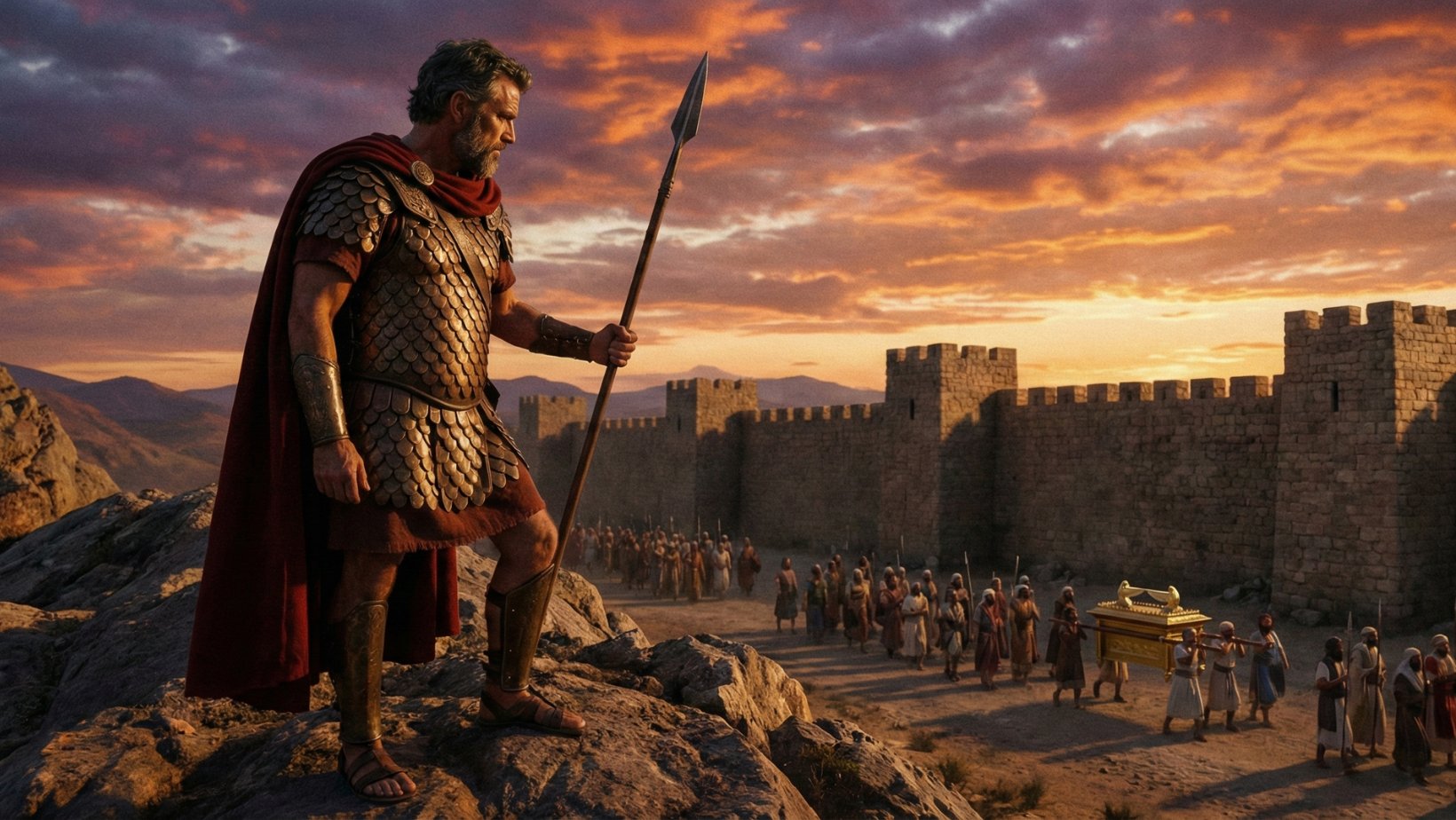
Joshua is one of the most significant figures in the Old Testament, transitioning from a slave in Egypt to the military commander and spiritual leader who brought Israel into the Promised Land. Serving first as the devoted aide to Moses, Joshua proved his faithfulness as one of only two spies who trusted God to deliver Canaan into their hands. His life is characterized by unwavering obedience, military brilliance, and a steadfast commitment to the Law of God. He fulfilled the promise given to the patriarchs by conquering the land and allotting it to the twelve tribes of Israel.
Quick Facts
- Name: Joshua (Hebrew: Yehoshua, meaning “Yahweh is Salvation”)
- Original Name: Hoshea (changed by Moses in Numbers 13:16)
- Tribe/Nation: Ephraim
- Era: Exodus and Conquest (~15th or 13th century BCE)
- Father: Nun
- Mentor: Moses
- Home: Egypt → The Wilderness → Timnath-serah, Canaan
- Book: The Book of Joshua (24 chapters); appears in Exodus and Numbers
- Key Virtues: Courage, obedience, faithfulness, leadership
- Legacy: Conquered Canaan; established Israel in the Promised Land
- Symbol: Sword and Shield — symbolizing warfare and defense of the faith
Name Meaning
“Joshua” (Yehoshua) means “Yahweh is salvation.” He was originally named Hoshea (“Salvation”), but Moses added the divine prefix, cementing the truth that salvation comes from God alone. This is the Hebrew form of the Greek name “Jesus,” highlighting a profound theological link between Joshua the conqueror and Jesus the Savior.
Lineage / Family Background
Origin: Born into slavery in Egypt.
Tribe: Ephraim, one of the leading tribes of Israel (descended from Joseph).
Father: Nun, a devout Israelite.
Mentor: Moses, whom he served as a personal assistant from his youth.
Descendants: While his specific descendants are not the focus of his story, his inheritance remained in Timnath-serah in the hill country of Ephraim.
Biblical Era / Context
Time: Spans the Exodus from Egypt, the 40 years of wilderness wandering, and the subsequent conquest of Canaan.
Setting: Begins in the brick pits of Egypt, moves through the Sinai Desert, and concludes with the settlement of the Promised Land.
Cultural Context: A time of transition from a nomadic tribal society to a settled nation-state. It was a period of “Holy War” where God fought on behalf of Israel to judge the idolatrous nations of Canaan.
Major Roles / Identity
Military Commander: Led Israel’s army against the Amalekites and the nations of Canaan.
Faithful Spy: One of the twelve spies sent into Canaan and one of only two (with Caleb) who brought a good report.
Successor to Moses: Commissioned by God to replace Moses and lead the people across the Jordan River.
Judge and Administrator: Oversaw the division of the land among the tribes and renewed the covenant at Shechem.
Key Character Traits
Courage: “Be strong and courageous” was the command he lived by (Joshua 1:6).
Obedience: He followed God’s instructions precisely, even when they seemed unconventional (e.g., the march around Jericho).
Loyalty: Remained fiercely loyal to Moses during the rebellion of the Golden Calf and the wilderness years.
Zeal: Jealous for God’s honor and the purity of Israel’s worship.
Wisdom: Showed strategic brilliance in military campaigns and fairness in judicial matters.
Main Life Events
Battle with Amalek: Led the Israelite army to its first victory while Moses prayed on the mountain (Exodus 17).
The 12 Spies: Scouted the land of Canaan; stood against the fearful majority, trusting God’s promise (Numbers 13–14).
Commissioning: Appointed by God and Moses as the new leader before Moses’ death (Deuteronomy 31).
Crossing the Jordan: Led the miraculous crossing of the Jordan River on dry ground (Joshua 3).
Fall of Jericho: Conquered the first stronghold of Canaan through a miraculous collapse of its walls (Joshua 6).
The Day the Sun Stood Still: During the battle against the Amorites at Gibeon, he prayed for the sun to stand still to complete the victory (Joshua 10).
Dividing the Land: Oversaw the casting of lots and distribution of territory to the twelve tribes (Joshua 13–21).
Major Relationships
Moses: His master and spiritual father; Joshua “did not depart from the tent” of meeting.
Caleb: His partner in faith; the only other spy from the older generation allowed to enter the Promised Land.
Rahab: The Canaanite woman who hid the spies and was spared during the destruction of Jericho.
Eleazar: The High Priest with whom he worked to distribute the land.
The Angel of the Lord: Encountered the “Commander of the Army of the Lord” before the battle of Jericho (Joshua 5).
Notable Passages
Joshua 1:9: The divine mandate — “Have I not commanded you? Be strong and courageous. Do not be afraid; do not be discouraged, for the LORD your God will be with you wherever you go.”
Joshua 24:15: His final challenge to the nation — “But as for me and my household, we will serve the LORD.”
Numbers 14:9: His plea to the fearful Israelites — “Do not rebel against the LORD. And do not be afraid of the people of the land, because we will devour them.”
Legacy & Impact
Establishment of Israel: He turned a wandering group of tribes into a landed nation.
Fulfillment of Prophecy: His life completed the promise God made to Abraham centuries earlier regarding the land.
Standard of Leadership: He set a precedent for leadership that is strictly adherent to God’s Word rather than political expediency.
Covenant Renewal: At the end of his life, he bound the people to a covenant renewal at Shechem, setting the stage for the era of the Judges.
Symbolism / Typology
- Name: Both share the name “Yahweh is Salvation” (Yeshua).
- Role: Moses (representing the Law) could not bring the people into the Promised Land; only Joshua (representing the Savior) could.
- Victory: Joshua defeated the enemies of God, just as Christ defeated sin and death.
- Rest: Joshua gave the people rest in the land (Hebrews 4:8), foreshadowing the eternal rest Christ provides.
The Jordan Crossing: Symbolizes the believer’s transition from the “wilderness” of the flesh into the “promised land” of Spirit-filled life (or death and resurrection).
Extra-Biblical References
Samaritan Tradition: The Book of Joshua is highly regarded in Samaritan history (though their version differs textually).
Jewish Tradition: The Talmud identifies Joshua as the author of the book bearing his name (except for the final verses recording his death).
Military History: Joshua’s strategies, particularly the ambush at Ai and the rapid southern campaign, are studied as examples of ancient surprise warfare and “defeat in detail.”







Leave a Reply