
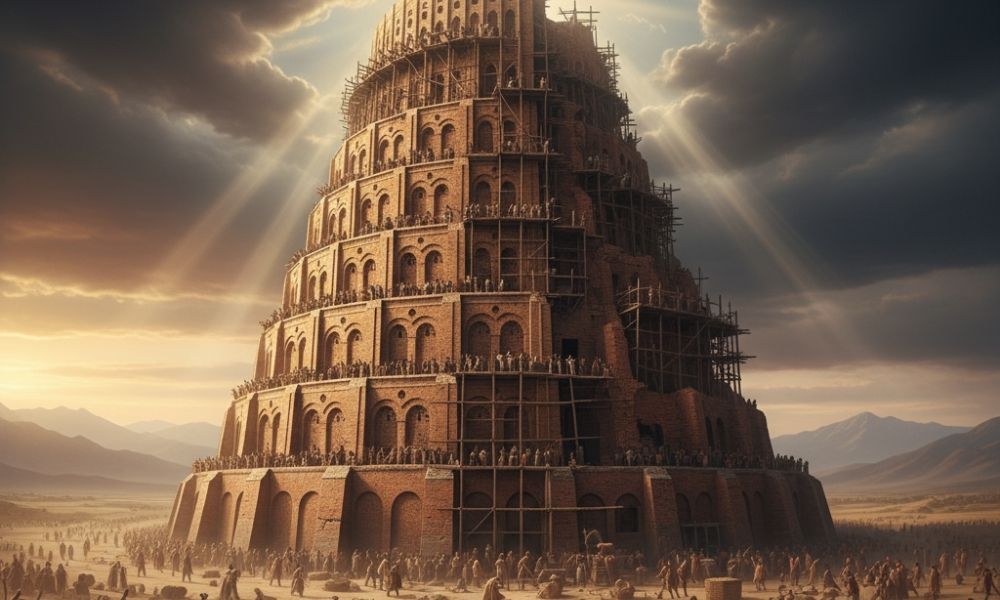
The confusion of languages and scattering of nations at Babel reveals both the justice and mercy of God. When humanity united to build a tower reaching to heaven, their goal was self-glorification rather than obedience to God’s command to fill the earth. To halt their rebellion, God confused their language, making communication impossible and forcing them to disperse. This divine act not only humbled human pride but also fulfilled God’s original plan for the earth — to be filled with diverse peoples and cultures under His sovereignty.
Quick Facts
Event Name: Languages Confused and Nations Scattered
Location: The plain of Shinar (Babel/Babylon region in Mesopotamia)
Key Figures: Humanity united in pride; God, the Judge and Creator
Cause: Human rebellion and pride in building the Tower of Babel
Consequence: Confusion of languages and dispersion of peoples across the earth
Key Scripture: Genesis 11:8–9 — “So the LORD scattered them from there over all the earth, and they stopped building the city. That is why it was called Babel — because there the LORD confused the language of the whole world.”
Symbolism: Judgment against pride, diversity of languages, and the establishment of nations
Meaning of the Event
This event marks the beginning of human cultural and linguistic diversity. What humanity intended for self-exaltation, God used to accomplish His command from Genesis 9:1 — to “be fruitful, multiply, and fill the earth.” The scattering at Babel shows that God’s purposes will always prevail, even when humans resist them.
Biblical Era / Timeline
Era: Early Post-Flood world (after the Table of Nations, Genesis 10)
Context: Following the unity and ambition of Babel’s builders, God intervened to redirect humanity’s course — transforming one proud people into many distinct nations.
The Story
1. Humanity’s Rebellion (Genesis 11:1–4)
After the Flood, the whole earth shared one language. Settling in the plain of Shinar, people decided to build a city and tower to make a name for themselves and prevent being scattered. Their unity became a tool for pride, not worship.
2. Divine Observation and Decision (Genesis 11:5–6)
“The LORD came down to see the city and the tower that the people were building.”
God saw that humanity’s united rebellion would lead to even greater sin. In mercy and justice, He chose to intervene — not by destroying them, but by dividing them.
3. The Confusion of Languages (Genesis 11:7)
“Come, let Us go down and confuse their language so they will not understand each other.”
Instantly, their common speech fractured into many languages. Unable to communicate, the builders abandoned their project in frustration.
4. The Scattering of the Nations (Genesis 11:8–9)
The people dispersed across the earth, forming distinct tribes, cultures, and nations. This scattering fulfilled God’s purpose for humanity to fill the earth, though it came through judgment rather than willing obedience. The city was named Babel, meaning confusion.
Symbolism & Meaning
| Symbol | Meaning |
|---|---|
| Language Confusion | God’s sovereignty over human communication and unity |
| Scattering of Peoples | The fulfillment of God’s command to fill the earth |
| Babel (Confusion) | The futility of pride and rebellion |
| Diverse Tongues | God’s creative power and wisdom in shaping nations |
| Abandoned Tower | The collapse of human ambition apart from God |
Theological Significance
- Divine Sovereignty: God governs the rise and spread of nations according to His plan (Acts 17:26).
- Human Pride and Limitation: Unity without God leads to corruption; humility restores divine purpose.
- Diversity as Design: The world’s variety of languages and cultures reflects God’s creative order, not chaos.
- Judgment with Mercy: God restrained sin without destroying humanity, giving people a chance to seek Him across the earth.
- Reversal at Pentecost: In Acts 2, God reunites nations through the Gospel, as people from every language hear the good news of Christ — a spiritual reversal of Babel.
Key Lessons
- God’s plans will always prevail, even against human resistance.
- Pride leads to confusion, but humility restores harmony.
- Unity without God’s direction results in destruction.
- Diversity is part of God’s good design for the earth.
- Only in Christ can divided nations and languages find true unity.
Legacy & Impact
- This event explains the origin of human languages and cultural diversity.
- It shows that every nation and people group descends from one family under God.
- Babel became the root of Babylon, later symbolizing human arrogance and rebellion throughout Scripture.
- The scattering prepared the way for God’s global redemption plan — to bless all nations through the descendants of Abraham (Genesis 12:3).
- The confusion of tongues at Babel is undone in part at Pentecost, where God’s Spirit unites believers from every language and nation.







Leave a Reply