
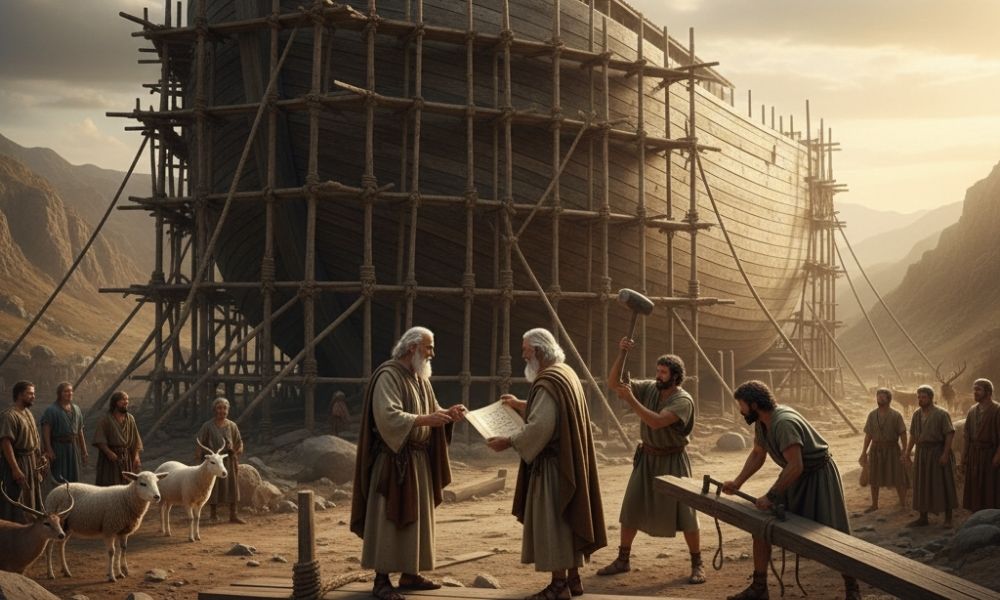
The story of Noah building the ark is one of the greatest examples of faith and obedience in all of Scripture. In a world consumed by wickedness, Noah stood apart as a righteous man who trusted God’s word even when it defied human reason. By building the ark exactly as God commanded, Noah became the means through which life was preserved during the Flood — a symbol of salvation, judgment, and divine grace.
Quick Facts
Event Name: Noah Builds the Ark
Location: Likely in the Mesopotamian region (exact place unknown)
Key Figures: Noah, God, Noah’s family (wife, Shem, Ham, Japheth, and their wives)
Cause: God’s command to prepare for the Flood as judgment for humanity’s wickedness
Consequence: Preservation of Noah’s family and all living species during the Flood
Key Scripture: Genesis 6:14 — “Make yourself an ark of gopher wood; make rooms in the ark, and cover it inside and outside with pitch.”
Symbolism: Obedience, salvation, divine protection, and faith amid unbelief
Meaning of the Event
Noah’s construction of the ark represents unwavering faith in God’s word despite a corrupt world’s mockery. It foreshadows salvation through Christ — the true Ark of refuge for all who believe. Just as Noah entered the ark to escape destruction, believers find safety in Christ from the judgment of sin.
Biblical Era / Timeline
Era: Antediluvian (Before the Flood)
Context: Humanity had become utterly corrupt and violent (Genesis 6:11–12). God determined to destroy all life by a great Flood but extended mercy through one righteous man — Noah.
The Story
1. God’s Command (Genesis 6:13–14)
God revealed His plan to Noah:
“I am going to put an end to all people, for the earth is filled with violence because of them.”
He commanded Noah to build an ark — a massive vessel designed to preserve life during the coming judgment.
2. The Ark’s Design (Genesis 6:15–16)
- Length: 300 cubits (~450 feet)
- Width: 50 cubits (~75 feet)
- Height: 30 cubits (~45 feet)
- Materials: Gopher wood, sealed with pitch inside and out
- Structure: Three decks, rooms for animals, one door, and a single window
This design reflects divine precision — a perfect balance of strength, stability, and capacity.
3. Noah’s Obedience (Genesis 6:22)
“Noah did everything just as God commanded him.”
Despite ridicule and decades of labor (likely spanning many years), Noah remained faithful, demonstrating total trust in God’s promise. His obedience became the defining mark of his faith (Hebrews 11:7).
4. Gathering the Living Creatures (Genesis 6:19–20)
God instructed Noah to bring into the ark two of every kind of animal — male and female — along with seven pairs of clean animals for sacrifice and food. This act preserved the diversity of life upon the earth.
5. The Promise of Salvation (Genesis 6:18)
God established His covenant with Noah — the first explicit covenant in Scripture:
“But I will establish My covenant with you; and you shall go into the ark — you, your sons, your wife, and your sons’ wives with you.”
This covenant assured Noah of divine protection and marked the beginning of God’s redemptive dealings with humankind.
Symbolism & Meaning
| Symbol | Meaning |
|---|---|
| The Ark | Salvation and refuge in God’s mercy |
| Gopher Wood & Pitch | Divine preparation and protection from judgment |
| One Door | Christ, the only way to salvation (John 10:9) |
| The Flood | God’s righteous judgment on sin |
| Noah’s Obedience | Faith that acts even when unseen (Hebrews 11:7) |
Theological Significance
- Faith in Action: Noah believed what God said about things yet unseen — a model of living faith.
- Judgment and Grace: The ark represents God’s mercy amid His justice; He provides salvation even when He judges sin.
- Foreshadowing Christ: Just as the ark saved Noah from the waters of death, Christ saves believers from the penalty of sin.
- Covenant Relationship: Noah’s covenant anticipates the New Covenant in Christ, based on divine grace and promise.
Key Lessons
- Faith obeys even when it doesn’t fully understand.
- God provides a way of salvation before judgment falls.
- Righteousness stands firm amid corruption.
- True obedience requires perseverance.
- God honors those who walk with Him in faith.
Legacy & Impact
- The ark became a symbol of God’s faithfulness, protection, and salvation.
- Noah’s obedience preserved humanity and animal life, restarting creation after the Flood.
- His faith became a model for all believers who trust God’s word against worldly disbelief.
- The ark’s story foreshadows the Church — a place of safety amid judgment — and Christ, our ultimate refuge.







Leave a Reply