
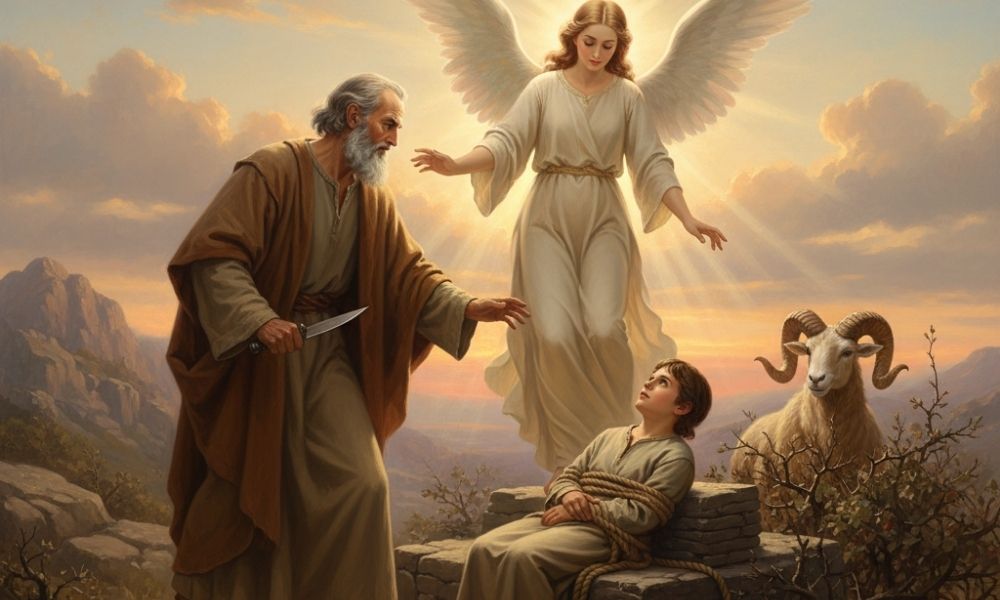
The Sacrifice of Isaac, also known as the Test of Abraham’s Faith, is one of the most profound and challenging moments in the Bible. It demonstrates Abraham’s absolute trust and obedience to God — even when commanded to offer his beloved son, Isaac, the child of promise. This event reveals God’s sovereignty, Abraham’s faith, and a powerful foreshadowing of the ultimate sacrifice — Jesus Christ, the Son whom God would later provide for the salvation of humanity.
Event: The Sacrifice of Isaac (Akedah, “The Binding of Isaac”)
Main Figures: Abraham and Isaac
Location: Mount Moriah (later identified with Jerusalem)
Scriptural Reference: Genesis 22:1–19
Themes: Faith, obedience, divine provision, testing, foreshadowing redemption
Symbol: The ram — God’s provided substitute
The Command and the Test
God tested Abraham by commanding him:
“Take your son, your only son, whom you love—Isaac—and go to the region of Moriah. Sacrifice him there as a burnt offering on a mountain I will show you.”
(Genesis 22:2)
This command struck at the heart of Abraham’s faith. Isaac was the promised heir through whom God’s covenant would continue — yet Abraham chose to obey without hesitation, trusting that God could even raise the dead if necessary (Hebrews 11:17–19).
The Journey to Moriah
Abraham set out early in the morning with Isaac, two servants, and the wood for the offering. After three days, they reached the place God had shown him. When Isaac asked, “Where is the lamb for the burnt offering?” Abraham replied with faith-filled words:
“God himself will provide the lamb for the burnt offering, my son.”
(Genesis 22:8)
The Moment of Obedience
On Mount Moriah, Abraham built an altar, arranged the wood, and bound Isaac upon it. As he raised the knife to sacrifice his son, the angel of the LORD called out from heaven, stopping him:
“Do not lay a hand on the boy… Now I know that you fear God, because you have not withheld from me your son, your only son.”
(Genesis 22:12)
Divine Provision
At that moment, Abraham looked up and saw a ram caught in a thicket. He offered it instead of his son. In awe and gratitude, Abraham named the place Yahweh-Yireh (“The LORD Will Provide”).
This powerful moment revealed that God does not delight in human sacrifice but in faith and obedience. It also prefigured the ultimate act of divine provision — God offering His own Son, Jesus, as the true Lamb of God.
Symbolism and Foreshadowing
- Isaac represents the child of promise — obedience and trust.
- Abraham symbolizes unwavering faith in God’s character.
- The Ram prefigures Christ, the substitutionary sacrifice for sin.
- Mount Moriah foreshadows Calvary, where God’s Son was given for the world.
Notable Verses
- Genesis 22:2: “Take your son, your only son, whom you love—Isaac…”
- Genesis 22:8: “God himself will provide the lamb…”
- Genesis 22:14: “So Abraham called that place The LORD Will Provide.”
Legacy
The Sacrifice of Isaac stands as a timeless symbol of faith under trial. It teaches that true faith trusts God’s goodness even in the face of the unthinkable. Through Abraham’s obedience, God reaffirmed His covenant and blessed all nations through his offspring.







Leave a Reply