
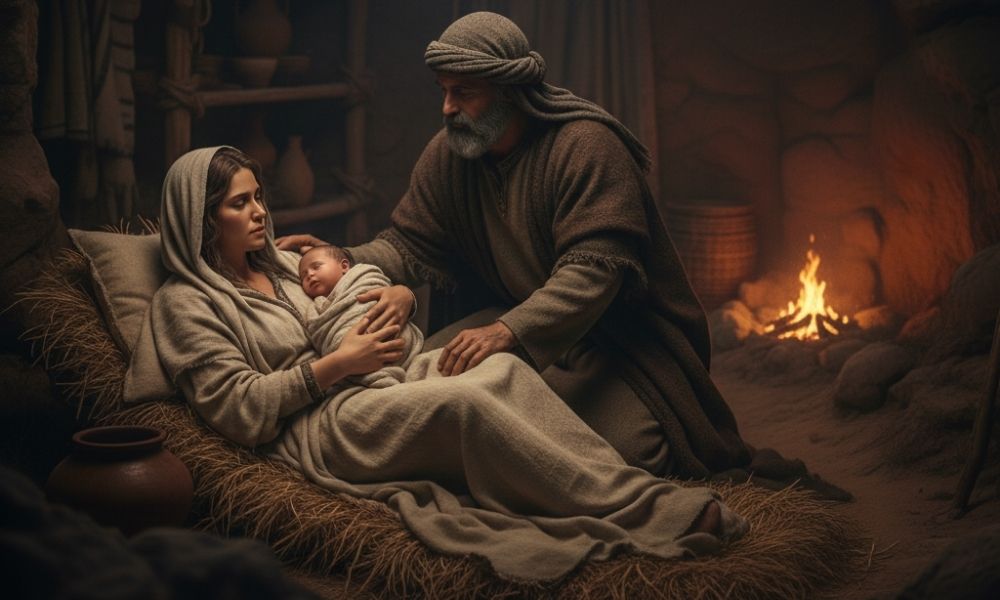
The birth of Seth marks a turning point after the tragedy of Cain and Abel. With Abel dead and Cain exiled, it seemed that humanity’s hope for righteousness was lost. Yet God, in His mercy, granted Adam and Eve another son — Seth, whose name means “appointed.” Through Seth’s line came a people who called upon the name of the Lord, and ultimately, the promised Redeemer, Jesus Christ.
Quick Facts
Event Name: The Birth of Seth
Location: Near Eden (Genesis 4:25–26; 5:3)
Key Figures: Adam, Eve, Seth, God
Parents: Adam and Eve
Meaning of Name: Seth (Hebrew Šēt) means “appointed” or “granted”
Significance: Continuation of the godly line leading to Noah and eventually to Christ
Key Scripture: Genesis 4:25 — “God has appointed me another offspring in place of Abel, for Cain killed him.”
Meaning of the Event
Seth’s birth represents God’s faithfulness and the preservation of His redemptive plan. After sin, murder, and exile had marred the human family, God appointed Seth as a new beginning — a righteous seed through whom His promise would endure. Seth symbolizes hope, restoration, and the continuation of God’s covenant purpose.
Biblical Era / Timeline
Era: Early Post-Edenic Period (First Generations of Humanity)
Setting: East of Eden, after Cain’s exile and Abel’s death
Approximate Age of Adam: 130 years old at Seth’s birth (Genesis 5:3)
The Story
1. Eve’s Hope Restored (Genesis 4:25)
After the deep sorrow of losing both sons — one murdered, one banished — Eve expressed renewed faith when she gave birth to Seth, saying:
“God has appointed me another offspring in place of Abel.”
Her words show trust that God’s promise of a deliverer (Genesis 3:15) would still be fulfilled through this new child.
2. The Line of Promise (Genesis 5:3–8)
Adam lived 130 years before fathering Seth “in his own likeness, after his image.”
Seth’s line became known for faithfulness and devotion to God, in contrast to Cain’s descendants, who grew in pride and wickedness.
3. Worship Restored (Genesis 4:26)
Through Seth’s son Enosh, people once again began to “call upon the name of the Lord.”
This marks the beginning of organized worship — a renewal of relationship between humanity and God, emphasizing spiritual revival and faith.
Symbolism & Meaning
| Symbol | Meaning |
|---|---|
| Seth | God’s appointed seed of promise |
| Eve’s Faith | Hope reborn after grief and sin |
| Enosh’s Generation | Revival of worship and godly heritage |
| Contrast with Cain’s Line | Division between the righteous and the ungodly |
| Seed of the Woman | Foreshadowing of Christ, the ultimate offspring who would defeat evil |
Theological Significance
- Divine Appointment: Seth’s name shows that God actively continues His plan even after human failure.
- Promise Preserved: Through Seth’s lineage came Noah (Genesis 5:6–29), Abraham, and ultimately Jesus (Luke 3:38).
- Faith vs. Rebellion: Seth’s descendants contrast with Cain’s — a picture of two spiritual lineages: those who seek God and those who reject Him.
- Hope After Judgment: Seth’s birth assures that even when sin seems to prevail, God’s grace provides renewal.
Key Lessons
- God’s purposes never fail, even when humanity sins.
- Faith can be reborn in times of loss and despair.
- God appoints new beginnings for those who trust Him.
- Worship restores fellowship between God and humankind.
- Every promise of God leads to Christ, the true Seed of salvation.
Legacy & Impact
- Seth’s descendants became the line of faithful worshippers and bearers of divine promise.
- His birth symbolized restoration and continuation after the world’s first murder.
- Seth’s genealogy in Genesis 5 lays the foundation for the coming of Noah and the patriarchal line of redemption.
- Through Seth’s line came Jesus Christ, fulfilling God’s word that the seed of the woman would crush the serpent’s head.







Leave a Reply