
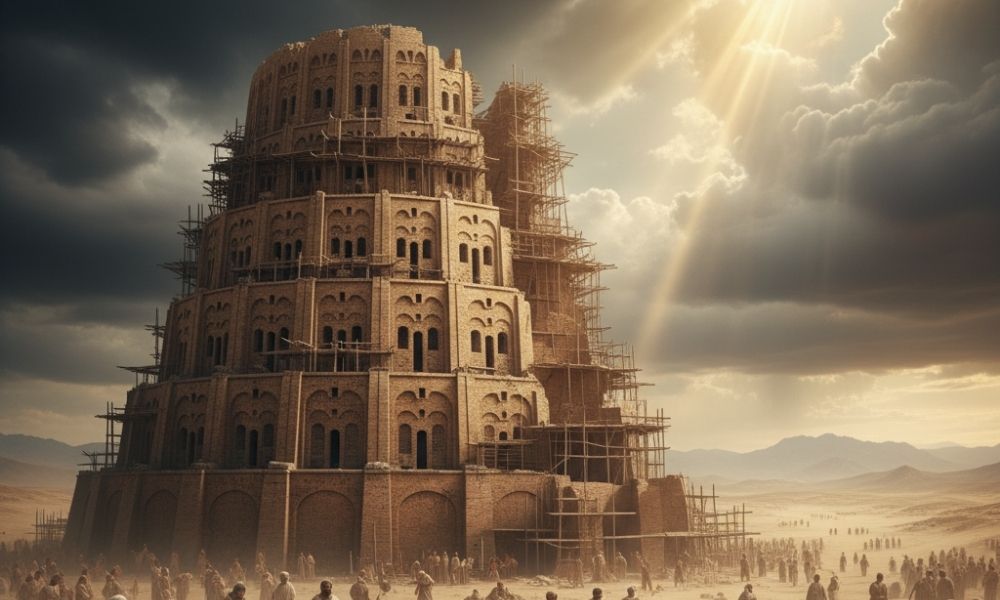
The Tower of Babel marks a turning point in human history — a story of pride, unity in rebellion, and divine intervention. After the Flood, humanity gathered in one place and sought to build a tower reaching to heaven, not to honor God but to make a name for themselves. In response, God confused their language and scattered them across the earth. This event explains the origin of diverse languages and nations while reminding us that pride leads to downfall, but God’s purposes always prevail.
Quick Facts
Event Name: The Tower of Babel
Location: The plain of Shinar (ancient Mesopotamia, likely near Babylon)
Key Figures: The people of the post-Flood world, God
Cause: Humanity’s pride and rebellion against God’s command to fill the earth
Consequence: Confusion of languages and scattering of peoples
Key Scripture: Genesis 11:9 — “That is why it was called Babel — because there the LORD confused the language of the whole world.”
Symbolism: Human pride, divine judgment, and the origin of nations
Meaning of the Event
The Tower of Babel represents humanity’s attempt to achieve greatness and unity apart from God. By building a monument to themselves, people sought independence from divine authority. God’s act of confusing their language was not merely punishment but redirection — ensuring His command to spread and fill the earth would be fulfilled.
Biblical Era / Timeline
Era: Early Post-Flood world, following the Table of Nations (Genesis 10)
Context: Humanity shared one language and culture, enabling coordinated ambition. Settling in the land of Shinar, they chose unity for self-glory rather than obedience to God’s plan.
The Story
1. Humanity’s Pride and Ambition (Genesis 11:1–4)
“Come, let us build ourselves a city, with a tower that reaches to the heavens, so that we may make a name for ourselves and not be scattered over the face of the whole earth.”
The people’s goal was not to worship God but to establish their own identity and control. The tower — likely a ziggurat — symbolized human pride and false religion.
2. God’s Observation (Genesis 11:5–6)
God came down to see the city and tower that humanity was building.
“If as one people speaking the same language they have begun to do this, then nothing they plan to do will be impossible for them.”
This was not a threat to God’s power but a recognition that unified rebellion would only deepen sin and destruction.
3. Divine Intervention (Genesis 11:7–8)
“Come, let Us go down and confuse their language so they will not understand each other.”
God disrupted their communication, creating multiple languages. Unable to cooperate, the builders abandoned their project, and God scattered them across the earth — fulfilling His command from Genesis 9:1 to “be fruitful and multiply and fill the earth.”
4. The Name “Babel” (Genesis 11:9)
The name Babel means both “gate of God” in Babylonian and “confusion” in Hebrew. What humans intended as a gateway to glory became a monument of confusion and failure — a warning against prideful ambition.
Symbolism & Meaning
| Symbol | Meaning |
|---|---|
| The Tower | Human pride and desire for self-glory |
| City of Babel | Unity in rebellion instead of obedience |
| Language Confusion | Divine intervention and human limitation |
| Scattering of Peoples | Fulfillment of God’s command to fill the earth |
| Babel (Confusion) | The futility of human pride apart from God |
Theological Significance
- Human Pride: The tower symbolizes humanity’s desire to replace God’s authority with self-exaltation.
- Divine Sovereignty: God controls the destiny of nations and ensures His purposes are fulfilled.
- Judgment and Mercy: God’s confusion of language restrained sin and preserved humanity from greater corruption.
- Foundation for Nations: The scattering of peoples explains the linguistic and cultural diversity recorded in the Table of Nations.
- Reversal in Christ: At Pentecost (Acts 2), the Holy Spirit reversed Babel’s curse — uniting diverse languages through the Gospel.
Key Lessons
- Pride separates humanity from God.
- Unity without God leads to destruction, not greatness.
- God’s plans cannot be thwarted by human ambition.
- Obedience to God’s will brings blessing; defiance brings division.
- True unity is found only in Christ, not in human effort or empire.
Legacy & Impact
- The Tower of Babel explains the origin of languages and the dispersion of nations.
- It serves as a lasting warning against arrogance, idolatry, and rebellion.
- Babel later became Babylon, a symbol throughout Scripture of human pride and opposition to God (Revelation 18).
- The story anticipates redemption through Christ, who restores communication and unity through the Spirit, reconciling all nations into one kingdom of God.







Leave a Reply