
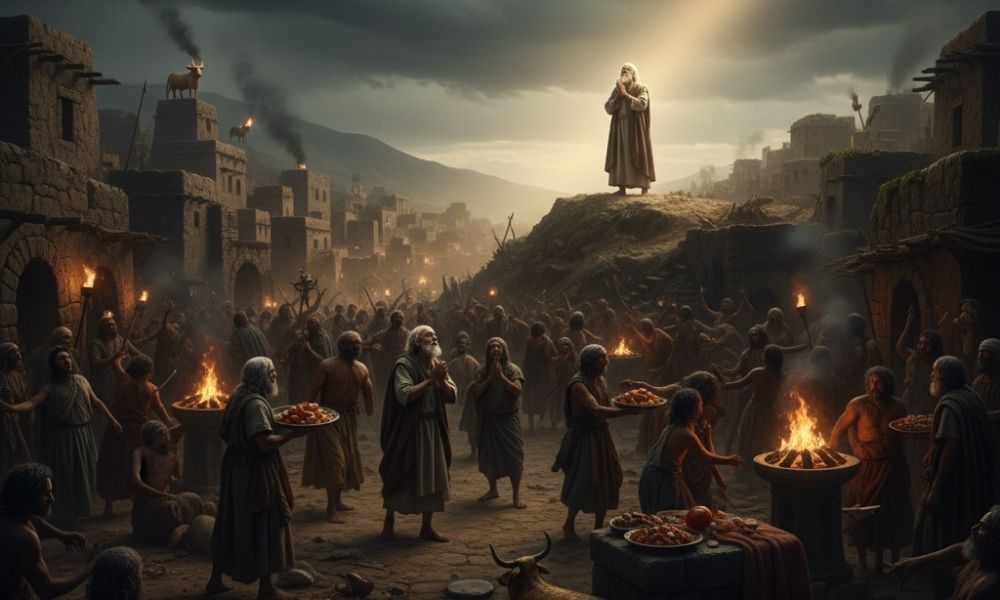
The phrase “Wickedness fills the earth” marks one of the darkest chapters in human history. After generations descended from Adam, humanity turned away from God, embracing violence, corruption, and immorality. The once-beautiful creation groaned under sin’s weight, as every thought of man’s heart became evil continually. Yet even amid this rebellion, God’s justice and mercy were revealed — preparing the way for judgment through the Flood and salvation through Noah.
Quick Facts
Event Name: Wickedness Fills the Earth
Location: The whole earth (Genesis 6:1–8)
Key Figures: God, the “sons of God,” the “daughters of men,” and Noah
Cause: Widespread sin, moral corruption, and violence
Consequence: God’s decision to destroy the world by a great Flood
Key Scripture: Genesis 6:5 — “The LORD saw that the wickedness of man was great in the earth, and that every intention of the thoughts of his heart was only evil continually.”
Symbolism: Total depravity, divine judgment, and the endurance of grace through one righteous man
Meaning of the Event
This event illustrates humanity’s complete moral collapse after generations of ignoring God. Sin, which began with disobedience in Eden, had now infected every part of human thought and society. God’s heart was grieved by what His creation had become, yet He extended mercy by preserving Noah — a sign that grace still triumphs over judgment.
Biblical Era / Timeline
Era: Antediluvian (Before the Flood)
Context: Several centuries after Adam and Eve, during the generations of Seth and Cain. Civilization had advanced, but spiritual corruption grew faster than progress.
The Story
1. Humanity Multiplies and Corruption Spreads (Genesis 6:1–2)
As people multiplied on earth, the “sons of God” (often interpreted as the godly line of Seth or fallen angels) took wives from among the “daughters of men.” These unions symbolized the mixing of righteousness with ungodliness, leading to moral decay and rebellion against God.
2. The Spirit of God Withdraws (Genesis 6:3)
God declared,
“My Spirit shall not strive with man forever, for he is flesh; his days shall be one hundred and twenty years.”
This was both a warning and a countdown to judgment — a period of grace before the coming Flood.
3. The Rise of Violence and Corruption (Genesis 6:4–5, 11–12)
The earth became filled with violence, deceit, and sin. Humanity’s imagination was “only evil continually.” Wickedness dominated every aspect of life — moral law was ignored, and justice perverted. Creation itself was defiled, echoing Romans 8:22: “The whole creation groans and suffers because of sin.”
4. God’s Grief and Judgment (Genesis 6:6–7)
“The LORD regretted that He had made man on the earth, and it grieved Him to His heart.”
This does not mean God made a mistake, but expresses His deep sorrow over human rebellion. Out of His holiness and justice, He determined to cleanse the earth with the Flood — to destroy all flesh corrupted by sin.
5. The Hope of One Man (Genesis 6:8)
Amid universal corruption, one man found favor in the eyes of the Lord — Noah. His righteousness preserved the human race and revealed God’s plan of redemption. Through Noah, God would restart creation and foreshadow the salvation available through Christ.
Symbolism & Meaning
| Symbol | Meaning |
|---|---|
| Violence and Corruption | The depth of human depravity without God |
| The 120 Years | A period of divine patience and grace before judgment |
| The Flood | God’s cleansing judgment upon sin |
| Noah’s Favor | The power of grace amid corruption |
| God’s Grief | His heart of compassion even in judgment |
Theological Significance
- Total Depravity: Humanity’s nature, apart from God, is inclined toward evil (Romans 3:23).
- Divine Justice: God cannot ignore sin; His holiness demands judgment.
- Divine Mercy: Even when judgment was certain, God gave humanity time to repent.
- Foreshadowing Salvation: The coming Flood prefigures the final judgment and the deliverance offered through Christ — our “Ark” of safety (1 Peter 3:20–21).
Key Lessons
- Sin spreads when unchecked and unrepented.
- God’s patience has limits — He warns before He judges.
- Violence and corruption grieve the heart of God.
- One righteous life can make a difference in a corrupt world.
- Grace shines brightest in times of darkness.
Legacy & Impact
- The corruption of this age led directly to the Great Flood, the first global judgment on sin.
- It set the stage for Noah’s obedience and the preservation of creation.
- The story serves as a warning to all generations about the consequences of moral decay.
- It also foreshadows God’s final cleansing — not by water, but by the fire of judgment (2 Peter 3:6–7).
- Yet through Noah, it reveals that God always preserves a remnant of faith.







Leave a Reply