
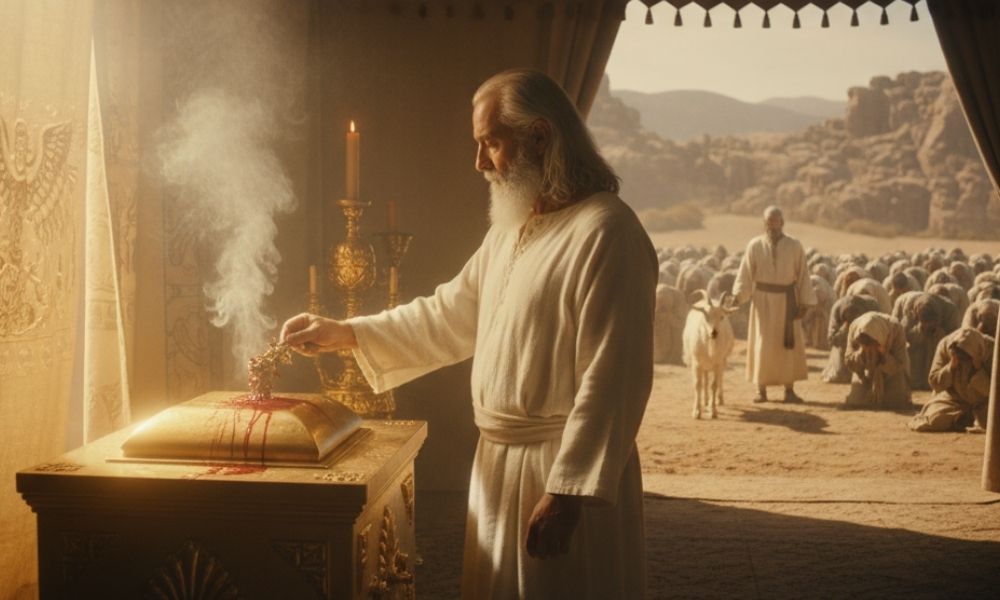
The Day of Atonement, known in Hebrew as Yom Kippur, is the holiest and most solemn day in the Jewish calendar. It is a day dedicated to repentance, fasting, and reconciliation with God. Biblically instituted in Leviticus 16 and Leviticus 23:26–32, it was the one day each year when the High Priest entered the Most Holy Place to make atonement for the sins of Israel — symbolizing cleansing, forgiveness, and restoration of fellowship with God.
Quick Facts
Name: Yom Kippur (Hebrew for “Day of Atonement”)
Institution: Leviticus 16; Leviticus 23:26–32; Numbers 29:7–11
Observed: 10th day of the 7th month (Tishri)
Duration: One day (from sunset to sunset)
Main Focus: National repentance, forgiveness, and purification from sin
Ritual Leader: The High Priest of Israel
Symbols: Sacrificial blood, scapegoat, fasting, white garments
Modern Practice: Fasting, prayer, confession, seeking forgiveness
Christian Fulfillment: Jesus Christ as the ultimate High Priest and perfect Atonement (Hebrews 9–10)
Name Meaning
“Yom Kippur” literally means “Day of Covering” — referring to the covering or removal of sin through sacrificial blood. The Hebrew root kaphar means “to cover, cleanse, or make atonement.”
Biblical Institution
God established the Day of Atonement through Moses:
- Leviticus 16: Detailed ritual instructions given after the deaths of Aaron’s sons, who offered unauthorized fire.
- Purpose: To cleanse the people and the sanctuary from the defilement of sin.
- Leviticus 23:27: “You shall afflict your souls, and offer an offering made by fire to the Lord.”
Main Rituals and Practices
1. Preparation
- The High Priest (Aaron and successors) bathed and dressed in simple white linen garments—symbolizing purity and humility.
- Special sacrifices were prepared for himself, his household, and the nation.
2. Sacrifices
- A bull was offered for the High Priest’s own sins and those of his household (Leviticus 16:6).
- Two goats were chosen for the people:
- One goat “for the Lord” — sacrificed as a sin offering.
- The other goat “for Azazel” (the scapegoat) — symbolically carried the sins of Israel into the wilderness.
3. Scapegoat Ritual
- The High Priest laid hands on the live goat, confessing the sins of Israel.
- The goat was then sent away into the wilderness, symbolizing the removal of sin (Leviticus 16:21–22).
4. Entering the Holy of Holies
- Once a year, the High Priest entered the Most Holy Place with the blood of the bull and goat.
- He sprinkled blood on the mercy seat of the Ark of the Covenant, making atonement for the nation (Leviticus 16:15–16).
5. National Repentance
- The people fasted, prayed, and humbled themselves before God — “afflicting their souls” (Leviticus 23:27).
- No work was permitted — it was a Sabbath of solemn rest.
Spiritual Significance in Judaism
- The central themes are repentance, forgiveness, and renewal.
- It is a time to seek reconciliation with God and others before the new year (Rosh Hashanah).
- Even today, observant Jews spend Yom Kippur in fasting, confession, and synagogue prayers, including the famous Kol Nidre and Ne’ilah services.
Christian Fulfillment
In Christian theology, Yom Kippur finds its ultimate fulfillment in Jesus Christ, who is both High Priest and sacrifice:
- Jesus as High Priest: “He entered once for all into the holy places… by means of His own blood, thus securing an eternal redemption.” (Hebrews 9:12)
- Jesus as the Sacrifice: His death fulfilled the need for repeated offerings (Hebrews 10:10–14).
- The Scapegoat: Jesus bore our sins and took them away — “The Lord has laid on Him the iniquity of us all.” (Isaiah 53:6)
Through Christ’s atonement:
- Sin is not merely covered but removed.
- Access to God’s presence is permanently opened (Hebrews 10:19–22).
Symbolism
- The High Priest: Christ, our eternal mediator (Hebrews 4:14–16).
- The Blood: The life offered to cleanse sin (Hebrews 9:22).
- The Scapegoat: Sin removed from the camp — Jesus carrying our sins away.
- White Garments: Purity through forgiveness.
- Fasting and Affliction: Humility and repentance before God.
Legacy and Modern Observance
- Still observed by Jewish communities worldwide as the holiest day of the year.
- Christians view it as a foreshadowing of Christ’s redemptive work, celebrating the once-for-all atonement achieved on the cross.
- In prophetic terms, many see it as symbolizing the final judgment and the purification of God’s people before the establishment of His Kingdom.







Leave a Reply