
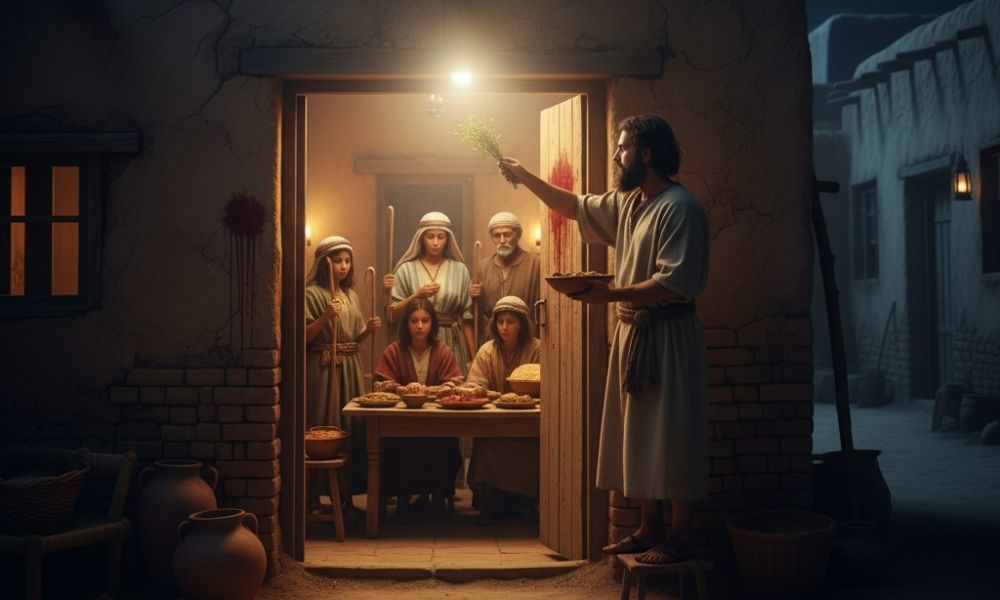
The Passover (Hebrew: Pesach) is one of the most significant events in the Bible — a divine act of deliverance, judgment, and covenant. It commemorates God’s mighty deliverance of the Israelites from slavery in Egypt and marks the beginning of their journey to the Promised Land. More than a historical event, it foreshadows the ultimate redemption through Jesus Christ, the true Passover Lamb whose blood delivers humanity from sin and death.
Key Verse:
“When I see the blood, I will pass over you.” — Exodus 12:13
Quick Facts
Event: The First Passover
Hebrew Name: Pesach (“to pass over” or “to spare”)
Recorded in: Exodus 12
Date: 14th day of the month of Nisan (Abib)
Occasion: God’s deliverance of Israel from Egypt
Symbol: The blood of the lamb on the doorposts
Duration: One day, followed by the Feast of Unleavened Bread (7 days)
Fulfillment: Jesus Christ, the Lamb of God (John 1:29; 1 Corinthians 5:7)
Historical Context
For 400 years, the Israelites were enslaved in Egypt (Genesis 15:13). Pharaoh’s hardened heart resisted God’s command to let His people go, leading to a series of ten devastating plagues (Exodus 7–11). The tenth and final plague — the death of the firstborn — brought Egypt to its knees.
Before this plague, God provided a way of salvation for His people through the blood of a spotless lamb. This divine act of protection and liberation became the foundation for the Passover celebration, remembered for generations to come.
Institution of the Passover (Exodus 12:1–14)
God gave Moses and Aaron precise instructions for the night of deliverance:
- Selection of the Lamb (Exodus 12:3–5):
- Each household was to choose a male lamb, one year old, without blemish.
- The lamb symbolized innocence and purity.
- The Slaughter of the Lamb (Exodus 12:6):
- The lamb was to be slain at twilight on the 14th day of the month.
- This act represented substitution — the lamb died in place of the firstborn.
- The Blood on the Doorposts (Exodus 12:7, 13):
- The Israelites were to apply the lamb’s blood to the doorposts and lintel of their homes.
- When God saw the blood, He would pass over that house, sparing it from judgment.
- The Passover Meal (Exodus 12:8–11):
- The lamb was roasted and eaten with unleavened bread (symbolizing purity) and bitter herbs (symbolizing the bitterness of slavery).
- The people were to eat it in haste, with belts fastened, sandals on, and staff in hand — ready to depart Egypt at God’s command.
- The Divine Judgment (Exodus 12:29–30):
- At midnight, the firstborn of every Egyptian household died — from Pharaoh’s son to the lowliest captive.
- But where the blood was applied, no death entered. God’s people were spared by obedience and faith.
- The Exodus (Exodus 12:31–42):
Theological Significance
1. The Blood as Protection
The lamb’s blood was a sign of substitutionary atonement — one life given in place of another. This prefigured the atoning death of Jesus Christ, whose blood delivers believers from sin and eternal death.
“Without the shedding of blood there is no forgiveness of sins.” — Hebrews 9:22
2. Salvation by Faith and Obedience
Only those who obeyed God’s command and applied the blood were saved. The act of obedience reflected faith in God’s word — the same principle by which salvation is received in Christ.
3. God’s Judgment and Mercy
The Passover demonstrates both justice (Egypt judged for sin) and mercy (Israel spared through the blood). God’s holiness demands judgment, but His love provides redemption.
4. Deliverance and New Identity
Passover marked the birth of Israel as a nation — delivered from bondage and called to serve God. Likewise, believers are freed from sin and made new creations in Christ (2 Corinthians 5:17).
The Feast of Unleavened Bread (Exodus 12:15–20)
Following the Passover, God commanded a seven-day feast during which no leaven (yeast) was to be eaten or found in their homes.
- Leaven symbolized sin and corruption.
- Unleavened bread represented purity, sincerity, and separation from sin.
“Let us keep the feast… with the unleavened bread of sincerity and truth.” — 1 Corinthians 5:8
This feast reminded Israel to live as a holy, set-apart people, cleansed from the defilement of Egypt — just as Christians are called to live pure lives after salvation.
Christ, Our Passover Lamb
The New Testament reveals that the Passover was a prophetic foreshadowing of Jesus Christ’s sacrifice.
- The Lamb Without Blemish:
- Jesus was sinless — the perfect Lamb of God (1 Peter 1:19).
- The Blood Applied:
- Just as Israel applied the lamb’s blood to their doors, believers apply Christ’s blood by faith to their hearts (Romans 3:25).
- The Deliverance:
- Israel was freed from Egypt’s bondage; believers are freed from the bondage of sin (John 8:36).
- The Memorial:
“For Christ, our Passover Lamb, has been sacrificed.” — 1 Corinthians 5:7
Symbolism and Spiritual Meaning
| Element | Symbolism | Fulfillment in Christ |
|---|---|---|
| Passover Lamb | Innocence and substitution | Jesus, the Lamb of God (John 1:29) |
| Blood on Doorposts | Protection and redemption | The blood of Christ applied by faith (Romans 5:9) |
| Unleavened Bread | Purity and separation from sin | Christ, the Bread of Life (John 6:35) |
| Bitter Herbs | Sorrow of slavery | Repentance and remembrance of sin’s cost |
| Haste of Departure | Readiness to obey | Believers living in readiness for Christ’s return |
| Feast of Unleavened Bread | Continual holiness | Sanctification through the Spirit (1 Thessalonians 4:3) |
Legacy and Observance
- Jewish Tradition:
Passover is still observed annually in remembrance of Israel’s deliverance. Families share a ceremonial meal called the Seder, retelling the Exodus story and giving thanks to God for freedom. - Christian Reflection:
Christians celebrate Communion (the Lord’s Supper) — rooted in the Passover — to remember Christ’s sacrifice and the new covenant sealed by His blood.
“Do this in remembrance of Me.” — Luke 22:19
Spiritual Lessons
- God Saves by Grace through Faith — not by merit, but through trust in His promise.
- Deliverance Requires Separation — leaving Egypt represents leaving sin behind.
- Redemption Leads to Worship — those freed by God are called to serve and glorify Him.
- The Blood Still Speaks — God’s salvation still rests on the blood of the Lamb (Hebrews 12:24).







Leave a Reply