
Purim is one of the most joyous and dynamic festivals in the biblical calendar, celebrating the miraculous deliverance of the Jewish people from a plot of annihilation in the ancient Persian Empire. Recorded in the Book of Esther, the holiday commemorates how Queen Esther and her cousin Mordecai overturned the decree of the wicked Haman. Unique among biblical holidays, God’s name is never explicitly mentioned in the Book of Esther, highlighting the theme of Divine Providence—God working “behind the scenes” through human agency and political events to save His covenant people.
Quick Facts
- Name: Purim
- Meaning: “Lots” (referring to the lots Haman cast to determine the day of destruction)
- Scripture Reference: The Book of Esther (specifically Esther 9:20–32)
- Date: 14th of Adar (Feb/March); 15th of Adar in walled cities (Shushan Purim)
- Key Figures: Queen Esther (Hadassah), Mordecai, King Ahasuerus (Xerxes I), Haman
- Key Rituals: Reading the Megillah (Scroll of Esther), Mishloach Manot (sending gifts of food), Matanot LaEvyonim (gifts to the poor), Feasting
- Theme: Survival, Reversal of Destiny, Hiddenness of God, Providence
- Key Verse: “And who knows but that you have come to your royal position for such a time as this?” (Esther 4:14)
Name Meaning
Purim: The word is the plural form of the Persian word Pur, meaning “Lot” (as in a lottery or die). It refers to the lots cast by Haman to randomly select the date for the genocide of the Jews (Esther 3:7). The name serves as an ironic reminder that while enemies may rely on chance, God controls history.
Origin / Historical Background
The Persian Exile: The story takes place in Susa (Shushan), the capital of the Persian Empire, likely under the reign of Xerxes I (486–465 BCE).
The Decree: Haman the Agagite, a high-ranking official, became enraged when Mordecai the Jew refused to bow to him. Haman convinced the King to issue a decree to annihilate all Jews in the empire’s 127 provinces on the 13th of Adar.
The Institution: After the Jews were saved and their enemies defeated, Mordecai and Esther established the festival as a perpetual memorial for all generations.
Biblical Era / Context
Time: The Post-Exilic period (after the destruction of the First Temple but before the rebuilding of the walls of Jerusalem by Nehemiah).
Setting: A cosmopolitan diaspora setting where Jews were a minority subject to the whims of a pagan superpower.
Cultural Context: The story illustrates the precarious nature of life in the Diaspora. Unlike other biblical narratives centered on land and temple, this story centers on palace intrigue, politics, and identity.
Major Roles / Purpose
Esther (The Heroine): An orphan raised by her cousin who hides her Jewish identity to become Queen, eventually risking her life to intercede for her people.
Mordecai (The Leader): A faithful Jew who uncovers an assassination plot against the king and refuses to compromise his integrity by bowing to Haman.
Haman (The Antagonist): A descendant of Amalek (Israel’s ancient enemy), representing irrational, genocidal anti-semitism.
God (The Hidden Actor): Though unseen and unnamed, the timing of events (insomnia of the king, timely coincidences) reveals His sovereign hand.
Key Characteristics
Hiddenness (Hester Panim): Just as God is hidden in the text, Esther (whose name relates to the Hebrew root s-t-r, “to hide”) hides her identity until the strategic moment.
Reversal (Nahafoch Hu): The central literary and theological theme is “turnabout.” The gallows Haman built for Mordecai becomes Haman’s own end; the day of doom becomes a day of victory.
Joy and Feasting: It is a time of unbridled celebration, acknowledging that physical survival allows for spiritual service.
Main Events
Vashti’s Removal: Queen Vashti is deposed for refusing the King’s command, opening the door for Esther (Esther 1).
Esther becomes Queen: She wins the King’s favor but keeps her heritage secret (Esther 2).
Haman’s Plot: Haman casts lots (pur) and sets the date for Jewish destruction (Esther 3).
Mordecai’s Appeal: He urges Esther to act, delivering the famous line, “If you remain silent at this time, relief and deliverance… will arise from another place” (Esther 4).
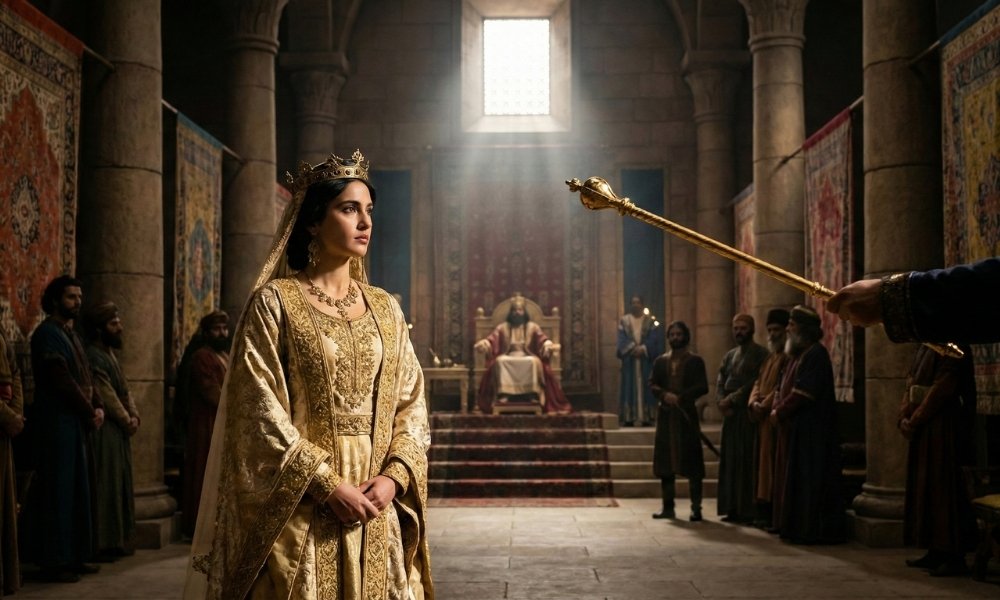
The Golden Scepter: Esther approaches the King uninvited—a capital offense—and is accepted (Esther 5).
The Sleepless Night: The King cannot sleep, reads the chronicles, and discovers Mordecai saved his life but went unrewarded (Esther 6).
The Banquets: Esther reveals Haman’s treachery during a private banquet. Haman is hanged on his own gallows (Esther 7).
Defense and Victory: The Jews are granted the right to defend themselves, turning the 13th of Adar into a victory and the 14th into a celebration (Esther 8–9).
Major Relationships
Esther & Mordecai: A partnership of wisdom and courage. Mordecai provides the strategy; Esther executes the diplomatic risk.
Mordecai vs. Haman: A recapitulation of the ancient battle between King Saul (a Benjamite, like Mordecai) and King Agag (an Amalekite, ancestor of Haman). Where Saul failed to destroy Agag, Mordecai succeeds in defeating Haman.
Notable Passages
Esther 4:14: “For if you remain silent at this time, relief and deliverance for the Jews will arise from another place, but you and your father’s family will perish. And who knows but that you have come to your royal position for such a time as this?”
Esther 4:16: “Go, gather together all the Jews… and fast for me… I will go to the king, even though it is against the law. And if I perish, I perish.”
Esther 9:22: “…as the time when the Jews got relief from their enemies, and as the month when their sorrow was turned into joy and their mourning into a day of celebration.”
Legacy & Impact
Survival of the Line: Had Haman succeeded, the messianic line (Tribe of Judah) would have been extinguished.
Amalek Theology: Haman is seen as the archetype of all future anti-Semites who seek to destroy the Jews without rational cause.
Customs:
- Reading the Megillah: The scroll is read publicly; listeners make noise (graggers) to blot out Haman’s name.
- Hamantaschen: Triangular cookies filled with poppy seeds or fruit, said to resemble Haman’s hat or ears.
Symbolism / Typology
The King’s Scepter: Represents grace extended to the intercessor.
The Gallows: Symbolizes the principle that “he who digs a pit will fall into it” (Proverbs 26:27).
The Third Day: Esther approaches the King on the “third day” of her fast, a common biblical motif for deliverance and resurrection.







Leave a Reply