
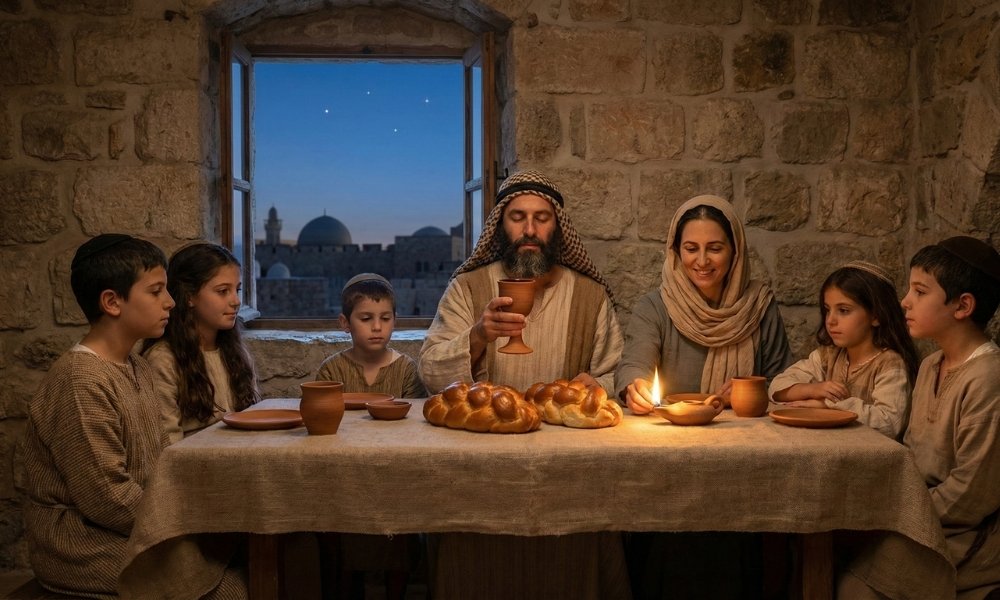
The Sabbath (Shabbat) is the seventh day of the week, set apart by God at Creation as a day of holy rest, cessation from work, and spiritual refreshment. It stands as one of the central pillars of biblical faith, serving as a covenant sign between God and His people. It is the first thing in scripture to be declared “holy” by God, emphasizing that time itself can be sanctified. While it began as a creation ordinance, it became a distinct command for Israel and finds its ultimate fulfillment in the redemptive rest offered through Jesus Christ.
Quick Facts
- Name: Sabbath (Hebrew: Shabbat)
- Meaning: “To cease,” “To rest,” or “Desist from exertion”
- Instituted By: God (Yahweh)
- First Mention: Genesis 2:2–3 (Creation Week)
- Covenant: Mosaic Covenant (Sign of the Covenant, Ex 31:13)
- Day of Observance: Seventh day (Friday sundown to Saturday sundown)
- Key Elements: Rest (Menuha), Holiness (Kodesh), Delight (Oneg)
- New Testament Status: Jesus is “Lord of the Sabbath” (Mark 2:28); a shadow of eternal rest (Hebrews 4)
- Symbol: Two candles (representing “Remember” and “Observe”), Challah bread
Name Meaning
The word “Shabbat” comes from the Hebrew root sh-b-t, meaning to cease, to end, or to rest. It does not merely imply “relaxation” in the modern sense but a deliberate cessation of creation and production. It signifies a “stopping” of worldly labor to acknowledge God’s sovereignty.
Origin / Historical Background
Creation: Established immediately after the six days of creation. God “rested” (ceased) on the seventh day, not because He was tired, but to complete the cycle of creation and set a pattern for humanity.
The Manna: Before the giving of the Law at Sinai, the Sabbath was reinforced when God provided a double portion of manna on the sixth day so the Israelites could rest on the seventh (Exodus 16).
The Ten Commandments: Codified in the Moral Law (the Decalogue) at Mount Sinai, elevating it from a creation principle to a binding covenantal commandment.
Biblical Era / Context
Time: From the beginning of time (Genesis) through the end of the age (Revelation/Eternal State).
Setting: Observed in the wilderness, the Land of Israel, the Exile, and utilized by Jesus in the synagogues of Galilee and Judea.
Cultural Context: In the ancient Near East, a day of rest for all—including servants and animals—was unique to Israel. It set them apart from surrounding nations who worked continuously. It was a declaration of freedom; slaves do not rest, but God’s people do.
Major Roles / Purpose
A Sign of Sanctification: It served as a perpetual sign that God makes His people holy (Exodus 31:13).
A Memorial of Creation: A weekly reminder that God is the Creator of the universe (Exodus 20:11).
A Memorial of Redemption: A reminder of deliverance from slavery in Egypt (Deuteronomy 5:15).
A Shadow of Christ: Colossians 2:16–17 describes the Sabbath as a shadow of the things to come, with the substance found in Christ.
Key Characteristics
Holiness: It is “set apart” from the other six days; common work is forbidden to focus on the divine.
Rest: Physical and mental recuperation for humans and animals alike.
Trust: Ceasing work requires faith that God will provide for needs during the time of inactivity.
Mercy: Jesus highlighted that the Sabbath is a day for doing good, healing, and showing mercy, rather than adhering to legalistic restrictions.
Main Events Associated with Sabbath
Institution at Creation: God blesses and sanctifies the seventh day (Genesis 2:3).
The Gathering of Sticks: A man is judged for gathering wood on the Sabbath, emphasizing the severity of the command in the theocracy (Numbers 15:32–36).
Prophetic Warnings: Jeremiah and Ezekiel warn Israel that Jerusalem would be destroyed for profaning the Sabbath and failing to keep it holy (Jeremiah 17:27).
The Exile: 2 Chronicles 36:21 notes that the 70-year exile was specifically to allow the land to enjoy its “Sabbath rests” that Israel had neglected.
Jesus’ Miracles: Jesus frequently healed on the Sabbath (e.g., the man with the withered hand, the invalid at Bethesda), challenging the Pharisees’ man-made traditions and declaring Himself Lord of the Sabbath.
Major Relationships
God: The Sabbath belongs to the Lord (“My Sabbaths”); it is His gift to man.
Israel: The primary recipient of the Sabbath covenant as a distinct nation.
Creation: The land itself was commanded to have a “Sabbath year” (Shemitah) every seven years.
Jesus Christ: He is the fulfillment of the Sabbath rest, offering spiritual rest to all who are weary and burdened (Matthew 11:28).
Notable Passages
Genesis 2:3: “Then God blessed the seventh day and made it holy, because on it he rested from all the work of creating that he had done.”
Exodus 20:8–10: “Remember the Sabbath day by keeping it holy. Six days you shall labor… but the seventh day is a sabbath to the LORD your God.”
Isaiah 58:13–14: Promises great blessing to those who call the Sabbath a “delight” and the Lord’s holy day “honorable.”
Mark 2:27: “The Sabbath was made for man, not man for the Sabbath.”
Hebrews 4:9–10: “There remains, then, a Sabbath-rest for the people of God… for anyone who enters God’s rest also rests from their works.”
Legacy & Impact
Jewish Identity: The Sabbath has kept the Jewish people together through centuries of dispersion. A famous adage states, “More than Israel has kept the Sabbath, the Sabbath has kept Israel.”
Christian Worship: While the early church began meeting on the “first day of the week” (Resurrection Sunday) to celebrate the new creation, the principle of a day of rest and worship remains vital in Christian theology.
Social Justice: The Sabbath introduced the first labor laws in history, granting rights of rest to servants, foreigners, and animals.
Symbolism / Typology
Eternal Rest: The weekly Sabbath points forward to the eternal rest of the Messianic Age and Heaven, where believers cease from the struggles of a fallen world.
Liberation: It symbolizes freedom from the slavery of sin and the tyranny of endless labor.
The Millennial Kingdom: In some theological frameworks, the 7th day represents the 1,000-year reign of Christ following 6,000 years of human history.
Extra-Biblical References
Talmud: Extensive rabbinic discussions (Tractate Shabbat) define the 39 categories of prohibited work (melacha) to protect the sanctity of the day.
Josephus: Historian Flavius Josephus documents how Romans and Greeks often misunderstood or ridiculed the Jewish custom of resting every seventh day.
Maccabees: Records the struggle of Jews who initially refused to fight in self-defense on the Sabbath, leading to a decision to allow defense to preserve life.







Leave a Reply