
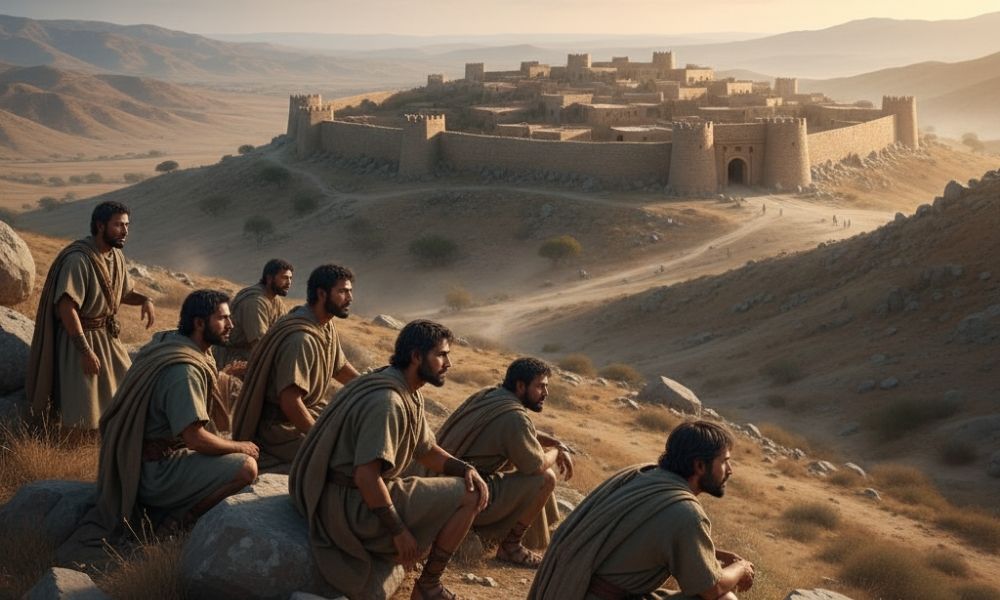
Ai

Ai was a small Canaanite town where Israel first stumbled but later triumphed, learning vital lessons about obedience and faith.


Ai is one of the earliest towns mentioned in the Bible, known mainly for Israel’s defeat and later victory during Joshua’s conquest of Canaan. Its story highlights themes of obedience, judgment, and restoration as Israel moved into the Promised Land.


Quick Facts

Name: Ai (Hebrew: “heap of ruins”)
Location: Hill country east of Bethel in ancient Canaan
Era: Patriarchal period to the Conquest (Bronze Age)
Known For: Israel’s initial defeat due to Achan’s sin and later victory under Joshua
Key Chapters: Joshua 7–8
Symbol: Ruins representing judgment, renewal, and lessons in obedience


Name Meaning

Ai: The name means “heap,” “ruin,” or “pile of stones,” reflecting both its ancient topography and the eventual destruction described in Scripture.


Historical & Biblical Context

Ai appears during the Israelite entry into Canaan after the fall of Jericho. The town was small but strategically placed near trade routes in the central highlands, which made it important for military control of the region.


Major Events

Initial Defeat: Israel attacked Ai confidently but fell because of Achan’s hidden sin (Joshua 7). This failure taught Israel the seriousness of covenant obedience.

Judgment and Restoration: After dealing with the sin, Joshua led a strategic ambush that defeated Ai (Joshua 8). The ruins symbolized renewed discipline and God’s guidance.


Geographical Setting

Ai stood close to Bethel, overlooking rugged hills common in today’s central Israel/Palestine highlands. This terrain offered natural defense and visibility. Many Kenyan landscapes like the Kerio Valley’s escarpments can help visualize the steep, rocky environment.


Cultural Significance

Ai’s narrative reflects the ancient Near Eastern world where fortified towns guarded trade and farmland. The story also highlights how communal responsibility shaped Israel’s early national identity.


Archaeological Notes

Sites such as et-Tell and Khirbet el-Maqatir have been studied as possible locations of Ai, with excavations uncovering remains of fortified settlements from the Bronze and Iron Ages.


Key Themes

Obedience: Ai’s fall shows the cost of ignoring God’s instructions.
Leadership: Joshua’s humility and strategy restored Israel’s confidence.
Renewal: The shift from defeat to victory symbolizes second chances.


Leave a Reply

Your email address will not be published. Required fields are marked *

Bible Characters

  • Mark (John Mark)
  • Mark (John Mark)

    John Mark was a young disciple who overcame early failure to become a trusted companion of Paul and Peter, ultimately authoring the dynamic Gospel that bears his name.


  • Matthew

    Matthew was a despised tax collector transformed by grace into a devoted apostle, whose Gospel bridges the Old and New Testaments by proclaiming Jesus as the promised Messiah and King.


  • Nabal

    Nabal was a wealthy but foolish landowner whose arrogance and refusal to show hospitality to David led to divine judgment and his sudden death.


Biblical Events

  • David lies to Ahimelech
  • Mark (John Mark)

    John Mark was a young disciple who overcame early failure to become a trusted companion of Paul and Peter, ultimately authoring the dynamic Gospel that bears his name.


  • Matthew

    Matthew was a despised tax collector transformed by grace into a devoted apostle, whose Gospel bridges the Old and New Testaments by proclaiming Jesus as the promised Messiah and King.


  • Nabal

    Nabal was a wealthy but foolish landowner whose arrogance and refusal to show hospitality to David led to divine judgment and his sudden death.


Bible Locations

  • Jezreel
  • Jezreel

    Jezreel was the fertile royal seat of King Ahab and Queen Jezebel, famous for the murder of Naboth and the site where divine judgment eventually wiped out their entire dynasty.


  • Aphek

    Aphek was a strategic military stronghold and staging ground on the Sharon Plain where the Philistines gathered to capture the Ark and where David was providentially released from the Philistine army.


  • Lachish

    Lachish was the second most powerful city in ancient Judah, a mighty fortress whose dramatic fall to Assyria and Babylon serves as a pivotal moment in biblical history and archaeology.


You May Also Like:

  • The Twelve Tribes of Israel were the tribal divisions descended from the sons of Jacob that formed the foundation of the Israelite nation and the prophetic lineage of the Messiah.

  • After burying Jacob in Canaan with great honor, Joseph reassures his fearful brothers that their past evil was overruled by God for good, and he dies in Egypt with a prophetic command that his bones be carried to the Promised Land.

  • On his deathbed, Jacob gathers his twelve sons to prophesy their destinies, disqualifying the firstborns for their sins and appointing Judah as the royal line and Joseph as the fruitful recipient of the double portion.

  • On his deathbed, Jacob adopts Joseph’s two sons as his own, deliberately crossing his hands to give the greater blessing to the younger Ephraim, declaring God as his Shepherd and Redeemer.

Bibliva

FREE
VIEW




