
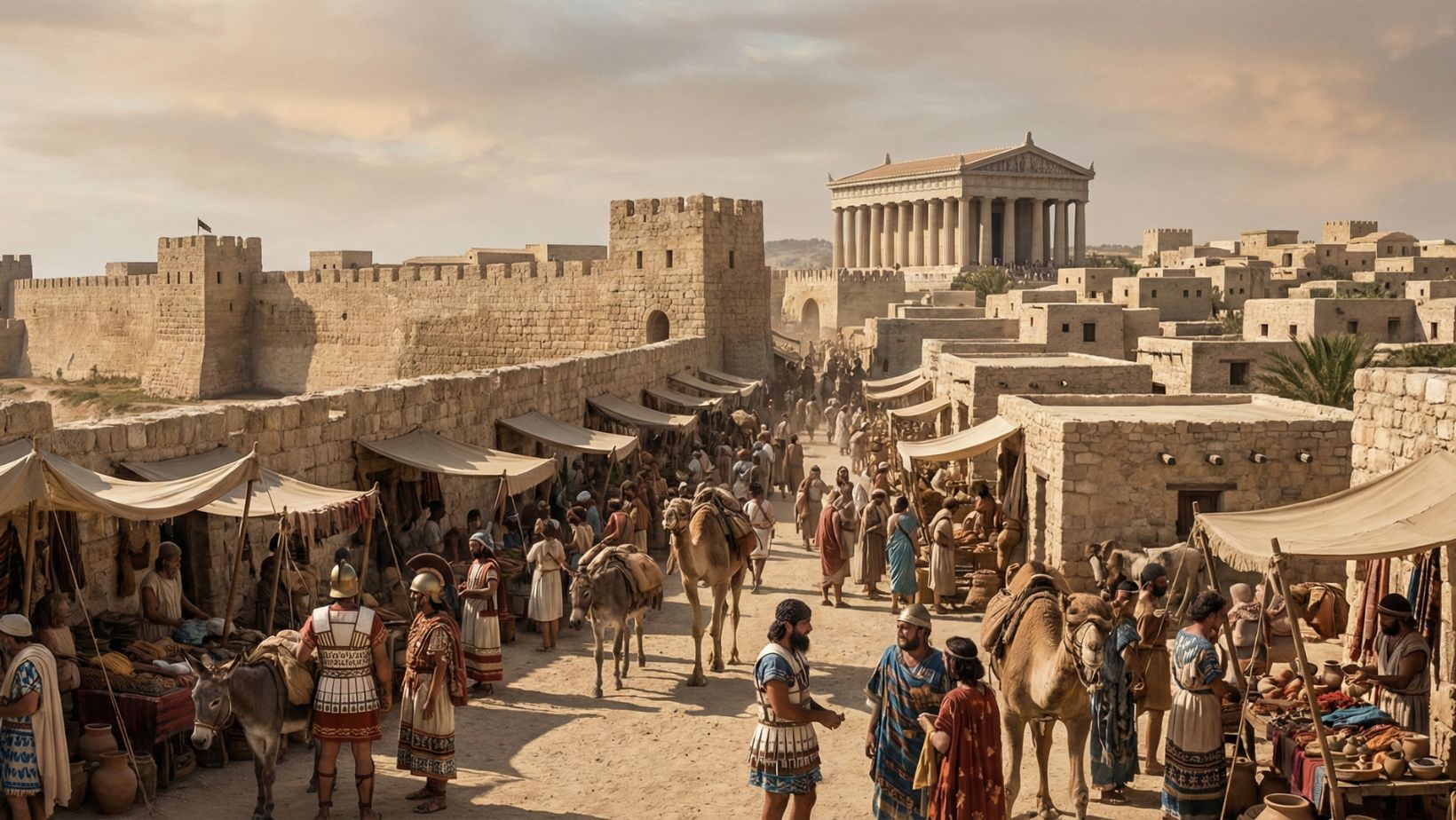
Ashkelon was one of the five great royal cities of the Philistines (the Pentapolis), situated on the Mediterranean coast. In the biblical narrative, it stands as a symbol of military power, pagan worship, and the enduring cultural and spiritual conflict between Israel and the Philistines. From the time of the Judges through the era of the Prophets, Ashkelon was a thriving seaport and a strategic fortress on the Via Maris trade route. It is perhaps best known for its association with Samson’s exploits and King David’s mourning over Saul, as well as being the subject of fierce prophetic judgment regarding the destiny of nations that oppose God.
Quick Facts
- Name: Ashkelon (Hebrew: Ashqelon)
- Region: The Southern Coastal Plain (Philistia)
- Political Status: One of the five Philistine city-states (along with Gaza, Gath, Ashdod, and Ekron)
- Key Deities: Atargatis (Derketo), Dagon, Baal-zebub
- Associated Figures: Samson, King David, Jeremiah, Zephaniah, Herod the Great
- Modern Location: The modern Israeli city of Ashkelon (approx. 50km south of Tel Aviv)
- Symbol: The Weighing Scale (Commerce) / The Sea Wall
Name Meaning
Ashkelon: The name is derived from the Semitic root sh-q-l, which means “to weigh” or “measure” (related to the word shekel, a unit of currency). This suggests that Ashkelon was originally founded and renowned as a center of commerce, trade, and merchant activity.
Geography / Historical Context
Strategic Location: Built on a natural sandstone ridge along the Mediterranean Sea, Ashkelon possessed a rare supply of fresh groundwater, making it a lush oasis.
The Via Maris: It sat directly on the ancient “Way of the Sea,” the major international highway connecting Egypt to Mesopotamia. This made it a prize for conquering empires, including Egyptians, Canaanites, Philistines, Babylonians, and later Romans.
Philistine Era: The Philistines, “Sea Peoples” from the Aegean region, settled here around the 12th century BCE, transforming it into a fortified city-state with distinct pottery and architecture.
Major Roles / Identity
The Merchant City: Unlike Gath (known for giants and warriors), Ashkelon was primarily a center of trade and culture, linking the Philistines to the broader maritime world.
The Pagan Stronghold: It was a religious center famous for the worship of Atargatis, the mermaid-bodied goddess of fertility and water.
The Political Adversary: As a member of the Philistine Pentapolis, its lords (seren) often colluded to oppress Israel during the time of the Judges and the early Monarchy.
Key Biblical Events
Samson’s Revenge: In Judges 14:19, the Spirit of the Lord came upon Samson. He went down to Ashkelon, struck down thirty men, and took their garments to pay a wager he had lost to Philistine companions at his wedding feast.
The Return of the Ark: In 1 Samuel 6, when the Philistines were plagued with tumors for capturing the Ark of the Covenant, the lords of Ashkelon were among those who sent the Ark back to Israel accompanied by guilt offerings (golden rats and tumors).
David’s Lament: Upon hearing of the death of King Saul and Jonathan, David cried out in 2 Samuel 1:20: “Tell it not in Gath, proclaim it not in the streets of Ashkelon, lest the daughters of the Philistines be glad.” This highlighted Ashkelon as a public center where news and victories were celebrated.
Prophetic Judgments: The city is frequently mentioned in “Oracles against the Nations” by prophets like Jeremiah, Amos, Zephaniah, and Zechariah, predicting its destruction by the Babylonians.
Notable Passages
Judges 14:19: “Then the Spirit of the LORD came powerfully upon him. He went down to Ashkelon, struck down thirty of their men, stripped them of everything and gave their clothes to those who had explained the riddle.”
2 Samuel 1:20: “Tell it not in Gath, proclaim it not in the streets of Ashkelon…”
Zephaniah 2:4: “For Gaza shall be abandoned, and Ashkelon shall become a desolation…”
Zechariah 9:5: “Ashkelon shall see it and be afraid… the king shall perish from Gaza, and Ashkelon shall be uninhabited.”
Legacy & Impact
Historical Endurance: Despite prophetic dooms, the city was often rebuilt due to its strategic value. It became a Hellenistic center and was later the birthplace of Herod the Great, who beautified the city with fountains and colonnades.
Archaeological Treasure: Excavations at Ashkelon have revealed the oldest arched city gate in the world (Canaanite era) and a massive dog cemetery, shedding light on the unique cultural practices of the region’s inhabitants.
Symbol of the World: In biblical theology, Ashkelon represents the worldly power of commerce and pagan culture that stands in opposition to the simplicity and covenant faithfulness required of Israel.







Leave a Reply