
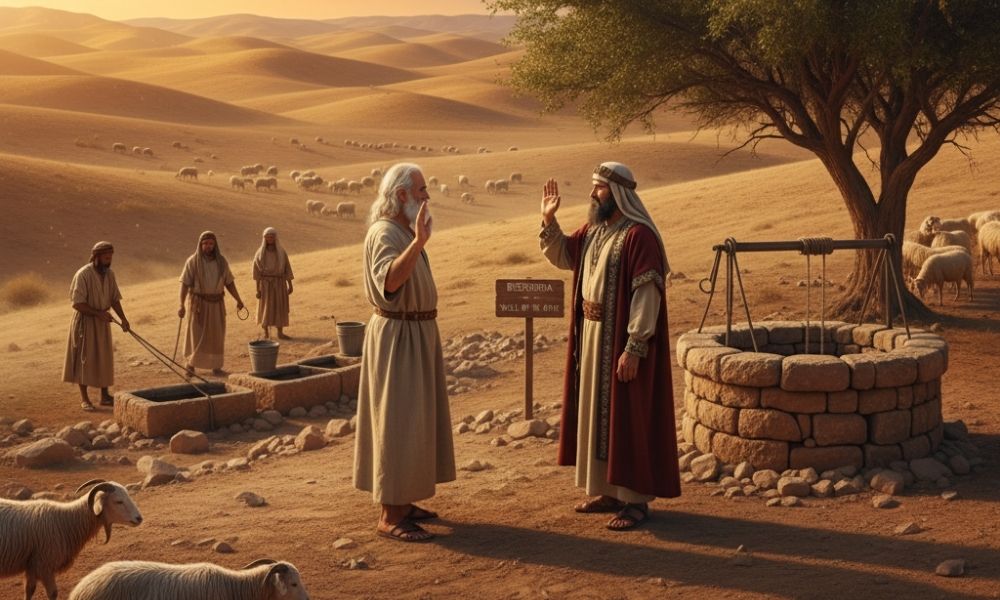
Beersheba, one of the most ancient and spiritually significant cities in the Bible, stands as a symbol of covenant, faith, and God’s enduring promises. Known in Hebrew as Be’er Sheva, meaning “Well of the Oath” or “Well of Seven,” this southernmost city of ancient Israel marked both a geographical and spiritual boundary — often described in the phrase “from Dan to Beersheba” (Judges 20:1), representing the full extent of the Promised Land.
Beersheba’s story is woven through the lives of the patriarchs — Abraham, Isaac, and Jacob — each of whom encountered God’s faithfulness at its wells. It is a place of prayer, promise, and peace, where covenants were made and altars were built.
Quick Facts
Name Meaning: “Well of the Oath” or “Well of Seven” (Be’er Sheva)
Location: Northern edge of the Negev Desert, southern Israel
Tribe/Territory: Judah (later Simeon’s inheritance)
Famous For: Covenants of Abraham and Isaac, patriarchal wells, southern border of Israel
Era: Patriarchal to Kingdom period
Key Figures: Abraham, Sarah, Isaac, Abimelek, Jacob, Elijah
Symbol: The well — representing covenant, provision, and divine faithfulness
Historical and Biblical Background
1. Abraham’s Covenant at Beersheba
Beersheba first enters Scripture in Genesis 21, where Abraham made a covenant of peace with Abimelek, king of Gerar. The dispute concerned a well Abraham had dug that Abimelek’s servants had seized. After resolving the matter, they made an oath before God, and Abraham named the place Beersheba — “Well of the Oath.”
“So that place was called Beersheba, because the two men swore an oath there.”
— Genesis 21:31 (NIV)
Abraham then planted a tamarisk tree and “called there on the name of the Lord, the Eternal God” (Genesis 21:33). This marked Beersheba as a site of worship and divine encounter.
2. Isaac’s Renewal of the Covenant
Years later, Abraham’s son Isaac also experienced God’s faithfulness in Beersheba. After conflict over water rights in the region of Gerar, Isaac dug his own wells and the Lord appeared to him:
“That night the Lord appeared to him and said, ‘I am the God of your father Abraham. Do not be afraid, for I am with you; I will bless you.’”
— Genesis 26:24 (NIV)
Isaac built an altar there, called on the Lord’s name, and again made peace with Abimelek. This repetition of covenant underscores Beersheba’s role as a generational place of divine confirmation.
3. Jacob’s Departure and Divine Vision
Before leaving for Haran, Jacob stopped in Beersheba to seek God’s blessing (Genesis 46:1–4). God spoke to him in visions, assuring him that He would make Jacob into a great nation even in Egypt and bring his descendants back to the Promised Land. Beersheba thus became a gateway — the threshold between the patriarchal homeland and the foreign land of exile.
Spiritual and Symbolic Meaning
Beersheba holds deep symbolic meaning in Scripture:
- Covenant: Both Abraham and Isaac made oaths there, sealing peace under God’s witness.
- Provision: Wells symbolize God’s life-giving sustenance — physical and spiritual.
- Faithfulness: God repeatedly reaffirmed His promises at Beersheba.
- Boundary: It represented the southernmost border of God’s covenant land.
- Worship: The patriarchs built altars there, marking Beersheba as a sacred meeting place between heaven and earth.
Beersheba’s sevenfold symbolism (sheva means “seven” and “oath” in Hebrew) points to completion and divine perfection — an everlasting covenant of peace and provision.
Beersheba in Later History
During the time of the judges and kings, Beersheba continued to serve as a center of worship and administration. The phrase “from Dan to Beersheba” became a standard expression to describe all of Israel (1 Samuel 3:20; 2 Samuel 17:11). The prophet Elijah also journeyed to Beersheba (1 Kings 19:3), fleeing from Jezebel before God met him in the wilderness.
Archaeological discoveries at Tel Be’er Sheva reveal ancient altars, wells, and structures confirming its biblical heritage. Today, the modern city of Beersheba is a thriving capital of Israel’s Negev region, still known as the “Gateway to the Desert.”
Prophetic Scripture
Genesis 21:33 (NIV)
“Abraham planted a tamarisk tree in Beersheba, and there he called on the name of the Lord, the Eternal God.”
This verse captures the essence of Beersheba — a place of peace, covenant, and worship where the Eternal God revealed Himself as faithful and unchanging.
Legacy Summary
Beersheba stands as a timeless witness to God’s covenant promises. It was the meeting point of heaven’s faithfulness and human obedience, where generations of patriarchs called upon the Lord and found His provision in both water and word. From Abraham’s oath to Jacob’s vision, Beersheba reminds believers that God’s promises endure across generations.







Leave a Reply