
Bethel

Bethel was a sacred place in Israel where God revealed Himself, renewed His covenant, and guided His people.


Bethel is a significant biblical location remembered as a place of encounter, covenant, and worship. Its name appears throughout the Old Testament, marking it as a spiritual landmark where God revealed Himself, guided His people, and affirmed His promises. Bethel became a symbol of divine presence and a reminder that God walks with His people even in seasons of transition.

Name: Bethel (Hebrew: Beit El, “House of God”)
Region: Central highlands of ancient Israel
First Mention: Genesis 12
Key Figures: Abraham, Jacob, Joshua, Samuel
Themes: Encounter, covenant, worship, identity, renewal


Origins and Name

Meaning: Bethel means “House of God,” reflecting its role as a sacred location where God’s presence was experienced.


Biblical Context

Early Patriarchal Site:
Abraham built an altar here during his journey through Canaan (Genesis 12:8).

Jacob’s Vision:
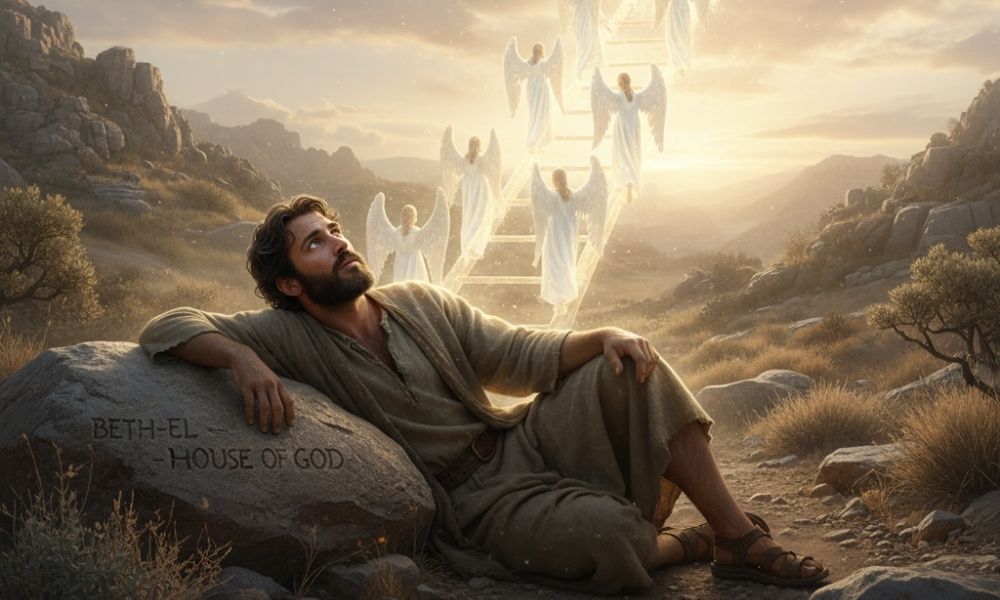
Bethel is most famous as the site where Jacob, fleeing to Haran, dreamed of a ladder reaching heaven. He awoke saying, “Surely the Lord is in this place,” naming it Bethel (Genesis 28:10–19).


Major Roles / Identity

Place of Divine Encounter:
A spiritual gateway where heaven and earth seemed to meet.

Covenant Landmark:
A memorial of God’s promise to Jacob about land, protection, and lineage.

Community Worship Site:
Later became a location of worship and national gatherings under judges and prophets.


Key Events

Jacob’s Return:
When Jacob returned years later, God reaffirmed His covenant at Bethel (Genesis 35:1–15).

Joshua’s Campaigns:
Bethel appears in Israel’s conquest narratives.

Era of Judges:
Israel sought God’s guidance from Bethel (Judges 20:18).


Legacy & Significance

Bethel stands as a reminder of God’s nearness, especially in moments of fear or uncertainty. It represents spiritual awakening, renewed commitment, and divine assurance.


Symbolism

House of God: The meeting point between humanity and the divine.
Stairway to Heaven: Represents connection, revelation, and God’s ongoing presence.


Leave a Reply

Your email address will not be published. Required fields are marked *

Bible Characters

  • Jonathan
  • Jonathan

    Jonathan was the valiant crown prince of Israel who chose loyalty to God’s anointed over his own ambition, becoming the Bible’s ultimate example of sacrificial friendship.


  • Michal

    Michal was the daughter of King Saul who saved David’s life out of love but ultimately ended her life in barren isolation because she valued royal dignity over humble worship.


  • Abner

    Abner was the powerful commander of Saul’s army who, after a long rivalry with David, sought to unite all Israel under David’s crown before being tragically assassinated by Joab.


Biblical Events

  • The Error of Uzzah
  • Jonathan

    Jonathan was the valiant crown prince of Israel who chose loyalty to God’s anointed over his own ambition, becoming the Bible’s ultimate example of sacrificial friendship.


  • Michal

    Michal was the daughter of King Saul who saved David’s life out of love but ultimately ended her life in barren isolation because she valued royal dignity over humble worship.


  • Abner

    Abner was the powerful commander of Saul’s army who, after a long rivalry with David, sought to unite all Israel under David’s crown before being tragically assassinated by Joab.


Bible Locations

  • The City of David
  • The City of David

    The City of David is the ancient, fortified ridge where King David established his capital, serving as the historical seed from which Jerusalem grew and the spiritual center of the Israelite kingdom.


  • Mahanaim

    Mahanaim, meaning “Two Camps,” was the historic fortress city east of the Jordan where Jacob met angels and where kings Ishbosheth and David found refuge during Israel’s greatest civil wars.


  • Jabesh-gilead

    Jabesh-gilead was a city defined by a legacy of survival and fierce loyalty, best known for the valiant night raid to retrieve the bodies of King Saul and his sons from Philistine desecration.


You May Also Like:

  • The Error of Uzzah serves as a stark warning that God’s absolute holiness demands profound reverence, and that sincere human intentions can never replace strict obedience to His commands.

  • Lamentations 3:22–23 reveals that God’s faithfulness is not dependent on human strength. Even in devastation, His love sustains, His mercy renews daily, and His covenant remains unbroken. When we are emptied of strength, we discover the fullness of His constancy. When you run out, God remains faithful.

  • “The faithful love of the Lord never ends! His mercies never cease.”

  • On the first day of the new year, Moses sets up the Tabernacle exactly as commanded, and the glory of the Lord fills the tent so intensely that even Moses cannot enter, marking God’s permanent dwelling among His people.

Bibliva

FREE
VIEW




